Quick answer
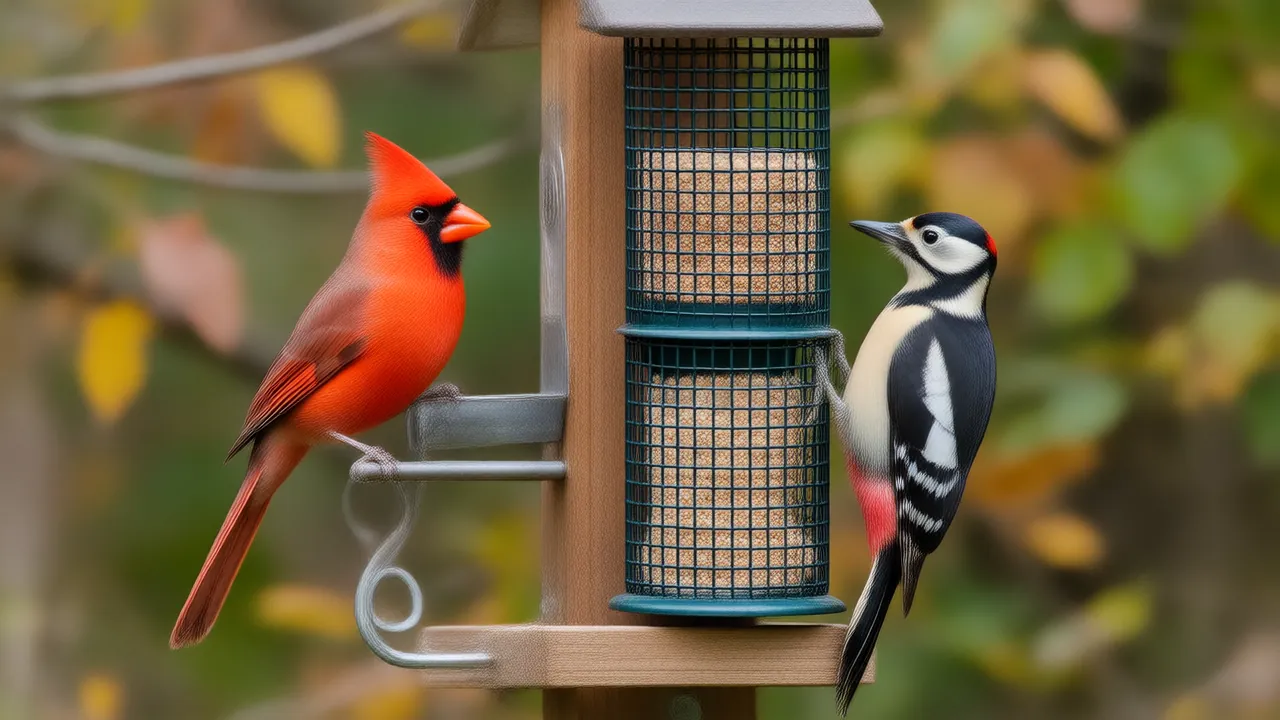
The main types of bird feeders are tube, hopper, platform, finch (nyjer), suet, peanut, nectar, fruit and window feeders. Tubes suit small birds such as chickadees and finches, hoppers and platforms serve bigger birds like cardinals and doves, suet cages draw woodpeckers, and nectar feeders are for hummingbirds and orioles. Most yards start well with a sunflower tube or hopper plus a suet feeder.
In this guide
Every feeder type works like a filter. A tube with short perches suits chickadees and finches, an open tray welcomes doves, juncos and cardinals, and a suet cage is built for woodpeckers and nuthatches. Decide which birds you want to feed, pick the feeder they can use, then fill it with the food they eat.
Most yards do well with two or three types: a tube or hopper of black oil sunflower, a suet feeder, and either a finch feeder or a low platform. Below is what each type holds, who uses it, how much trouble squirrels give it, and how much cleaning it asks of you.
Bird feeder types at a glance
Use this table as the master list. Species vary by region, but the pattern holds across most of the US.
| Feeder type | Best food | Birds it serves |
|---|---|---|
| Tube feeder | Black oil sunflower, sunflower mixes | Chickadees, titmice, nuthatches, house finches, goldfinches, downy woodpeckers |
| Finch (nyjer) feeder | Nyjer seed | American goldfinches, house finches, pine siskins; redpolls in northern states in some winters |
| Hopper feeder | Black oil sunflower, safflower, quality mixes | Cardinals, jays, grosbeaks, chickadees, titmice, finches, sparrows |
| Platform or tray | Sunflower, white proso millet, cracked corn, fruit, mealworms | Mourning doves, juncos, native sparrows, towhees, cardinals, jays |
| Suet feeder | Suet cakes, no-melt suet dough | Woodpeckers, nuthatches, chickadees, titmice, wrens |
| Peanut feeder | Shelled, unsalted peanuts | Woodpeckers, jays, nuthatches, titmice, chickadees |
| Nectar feeder | Sugar water, 1 part white sugar to 4 parts water | Hummingbirds; orioles at larger oriole feeders |
| Fruit or jelly feeder | Orange halves, grape jelly | Orioles, gray catbirds |
| Mealworm dish | Live or dried mealworms | Bluebirds, wrens, chickadees, robins |
| Window feeder | Sunflower, safflower | Chickadees, titmice, finches, nuthatches, cardinals |
Seed feeders: tube, hopper and finch feeders
Tube feeders
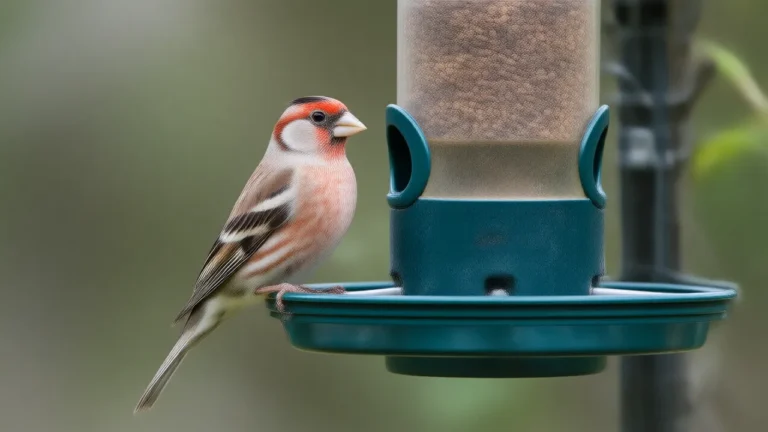
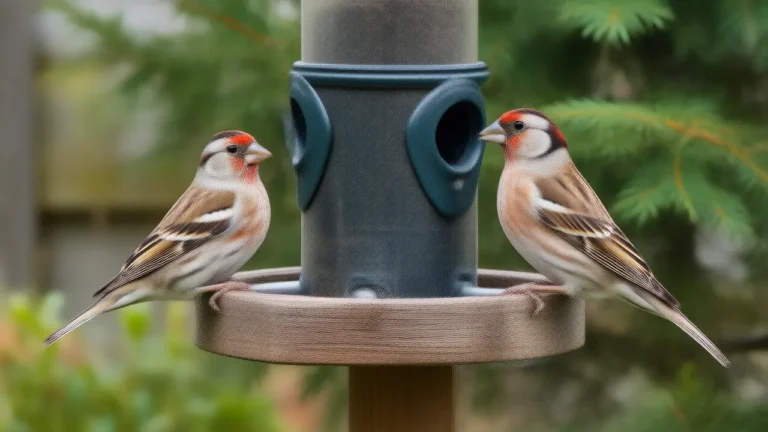
A tube feeder is a clear or mesh cylinder with feeding ports and short perches. Small, agile birds such as chickadees, titmice, finches and nuthatches feed from it easily, while bigger birds like cardinals and jays struggle to balance on the little perches. That makes a tube a good way to feed small birds without larger ones emptying it in an afternoon.
Fill it with black oil sunflower, which nearly every seed-eating feeder bird will take. Choose a tube whose lowest port sits close to the base, because seed below the bottom port just sits there and spoils. A tray clipped under the tube catches spilled seed and gives cardinals a place to stand.
Hopper feeders
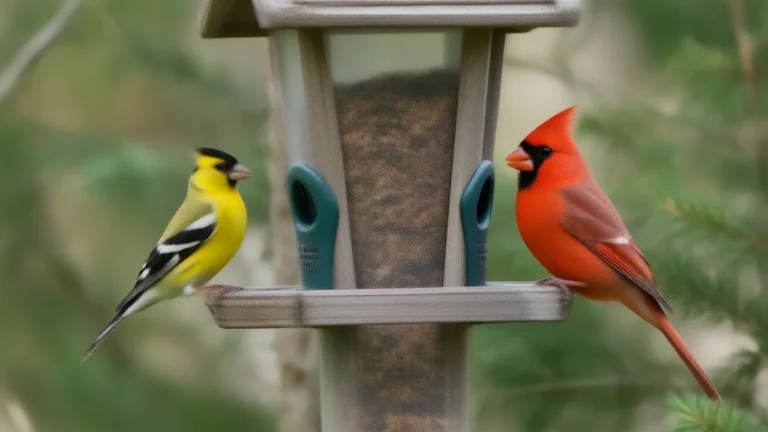
A hopper is the classic house-shaped feeder: seed sits in a central bin and trickles down into a trough on each side. The wide ledges suit bigger birds, so cardinals, jays, grosbeaks and even doves use hoppers alongside chickadees and finches. Hoppers hold a lot of seed, which helps if you can only refill a couple of times a week.
The weak point is moisture. Rain blows in under the roof, and seed at the bottom of the bin can cake and mold before it gets eaten. Fill a hopper only with what your birds eat in a few days, especially in wet weather. For a side-by-side look at the two most common designs, see tube feeder vs hopper feeder.
Finch (nyjer) feeders
Nyjer is a tiny black seed that needs its own feeder: a tube with pinhole-sized ports or a soft mesh sock. Goldfinches and other small finches pull the seeds out one at a time, often while hanging upside down. Most other birds ignore nyjer, and squirrels rarely bother with it.
Nyjer goes stale faster than sunflower and molds quickly in a sock that stays wet after rain. If goldfinches abandon a full finch feeder, suspect the seed first: dump it, dry the feeder, and refill with a small, fresh batch.
Open feeders: platforms and ground trays
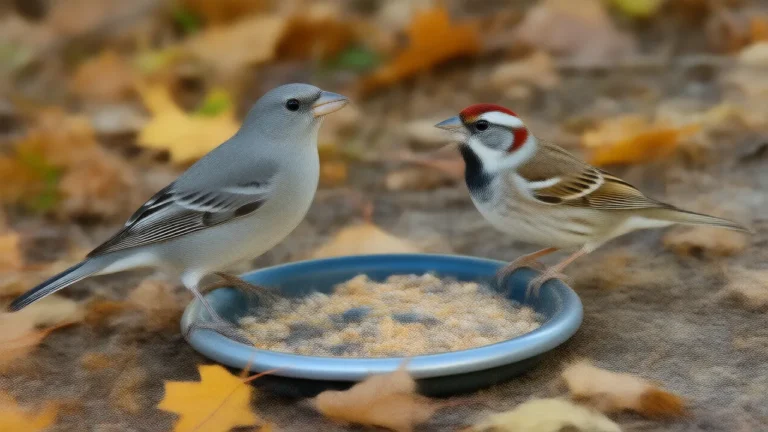
A platform feeder is a flat tray, ideally with a screened bottom so rain drains through. It can hang, sit on a pole, or rest a few inches above the ground. With no ports or perches to master, it draws the widest mix of any feeder, including ground feeders that rarely use hanging feeders: mourning doves, dark-eyed juncos, song and white-throated sparrows, and towhees.
A platform is also where foods that will not fit in a tube go: white proso millet for juncos and sparrows, cracked corn for doves, mealworms, chopped fruit. The trade-off is that everything else can reach it too. Squirrels, blackbirds, grackles, pigeons and, after dark, raccoons all use open trays. Put out only what birds will finish in a day, and brush the tray off often, since droppings and wet seed collect on a flat surface. The guide to the platform bird feeder covers which birds use one and how to set it up.
Specialty feeders: suet, peanuts, nectar, fruit and mealworms
Suet feeders
A suet feeder is a wire cage that holds a square suet cake. Woodpeckers, nuthatches, chickadees and titmice cling to the cage and chip at the fat. Models with a long tail-prop panel below the cage let larger woodpeckers brace with their stiff tails, the way they do on a trunk. In hot months raw suet softens and can turn rancid, so switch to a no-melt suet dough or take the feeder in until fall.
Peanut feeders
A peanut feeder is a mesh tube with openings big enough for birds to peck out pieces but too small for whole kernels to fall through. Jays, woodpeckers, nuthatches and titmice all work at them. Use raw or dry-roasted peanuts with no salt or coating, and keep them dry, since damp peanuts can grow mold.
Nectar feeders
Hummingbird feeders come in two main designs. Saucer feeders have ports on top of a shallow basin; inverted bottle feeders hold nectar above the ports. Saucers are easier to clean and less prone to dripping. Oriole nectar feeders look similar but are often orange, with larger ports and sturdier perches. Use plain sugar water, one part white sugar to four parts water, never honey or red dye, and replace it every few days, more often in hot weather.
Fruit, jelly and mealworm feeders
Orioles and gray catbirds come to orange halves pressed onto a spike and to small cups of grape jelly, mostly in spring and early summer. Offer jelly a spoonful at a time so it does not sit and spoil. Bluebirds, wrens and robins take mealworms from a dish with smooth, steep sides that live worms cannot crawl out of; dried mealworms can go in any tray.
Squirrel risk and cleaning effort by feeder type
| Feeder type | Squirrel risk | Cleaning effort |
|---|---|---|
| Tube | High, unless it has metal ports and sits behind a baffle | Moderate; brush out the base each time |
| Finch (nyjer) | Low | Moderate; wet seed spoils fast |
| Hopper | High | Moderate to high; seed can cake in the bin |
| Platform | Very high | High; clear it every day or two |
| Suet cage | Moderate; raccoons at night | Low; wipe the cage between cakes |
| Peanut mesh | Very high | Low to moderate |
| Nectar | Low; ants and bees are the pests | High; every nectar change |
| Window | Low to moderate, depending on nearby launch points | Low; easy to reach |
Squirrel risk depends more on where a feeder hangs than on the feeder itself. Almost any feeder on a pole with a correctly placed baffle, well away from trees, fences and roofs, is out of reach; the same feeder hung from a branch is not. Placing a squirrel baffle walks through the heights and distances that matter.
Every type needs regular cleaning. Empty and scrub seed feeders about every two weeks, and more often in wet weather or when crowds of birds are using them. Nectar feeders need a wash at every refill. The steps are in how to clean a bird feeder.
Which feeders to start with
If you are setting up from scratch, add one type at a time, in roughly this order:
- A tube or hopper with black oil sunflower. This single feeder serves the widest range of species in most of the country.
- A suet feeder, especially from fall through early spring, for woodpeckers, nuthatches and chickadees.
- A finch feeder with nyjer if goldfinches are around, or a low platform with millet if juncos and sparrows are feeding on the ground.
- A nectar feeder from spring through fall where hummingbirds nest or pass through.
Protect hazardous windows with exterior markings no more than 2 inches apart across the pane or a complete exterior screen. Choose the feeder location for access, cover and maintenance, not a supposedly safe glass distance; see window-protection guidance.
Give birds a week or two to find each new feeder, and keep feeders near shrubs or small trees they can dart into when a hawk passes. Match the seed to the feeder as well: cheap mixes padded with red milo and wheat mostly end up on the ground under a tube. The guide to types of bird seed shows which seeds go in which feeder.
Questions people ask
What is the best type of bird feeder for a beginner?
A tube or hopper feeder filled with black oil sunflower. It attracts the widest range of common feeder birds, is easy to fill, and works in almost any yard.
Which type of bird feeder attracts the most kinds of birds?
A platform or tray feeder, because birds do not need to perch or cling to use it. Doves, juncos, sparrows, cardinals and jays all feed from one, though squirrels and blackbirds will too.
Do different seeds need different feeders?
Some do. Nyjer needs a finch feeder with tiny ports or a mesh sock, suet needs a cage, and millet works best on a tray or the ground. Black oil sunflower works in tubes, hoppers and platforms.
How many bird feeders do you need?
Two or three different types is plenty to start. Spreading several feeders a few feet apart also reduces crowding and squabbling, which helps limit the spread of disease.
Written by the Backyard Birdcam team with AI assistance. Found something we got wrong? Email shop@smarternewsnow.com and we will fix it. How we write our guides.