Quick answer
Choose a tube feeder for small clinging birds such as chickadees, titmice, nuthatches and finches; its short perches keep many bigger birds out, and the seed stays sealed inside. Choose a hopper feeder for cardinals, jays and grosbeaks, which like a ledge to stand on. Hoppers hold more seed but attract grackles and squirrels. Many yards do best with one of each.
In this guide
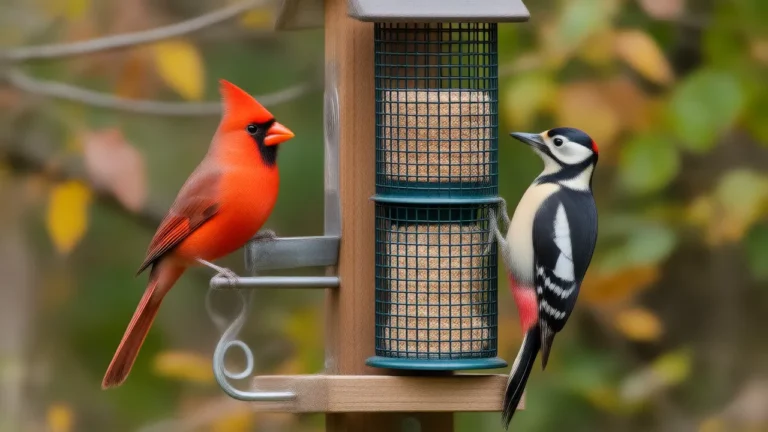
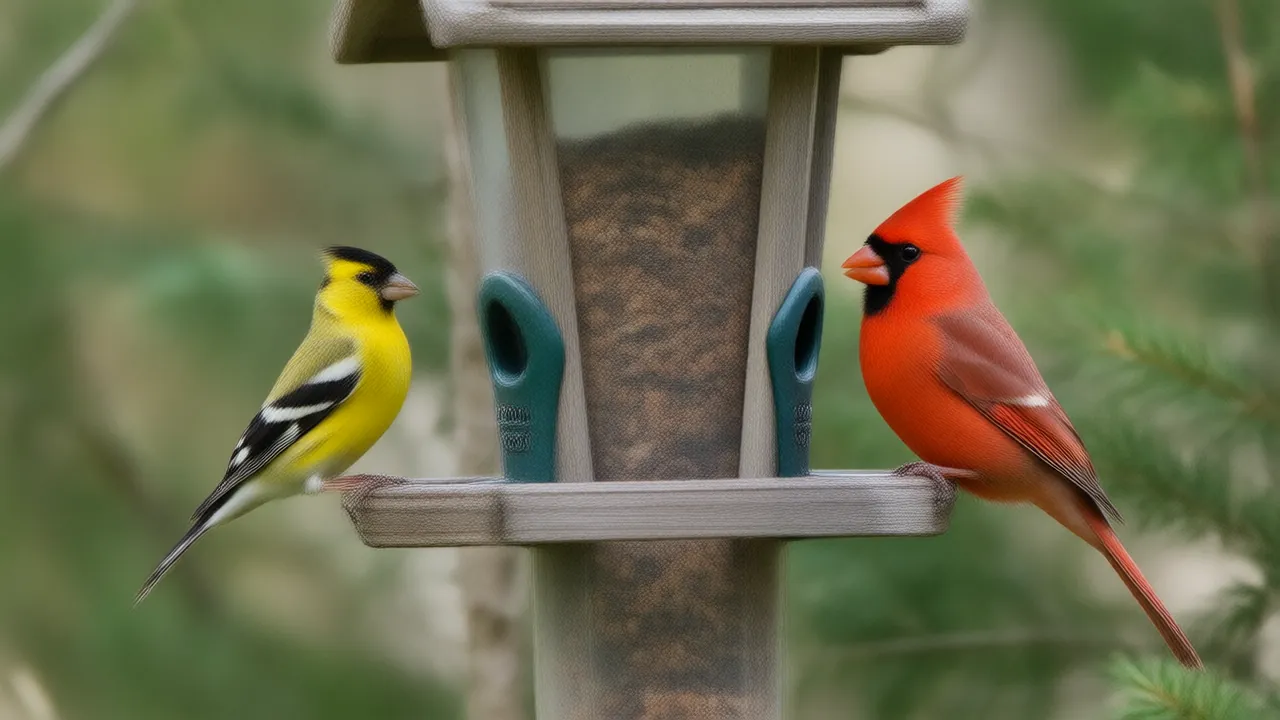
The real difference between a tube feeder and a hopper feeder is who gets to eat. A tube feeder, with its small ports and short perches, suits small clinging birds such as chickadees, titmice, nuthatches and finches, and keeps many larger birds out. A hopper feeder, with a roof and a wide ledge, suits birds that like to stand and face their food, especially cardinals, jays and grosbeaks, though it also welcomes grackles and squirrels.
Neither one is better in every yard. Decide which birds you most want to feed, how wet your weather is and how much cleaning you will realistically do, and the choice usually makes itself. Plenty of yards end up with one of each.
Tube vs hopper feeder at a glance
| Feature | Tube feeder | Hopper feeder |
|---|---|---|
| Design | A clear cylinder with feeding ports and small perches | A house-shaped box with a roof, see-through sides and a ledge along the bottom |
| Birds it suits | Chickadees, titmice, nuthatches, House Finches, goldfinches, siskins, Downy Woodpeckers | Cardinals, jays, grosbeaks, finches, chickadees, titmice; also grackles and blackbirds |
| Seed | Black oil sunflower, sunflower chips, safflower; nyjer in a finch tube with tiny ports | Black oil sunflower, safflower, peanuts, mixes with larger seeds |
| Capacity | Small to medium; longer tubes hold more | Often larger, with room for several birds at once |
| Weather protection | Seed sealed inside, but rain can wet the seed at the ports | Roof covers most seed, but the open ledge gets wet |
| Cleaning | Easy if both ends come off; needs a long bottle brush | Easy if the roof or sides lift off; seed packs into corners |
| Squirrels and big birds | Short perches and metal ports resist both | A ledge is easy for squirrels and grackles to sit on |
Tube feeders: strengths and weak spots
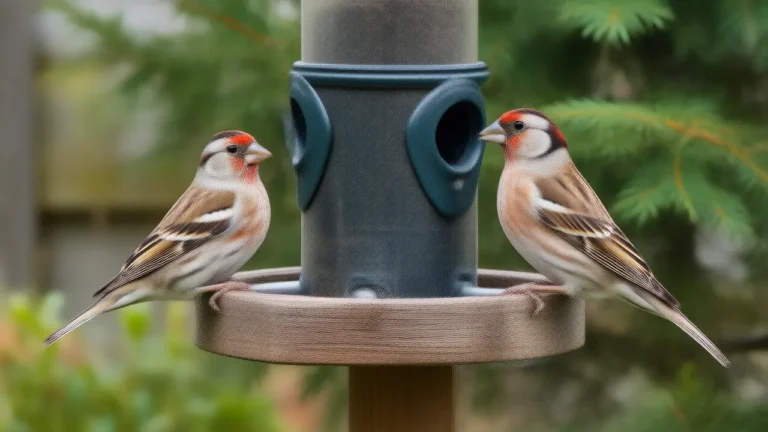
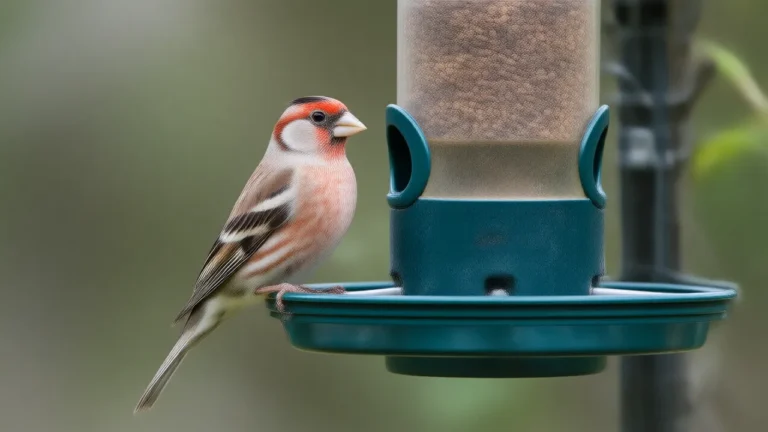
A tube feeder's short perches are its biggest strength. Small birds perch comfortably and pull one seed at a time from a port, while grackles, starlings, pigeons and jays struggle to balance. Birds also waste less seed at a port than on an open ledge.
- Finch tubes. Tubes with tiny slits instead of round ports are made for nyjer, the fine black seed that goldfinches love. Only small-billed finches can use them. See how to attract goldfinches for more.
- Mesh tubes. Wire mesh tubes hold sunflower chips or peanut pieces for clinging birds such as chickadees, nuthatches and woodpeckers.
- Cardinals. Cardinals will use a tube, but they prefer to face their food on a steady surface, and short perches suit them poorly. A tray clipped under the tube gives them a place to stand.
The weak spots are moisture and the dead zone at the bottom. Rain can blow into ports and clump the seed there, and in many tubes the seed below the lowest port sits out of reach until it spoils. Look for a tube with a port close to the base, or a raised insert that pushes seed up toward the lowest port. Metal ports, caps and bases stand up to squirrel teeth far better than plastic.
Hopper feeders: strengths and weak spots
A hopper holds a lot of seed and lets birds feed the way many larger songbirds prefer, standing on a ledge and facing forward. That makes it the classic cardinal feeder, and it serves the widest mix of species with a single seed, black oil sunflower. The roof keeps rain off most of the seed and gives birds a little shelter.
The trade-offs come with the open ledge:
- Mess. Birds sweep seed off the ledge while picking out favorites, so more ends up on the ground.
- Wet seed. Wind-driven rain and snow wet the seed in the trough, and it packs into corners where it can mold. Clear old seed out of the trough every few days in wet weather.
- Bullies and squirrels. Grackles, blackbirds and squirrels can sit on the ledge and empty a hopper quickly. Weight-sensitive perch bars that close the ports under heavier animals help, and a baffled pole keeps squirrels from climbing up.
- Materials. Wooden hoppers look good but soak up moisture and are harder to sanitize. Recycled plastic and metal clean more easily and last longer outdoors.
How to clean a tube or hopper feeder
Clean either type about every two weeks, weekly in warm, wet weather or when many birds are visiting, and right away if you see moldy seed or sick-looking birds. The full routine, including what to do during disease outbreaks, is in the guide to cleaning a bird feeder.
The best way to clean a tube feeder
- Empty all the seed, including the stale layer below the lowest port.
- Remove the base and the top. Most unscrew or pull off.
- Scrub the inside with a long bottle brush in hot, soapy water. Use a small brush or pipe cleaner on each port and perch hole.
- Soak the tube for about 10 minutes in a solution of 1 part household bleach to 9 parts water.
- Rinse thoroughly with clean water.
- Let every part dry completely, ideally in the sun, before refilling. Damp seed molds quickly.
Cleaning a hopper
Lift off the roof and any removable panels. Scrape packed seed out of the trough and corners with an old toothbrush or a plastic putty knife, then scrub with hot, soapy water, soak or wipe with the same bleach solution, rinse and dry fully. Wooden hoppers need an especially thorough drying before you fill them again.
Keep a spare feeder of each type. Swap in the clean one while the other dries, and the birds never go without.
Which one should you choose?
- You want goldfinches, chickadees and other small birds: a tube feeder, plus a finch tube of nyjer for goldfinches.
- You want cardinals, jays and grosbeaks: a hopper, or a platform feeder. The guide to the platform bird feeder covers the open-tray option.
- Grackles or starlings take over: a tube with short perches, or a tube inside a wire cage that only small birds can pass through.
- Squirrels are the problem: either type on a baffled pole, choosing a weight-sensitive hopper or a metal tube.
- You can hang only one feeder: a hopper filled with black oil sunflower feeds the widest range of birds, at the price of more mess and more big birds.
For the full lineup, including suet, nectar and window feeders, see types of bird feeders.
When to have both, and how to set them up
A tube and a hopper together cover most backyard birds: small clingers at the tube, cardinals and jays at the hopper. Set them up so they work together rather than compete:
- Give each a clear job. Fill the tube with sunflower chips or nyjer for small birds, and the hopper with black oil sunflower or safflower for cardinals and larger birds.
- Space them out. Hang them a few feet apart, or on opposite arms of a pole, so one busy feeder does not crowd the other.
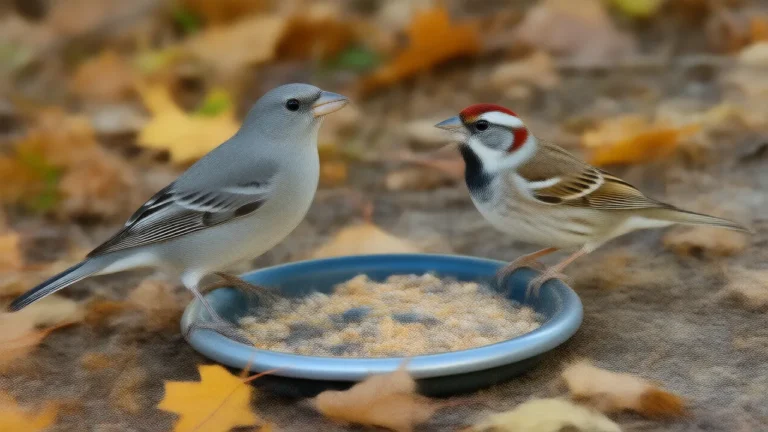
- Plan for the ground. Juncos, sparrows and doves will feed on what falls. A tray under the feeders catches the spill and keeps the ground cleaner.
- Protect both. Put them on one baffled pole, 8 to 10 feet from trees and fences.
- Mind the windows. Treat hazardous glass with a full exterior screen or dense exterior markings; feeder distance alone does not make it safe. The guide to where to put a bird feeder covers the corrected placement approach.
- Stagger the cleaning. Clean one this weekend and the other next weekend, so one feeder is always up.
Questions people ask
Which is better, a tube feeder or a hopper feeder?
Neither is better everywhere. A tube suits small birds such as chickadees and finches and keeps many large birds out; a hopper suits cardinals, jays and grosbeaks. With room for only one, a hopper of black oil sunflower feeds the widest mix.
Do cardinals eat from tube feeders?
Sometimes, but they prefer to stand and face their food on a hopper ledge or a platform. A tray attached below a tube feeder makes it easier for them.
What is the best way to clean a tube bird feeder?
Empty it, take off both ends, scrub inside with a long bottle brush and hot soapy water, clean each port, soak in 1 part bleach to 9 parts water, rinse well and dry completely before refilling.
How often should you clean a hopper feeder?
About every two weeks, weekly in warm or wet weather, and right away if seed in the trough looks clumped or moldy.
Written by the Backyard Birdcam team with AI assistance. Found something we got wrong? Email shop@smarternewsnow.com and we will fix it. How we write our guides.