Quick answer
To attract goldfinches, fill a tube or mesh finch feeder with fresh nyjer seed or hulled sunflower chips, keep it clean and dry, and plant seed-producing flowers such as purple coneflower, sunflowers, zinnias and black-eyed Susans. Leave the seedheads standing into fall and winter, and add a shallow bird bath nearby.
In this guide
Goldfinches eat seeds almost exclusively, and they are fussy about freshness. Offer fresh nyjer or hulled sunflower in a feeder built for small clinging birds, plant flowers that go to seed and leave them standing, and put out shallow water. That combination brings goldfinches in and keeps them coming back.
The American Goldfinch is found across nearly all of the lower 48 states at some point in the year. In much of the northern and central US many stay all year; across the South they are mainly winter visitors. In the Southwest and along the West Coast, the smaller Lesser Goldfinch comes to the same foods.
What goldfinches eat, month by month
| Months | What they're doing | Main foods |
|---|---|---|
| December to February | Roaming in winter flocks, in drab olive-brown plumage | Nyjer and sunflower chips at feeders; birch and alder seeds; leftover seedheads |
| March to April | Spring molt; males turn blotchy, then bright yellow | Feeders, plus early tree seeds such as elm |
| May to June | Pairing up; males singing and calling | Dandelion seed heads and other early weeds; feeders |
| July to August | Nesting, later than almost any other North American songbird | Thistle, sunflower, coneflower and other late-summer seeds; thistle down lines the nest |
| September | Young birds following parents to feeders | Coneflower, zinnia, cosmos, black-eyed Susan and sunflower seeds |
| October to November | Fall molt into winter plumage; flocks forming | Standing seedheads and feeders |
That late nesting season is timed to the peak of summer seeds. Goldfinches even feed their nestlings seeds rather than insects, which is why they keep visiting feeders through July and August when many other birds have switched to caterpillars. Exact timing varies by a few weeks from region to region and year to year.
Seeds goldfinches prefer
Nyjer
Nyjer, sometimes sold as "thistle" seed even though it doesn't come from a thistle, is a tiny black oil-rich seed. Goldfinches, Pine Siskins and redpolls love it, and most other birds and squirrels ignore it. Imported nyjer is heat-treated so it won't sprout under the feeder. There is more background in what nyjer seed is.
The catch is freshness. Nyjer dries out and goes stale faster than most seed, and goldfinches will abandon a feeder full of old nyjer. Buy small bags, keep them sealed in a cool, dry place, and if the level in the feeder hasn't dropped in a couple of weeks, empty it and refill with fresh seed.
Who else shows up at the nyjer feeder
Goldfinches rarely have a finch feeder to themselves. Pine Siskins, small streaky brown finches with yellow flashes in the wings, join goldfinch flocks in some winters and can arrive in large numbers without warning. In the northern states, redpolls, streaky finches with a small red cap, turn up in certain winters too. House Finches will also work the ports. All are welcome, and a second nyjer feeder eases the crowding.
Hulled sunflower
Sunflower hearts or chips are just as popular with goldfinches, and many other birds eat them too. Black oil sunflower in the shell works as well, though goldfinches take the hulled kind more readily. A feeder of each gives you two draws for goldfinches and a wider mix of visitors.
Finch feeders that work
- Nyjer tube feeders have tiny slit-shaped ports that hold the small seed in. Many have perches both above and below each port so more birds can feed at once.
- Mesh feeders and socks let a whole flock cling to the sides together. Fabric socks are inexpensive but soak up rain; a metal mesh tube lasts longer and drains. See the finch sock feeder guide for when a sock makes sense.
- Upside-down feeders put the ports below the perches, so birds hang upside down to eat. Goldfinches manage this easily; House Finches tend to find it awkward, which helps where they crowd goldfinches out.
- Regular tube feeders filled with sunflower chips work well too.
Hang a new finch feeder near a feeder the birds already use, about 5 feet up and in view of a tree or shrub where they can perch. Once goldfinches find it, you can move it a few feet at a time to wherever you like.
Keep finch feeders clean. Nyjer and chips cake in the bottom of a tube after rain and turn moldy, and goldfinches will skip a dirty feeder. Empty and wash it every two weeks, more often in wet weather, and dry it fully before refilling.
Flowers and plants to grow for goldfinches
A garden that goes to seed is the best goldfinch feeder there is. Plant these in full sun:
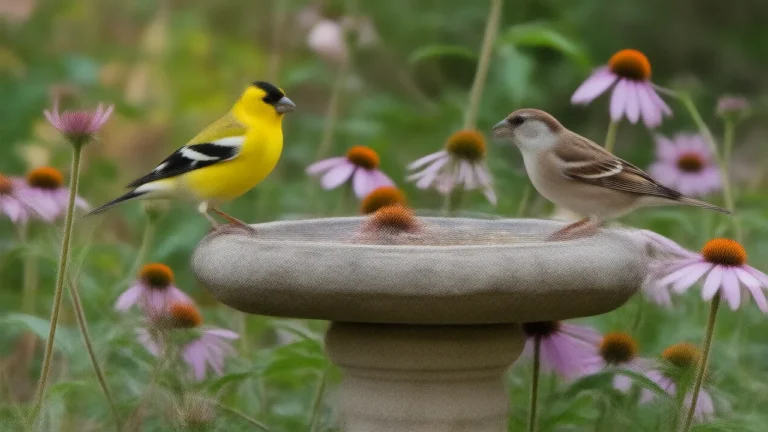
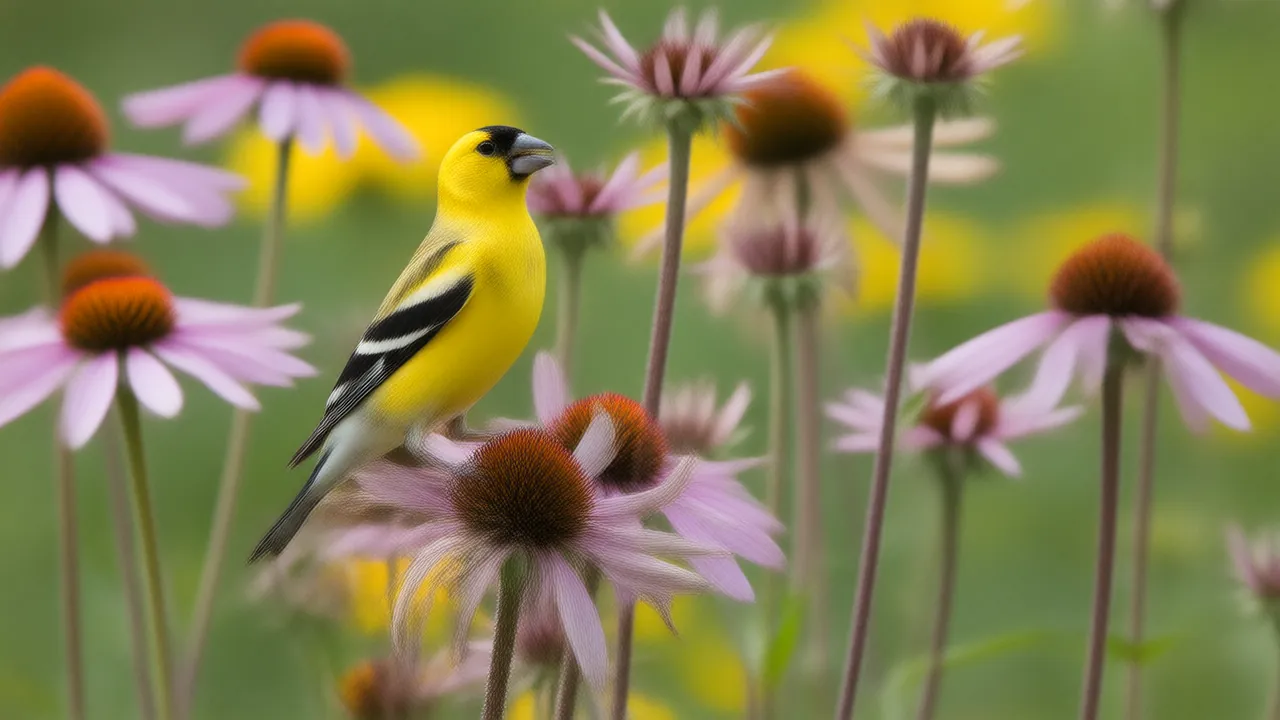
- Purple coneflower. Goldfinches perch on the dried cones and pick out the seeds from late summer into winter. See do goldfinches eat coneflower seeds.
- Sunflowers. Any variety. Leave the heads standing, or cut them once the backs turn brown and hang them up.
- Zinnias and cosmos. Easy annuals from seed. Let the last flowers of the season dry on the plant.
- Black-eyed Susans, coreopsis and native asters. Reliable seed crops in late summer and fall.
- Native thistles. They supply seed and the soft down goldfinches line their nests with. Avoid invasive thistles, which are listed as noxious weeds in many states.
- Birch and alder trees. Their small seeds carry goldfinches through winter in many northern areas.
- A patch of dandelions. Leave a corner unmown in spring and watch goldfinches work the seed heads.
The single most important step is not cutting these plants back in fall. Leave the dried seedheads standing through winter; they look tidier than you might expect under frost, and they feed goldfinches for months.
Why goldfinches seem to disappear
- They're still there, in winter clothes. In fall, males lose their bright yellow and turn olive-brown like the females. Many people assume the goldfinches left when they simply changed color; see goldfinch winter plumage.
- Stale or moldy seed. A frequent cause. Nyjer that is clumped, dusty or damp gets ignored.
- Plenty of wild food. In late summer, when flowers and weeds are loaded with seed, feeder visits drop.
- Flocks on the move. Winter flocks roam widely, so numbers swing from week to week, and some northern birds shift south. Whether yours stay is covered in do goldfinches migrate.
- A hawk in the area. A Cooper's or Sharp-shinned Hawk hunting the yard can empty it of small birds for days.
Water and a quick start plan
Goldfinches drink and bathe often. A shallow bird bath, 1 to 2 inches deep, within sight of the feeder gives them another reason to stop, and a heated bath keeps them coming in freezing weather.
- Hang a nyjer tube or mesh feeder near your existing feeders.
- Fill it only a third to half full at first, so the seed stays fresh while they discover it.
- Add a second feeder of hulled sunflower chips.
- Put a bird bath where the birds can see it from the feeders.
- Plant coneflowers, zinnias and sunflowers in a sunny bed, and plan to leave them standing in fall.
Questions people ask
What is a goldfinch's favorite food?
At feeders, fresh nyjer and hulled sunflower chips. In the garden, the seeds of coneflowers, sunflowers, thistles, zinnias and similar flowers.
Why are goldfinches ignoring the nyjer feeder?
The seed is often stale, damp or caked in the tube. Empty it, clean the feeder, and refill with a small amount of fresh nyjer.
Do goldfinches stay all winter?
In much of the northern and central US, yes, but in drab olive-brown plumage that is easy to overlook. Across the South they arrive as winter visitors.
When do goldfinches nest?
Late in the season, mostly from July into September, when thistles and other summer flowers are full of seed and down.
Written by the Backyard Birdcam team with AI assistance. Found something we got wrong? Email shop@smarternewsnow.com and we will fix it. How we write our guides.