Quick answer
Birds survive winter with insulation and fuel. They fluff their feathers to trap warm air, build fat during the day and burn it overnight, and shiver to make heat. They roost out of the wind in tree cavities, nest boxes and dense evergreens. Some lower their body temperature at night to save energy, and chickadees, nuthatches and jays hide food in fall to find later.
In this guide
- Are birds cold in the winter?
- Feathers: why birds puff up in winter
- Fat, food and shivering: fuel for the night
- Shelter: where birds spend winter nights
- Safety in numbers: winter flocks and routines
- What makes winter hardest for birds
- How your yard can help birds through winter
- Sources and editorial verification
Birds survive winter by holding on to heat and burning fuel all night. A small songbird fluffs its feathers into a thick coat, eats almost constantly during the short day to build a layer of fat, and spends the night in a sheltered spot, shivering and burning that fat to stay warm. Some species also lower their body temperature at night or hide food in fall to find later.
It is a narrow margin, especially for the smallest birds. A chickadee weighs less than half an ounce, and on a long, frigid night it can use up much of the fat it gained that day. That is why the hours around dawn and late afternoon are so busy at winter feeders.
Are birds cold in the winter?
Birds feel the cold, and small ones lose heat fast. Most songbirds run a body temperature of around 104°F or a little higher, several degrees warmer than ours, and a tiny body has a lot of surface for its size, so heat leaks away quickly on a windy, freezing day.
What keeps them alive is equipment and behavior. The birds that stay north for the winter, such as chickadees, titmice, nuthatches, woodpeckers, cardinals, jays and juncos, are built for it. Most of the birds that could not cope, especially insect-eaters like warblers and flycatchers, simply leave in fall.
Feathers: why birds puff up in winter
Feathers are superb insulation. Next to the skin sits a layer of soft, fluffy down; over it lie the overlapping contour feathers that give a bird its shape and shed wind and water. After the late-summer molt, most birds head into winter with a fresh, full coat.
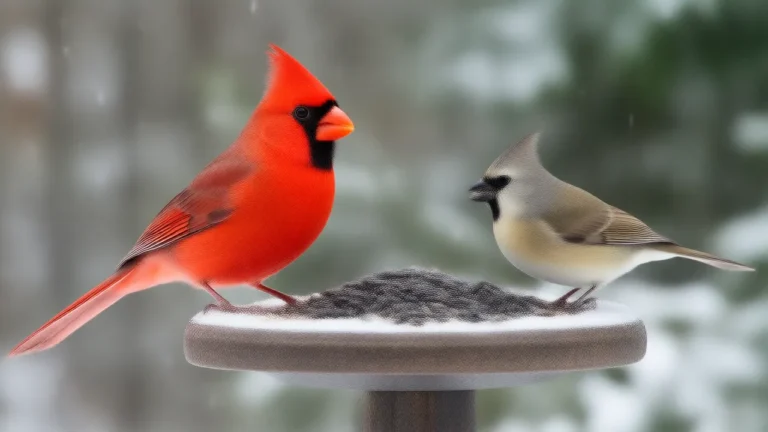
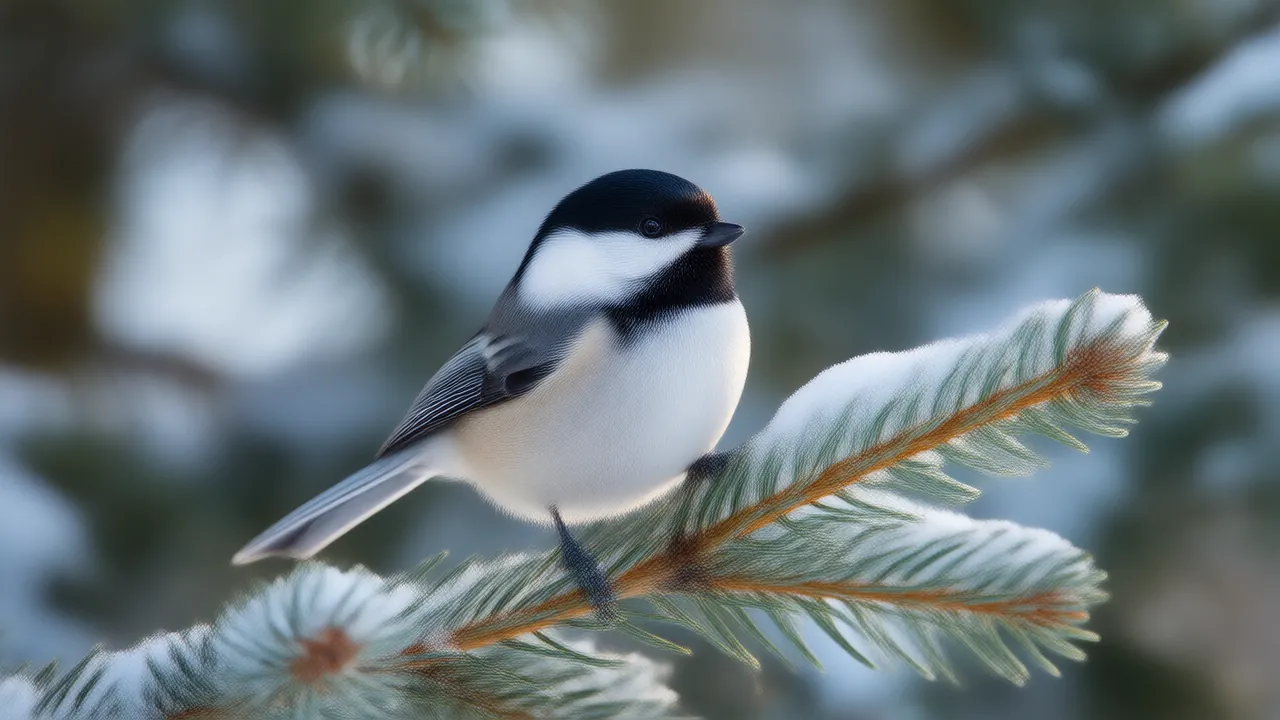
When a bird fluffs up, it raises those feathers and traps pockets of still air between them. That air, warmed by the body, does the insulating. It is why a cardinal or chickadee on a bitter morning can look like a round ball with a beak. The bird is not getting fatter; it is turning its feathers into a down jacket.
Birds add a few more tricks:
- Tucking in. A resting bird turns its head and pushes its bill into the feathers on its back, and often pulls one leg up into its belly feathers or sits down over both feet.
- Cold feet by design. Bird legs and feet are mostly bone, tendon and scaly skin, with little muscle to keep warm. The arteries running down the leg lie right against the veins coming back up, so warm blood heading down heats the cold blood returning. The feet run cool, just above freezing, and the body loses very little heat through them. That is how a duck can stand on ice.
- Clean, oiled feathers. Birds preen constantly, spreading oil from a gland near the base of the tail. Clean, well-arranged feathers insulate far better than matted ones, which is one reason birds keep bathing in winter.
A fluffed-up bird is usually just a cold bird. One that stays puffed up on a mild afternoon, sits still with its eyes half closed and lets you walk close may be sick. The guide to why birds fluff up covers the difference.
Fat, food and shivering: fuel for the night
Feathers slow heat loss, but a bird still has to make heat, and that takes food. On a cold winter day, small birds spend most of the daylight hours eating. They build fat through the day and burn it overnight, so the first meal after dawn is urgent and the last one before dusk sets them up for the night ahead.
Shivering
Birds shiver to make heat, just as people do, using the big flight muscles in the chest. A chickadee tucked into a tree hole on a winter night may shiver for hours. It is hard work, and it is exactly what the day's fat is for.
Turning down the thermostat
Chickadees and some other small birds can let their body temperature fall by several degrees at night, a controlled chill that saves a surprising amount of energy. Hummingbirds go further and slip into torpor, a deep overnight shutdown. That matters along the Pacific Coast, where Anna's Hummingbirds stay all winter and ride out frosty nights this way.
Hidden food and a change of diet
Chickadees, titmice, nuthatches and jays hide seeds and nuts in fall and winter, tucking them into bark crevices, under lichen or into the ground, and come back for them later. Chickadees have an excellent memory for their hiding spots, and Blue Jays bury acorns that carry them through lean weeks.
Other birds switch menus. Robins and bluebirds that stay north trade worms and insects for berries and other fruit. Yellow-rumped Warblers can digest the waxy coating on bayberries and wax myrtle, which lets them winter farther north than most other warblers. Woodpeckers keep drilling for insects and larvae hidden in bark and dead wood all winter long.
Shelter: where birds spend winter nights
Getting out of the wind matters as much as feathers. Wind strips away the layer of warm air a bird traps, so a sheltered roost can make the difference on the coldest nights.
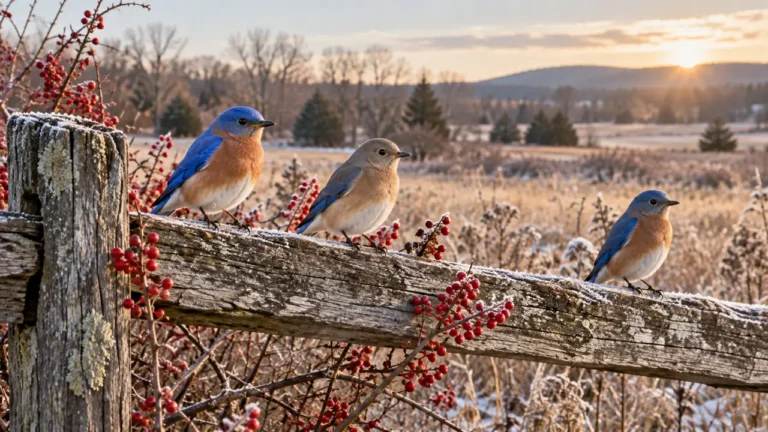
- Cavities and boxes. Woodpeckers, chickadees, titmice, nuthatches and bluebirds roost in tree holes and nest boxes. Eastern Bluebirds sometimes pile several birds into one box to share warmth.
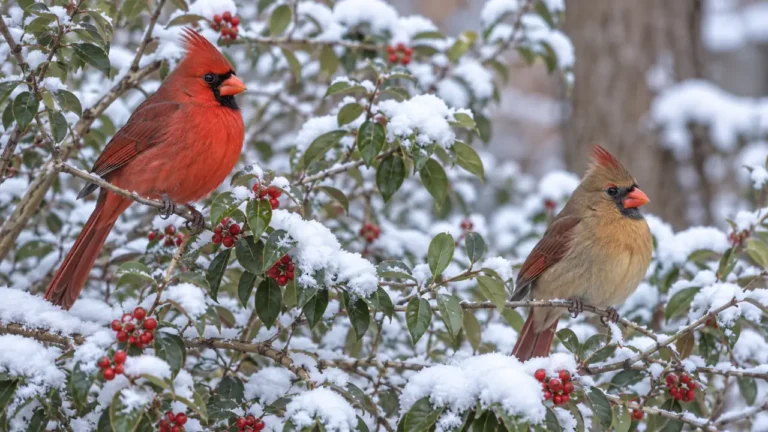
- Dense evergreens and tangles. Cardinals, juncos, sparrows and doves roost deep in spruce, pine, cedar, holly and thick vines, out of the wind and hidden from owls.
- Snow. Common Redpolls and Ruffed Grouse can burrow into soft snow and roost inside it, where the temperature stays steadier than in the open air.
- Buildings. Sparrows, starlings, wrens and others tuck into eaves, dense ivy, vents and sheltered corners of porches and barns.
The guide to where birds sleep at night goes into more detail on roosting.
Safety in numbers: winter flocks and routines
In winter, many small birds join mixed flocks. A typical eastern flock might hold chickadees, titmice, a nuthatch or two, a Downy Woodpecker and a few kinglets or a Brown Creeper, moving through the woods together. More eyes find more food and spot hawks sooner, and the chickadees' alarm calls are heeded by the whole group.
Birds also make use of the sun. On a cold, clear morning, watch for birds perched on the sunny side of a tree or fence, feathers fluffed, soaking up warmth before they start feeding in earnest.
What makes winter hardest for birds
Most birds handle steady cold well. The dangerous stretches are the ones that cut off food or soak feathers:
- Ice storms glaze seeds, buds and bark, sealing food away for days.
- Deep snow buries the seeds that juncos, sparrows and doves find on the ground.
- Long cold snaps give birds night after night of heavy fuel use, with little chance to rebuild reserves.
- Late winter is often leaner than early winter, because natural seed and fruit have been picked over for months.
These are the moments when a well-stocked feeder and open water help the most.
How your yard can help birds through winter
Birds use many food sources and do not depend on any one feeder. Still, a reliable yard makes a real difference in hard weather. Here is what counts most:
- Offer high-energy food. Black oil sunflower, sunflower hearts, suet and peanuts are rich in fat. Scatter white millet on a tray or a swept patch of ground for juncos and sparrows. See what to feed birds in winter for a full list.
- Fill feeders before storms and in the late afternoon, so birds can fuel up before a long night. Brush snow off platforms after it falls.
- Keep water open. A heated bird bath gives birds a drink without the energy cost of eating snow. Never add antifreeze, salt or any chemical to keep water from freezing. More on water for birds in winter.
- Add shelter. Evergreen shrubs, a brush pile or your Christmas tree, propped near the feeders after the holidays, give birds cover from wind and hawks. Leave perennials and seed heads standing until spring.
- Put up a roost box. A winter roosting box has its entrance near the bottom, so warm air stays trapped inside, and perches inside for several birds. Mount it facing away from the prevailing winter wind.
- Keep cats indoors, especially around feeders where birds gather on the ground.
Sources and editorial verification
Editorial boundary for How Do Birds Survive Winter? Feathers, Fat and Shelter: Cold tolerance, torpor, roosting and food caching vary by species and condition; avoid turning a general physiological example into a universal threshold. Check linked sources and the responsible local authority again before acting because product documentation, disease conditions, wildlife rules and seasonal observations can change.
- Cornell Lab of Ornithology — checked for feather insulation.
- Cornell Lab of Ornithology — checked for species identification.
- Cornell Lab of Ornithology eBird Science — checked for modeled seasonal abundance.
- US Fish and Wildlife Service — checked for native plants.
Questions people ask
Are birds cold in the winter?
They feel the cold and small birds lose heat quickly, but the species that stay north are well equipped. Fluffed feathers, fat reserves, shivering and sheltered roosts keep them going through freezing nights.
Why do birds puff their feathers in winter?
Raising the feathers traps pockets of air that the body warms, which works like a down jacket. A bird that stays puffed up and sluggish on a mild day may be sick, though.
Where do birds go at night in winter?
Into tree cavities, nest boxes, dense evergreens, thick vines and sheltered corners of buildings. A few species, such as redpolls and grouse, burrow into soft snow.
Do birds need feeders to survive winter?
No. Birds use many natural food sources and do not rely on one feeder. Feeders help most during ice storms, deep snow and long cold snaps, when natural food is hard to reach.
Written by the Backyard Birdcam team with AI assistance. Found something we got wrong? Email shop@smarternewsnow.com and we will fix it. How we write our guides.