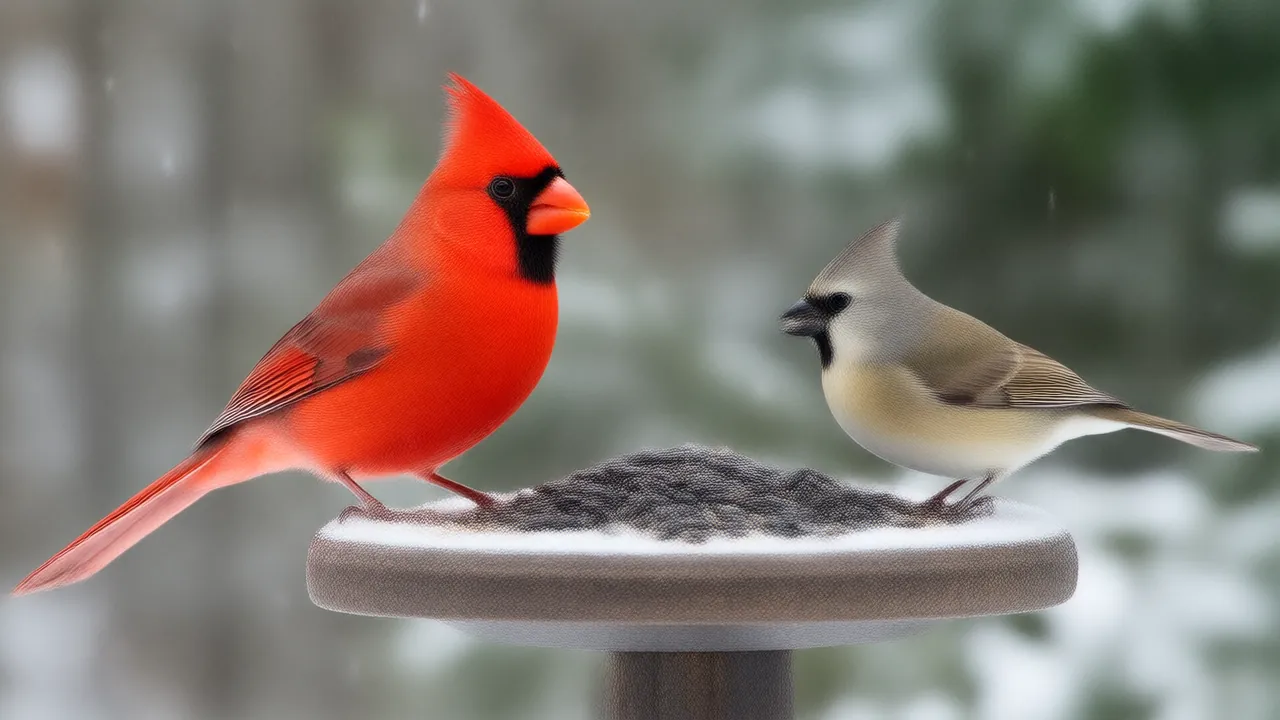
Quick answer
Feed birds high-energy foods in winter: suet, black oil sunflower, shelled unsalted peanuts, nyjer for finches, and white millet scattered low for juncos and sparrows. Fill feeders by dawn and top them up in early afternoon, provide open water, and clean feeders about every two weeks, since crowded winter feeders spread disease. Skip bread, salty foods and bacon grease.
In this guide
Feed birds high-fat, high-energy foods in winter: suet, black oil sunflower, shelled peanuts and nyjer, plus white millet scattered low for juncos and sparrows. Small birds burn through their fat reserves on long, cold nights, and these foods help them refuel fast in the short daylight hours.
Add a source of open water, keep feeders clean and dry, and fill them early in the morning and again in the afternoon. That covers the bulk of what winter birds need from a backyard.
Should you feed birds in winter?
Yes. Winter is when feeding helps birds most. Insects are dormant or hidden, snow and ice cover seeds on the ground, and days are short, so birds have less time to find more food than they need at any other time of year. A small songbird such as a chickadee has to eat enough during the day to get through a long, freezing night.
Feeders do not make wild birds dependent. Birds that visit feeders keep foraging for natural food and visit several places in a day. Still, a feeder that suddenly goes empty during a hard freeze or a snowstorm is a lost meal at the worst moment, so try to keep feeders filled steadily through cold snaps. The guide to helping birds in a snowstorm covers what to do when bad weather hits.
What do birds eat in winter naturally?
Understanding the natural winter diet explains which feeder foods work best. In the wild, winter birds eat:
- Seeds from wildflowers, weeds, grasses and trees: coneflowers, sunflowers, goldenrod, ragweed, birch and pine.
- Berries and fruit that hang on the branch into winter, such as winterberry, sumac, juniper and crabapple. Robins, bluebirds, cedar waxwings and mockingbirds depend on them.
- Dormant insects, eggs and pupae hidden in bark crevices, dug out by woodpeckers, nuthatches, chickadees and brown creepers.
- Stored food. Chickadees, titmice, nuthatches and jays hide seeds and nuts in fall and retrieve them through the winter.
Leaving seed heads standing in the garden through winter adds natural food alongside your feeders. The guide to birds that stay all winter shows who you are likely feeding.
The best winter bird foods
| Food | Birds it feeds | Best way to offer it | Winter notes |
|---|---|---|---|
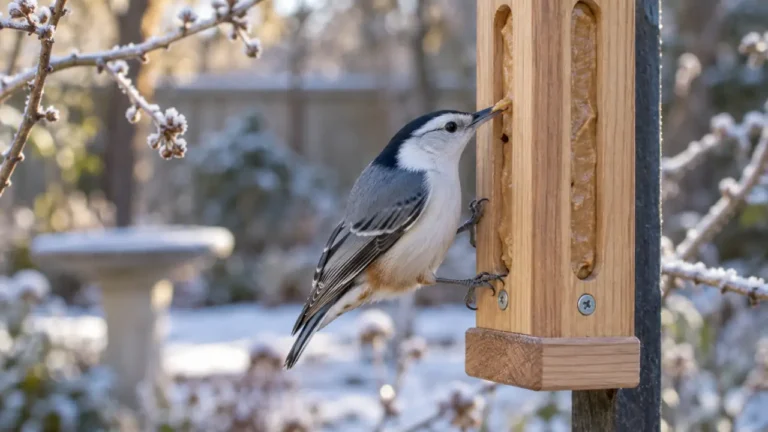
| Suet | Woodpeckers, nuthatches, chickadees, titmice, wrens, creepers | Suet cage, tail-prop feeder or suet log | Pure fat energy; raw suet stays firm in cold weather |
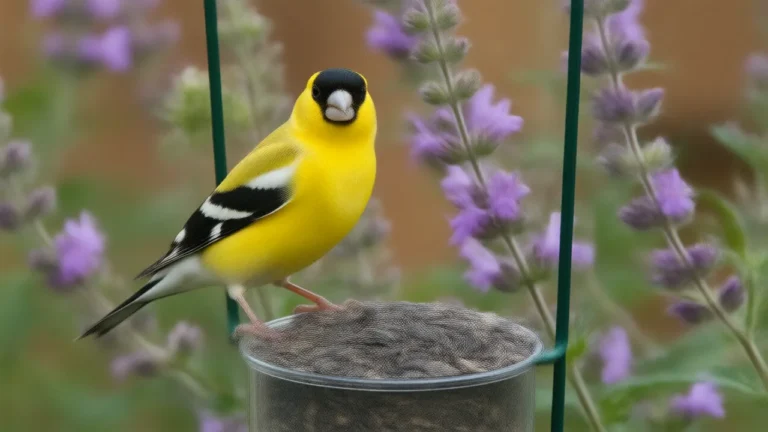
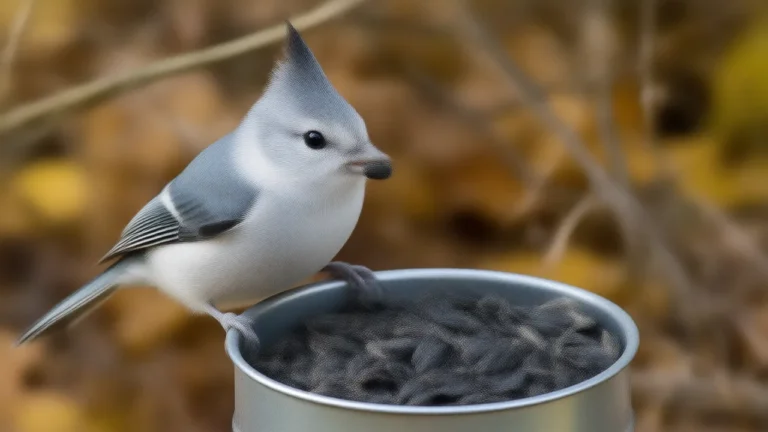
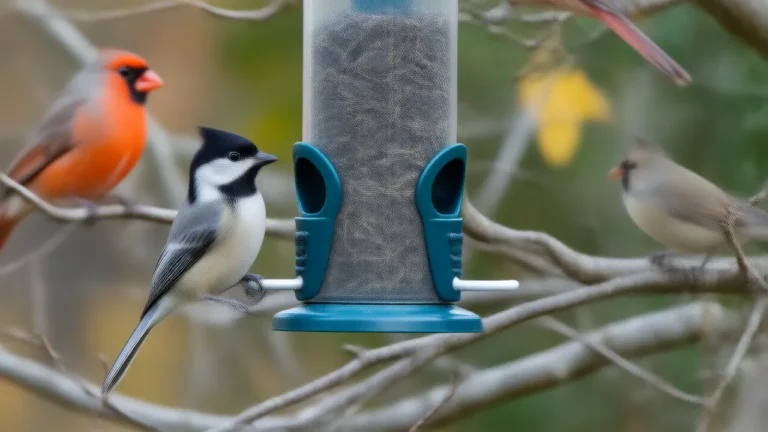
| Black oil sunflower | Cardinals, chickadees, titmice, nuthatches, finches, jays, grosbeaks | Tube, hopper or platform | High in oil with a thin shell; the best all-round seed |
| Hulled sunflower chips | The same birds as whole sunflower | Covered tube or hopper | No hulls on the snow; spoils faster if it gets wet |
| Peanuts | Jays, woodpeckers, titmice, chickadees, nuthatches | Mesh peanut feeder or tray | Shelled, raw or dry-roasted, unsalted |
| Nyjer | Goldfinches, pine siskins, redpolls | Finch tube or mesh sock | Keep it dry; it molds quickly when wet |
| White proso millet | Juncos, native sparrows, mourning doves | Low platform or packed snow | Scatter a little at a time for ground feeders |
| Safflower | Cardinals, chickadees, titmice, doves, house finches | Hopper or platform | Squirrels and grackles are less keen on it |
| Fruit and mealworms | Robins, bluebirds, mockingbirds, wrens | Open dish or tray | Chopped apple, softened raisins, dried mealworms |
Do not offer grapes or raisins where a dog can reach the tray or dropped food. The ASPCA warns that grapes and raisins can injure dogs; a raised feeder does not prevent dropped pieces from being eaten. Plain apple or berries are alternatives.
If you only put out two foods, make them black oil sunflower and suet. Together they feed most of the birds that stay through winter across the US. The guide to what birds eat suet covers the suet types, and you can also make your own with the homemade suet recipe.
What shows up, and so what you go through fastest, depends on where you live. In northern states, some winters bring flocks of pine siskins, common redpolls or evening grosbeaks down from Canada, and they empty nyjer and sunflower feeders quickly. In the South, winter is when many northern birds arrive: dark-eyed juncos and white-throated sparrows feed on the ground, and yellow-rumped warblers and ruby-crowned kinglets may visit suet or suet dough.
Cracked corn draws doves, jays and juncos cheaply, but it also brings squirrels, blackbirds and deer, and it molds fast when wet. Offer it in small amounts that will be finished the same day.
A daily winter feeding routine
Birds feed hardest at two times of day in winter: early morning, to replace what they burned overnight, and mid-to-late afternoon, to store up fat before dark. Time your chores around those peaks:
- Evening or first light: fill seed feeders and check the suet, so food is waiting at dawn.
- Morning: brush snow off platform feeders and the tops of feeders, and knock out any ice around the ports.
- After a snowfall: clear or tramp down a patch of snow near cover and scatter millet and sunflower there for juncos, sparrows and doves.
- Midday: check water. Refresh it or make sure the heater is working.
- Early to mid-afternoon: top up sunflower and suet before the late-day feeding rush.
Water is easy to overlook in winter, but in freezing weather it can be harder for birds to find than food. A heated bird bath or a bath de-icer keeps it open. See water for birds in winter for options.
Winter feeding risks and hygiene
Crowding and disease
Winter brings large feeder crowds, and shared food, water and surfaces can spread disease. House Finches can develop eye disease, while winter finch flocks are sometimes affected by infections such as salmonellosis. Clean seed and suet feeders every week or two and more often in wet weather or heavy use; remove spoiled food and ground debris. If birds look sick or you find a dead bird, keep pets away, avoid handling the bird and contact your state wildlife agency for reporting and local instructions. CDC currently advises a two-week feeder and birdbath pause after finding sick or dead birds. Local outbreak advice and restart instructions take precedence; a calendar alone does not establish that feeding is safe again. See Project FeederWatch's cleaning guidance for disease-specific precautions.
Wet and moldy seed
Snow blows into feeders and melts on sunny days, then refreezes into clumps. Wet seed can grow mold that is harmful to birds. Use feeders with roofs or covers, fill them with only a few days' worth of seed, and choose trays with screened bottoms that drain. Throw out any seed that has clumped, smells musty or looks discolored.
Foods to skip
- Bread and baked goods: they fill birds up without the fat and nutrients they need.
- Salted or seasoned foods: salted nuts, chips and leftovers.
- Bacon grease and meat drippings: they carry salt and can go rancid. Use plain suet instead.
- Cheap mixes full of red milo, wheat and oats: most feeder birds kick them to the ground, where they attract rodents.
Hawks and windows
Busy winter feeders attract Cooper's and sharp-shinned hawks. Keep shrubs or evergreens nearby so small birds have cover. Treat reflective windows near the feeding area with an exterior pattern or screen; distance alone is not a reliable collision safeguard. See Cornell's current window guidance.
What to do this week
- Put up a suet feeder and a feeder of black oil sunflower if you do not already have them.
- Add a tray or a cleared patch of ground for millet, for the juncos and sparrows.
- Set up open water with a heated bath or de-icer if your area freezes.
- Check feeder roofs and drainage before the next storm, and store extra seed in a sealed metal can.
- Put a feeder-cleaning day on the calendar every two weeks until spring.
Questions people ask
What is the best food to feed birds in winter?
Black oil sunflower and suet feed the widest range of winter birds. Add shelled peanuts, nyjer for finches, and white millet on the ground for juncos and sparrows.
Is it OK to feed birds in winter?
Yes. Winter is when feeding helps birds most, because natural food is scarce and cold nights use up their energy. Keep feeders clean and filled steadily, especially through storms.
What do birds eat in the winter in the wild?
Seeds from wildflowers, weeds and trees, berries that stay on the branch, dormant insects and eggs hidden in bark, and seeds and nuts that some birds stored in fall.
Do birds need water in winter?
Yes. Birds drink and bathe all winter, and open water can be hard to find when everything freezes. A heated bird bath or a de-icer keeps water available.
When is the best time of day to feed birds in winter?
Have food out by dawn, when birds are hungriest after a cold night, and top feeders up in early afternoon before the late-day feeding rush.
Written by the Backyard Birdcam team with AI assistance. Found something we got wrong? Email shop@smarternewsnow.com and we will fix it. How we write our guides.