Quick answer
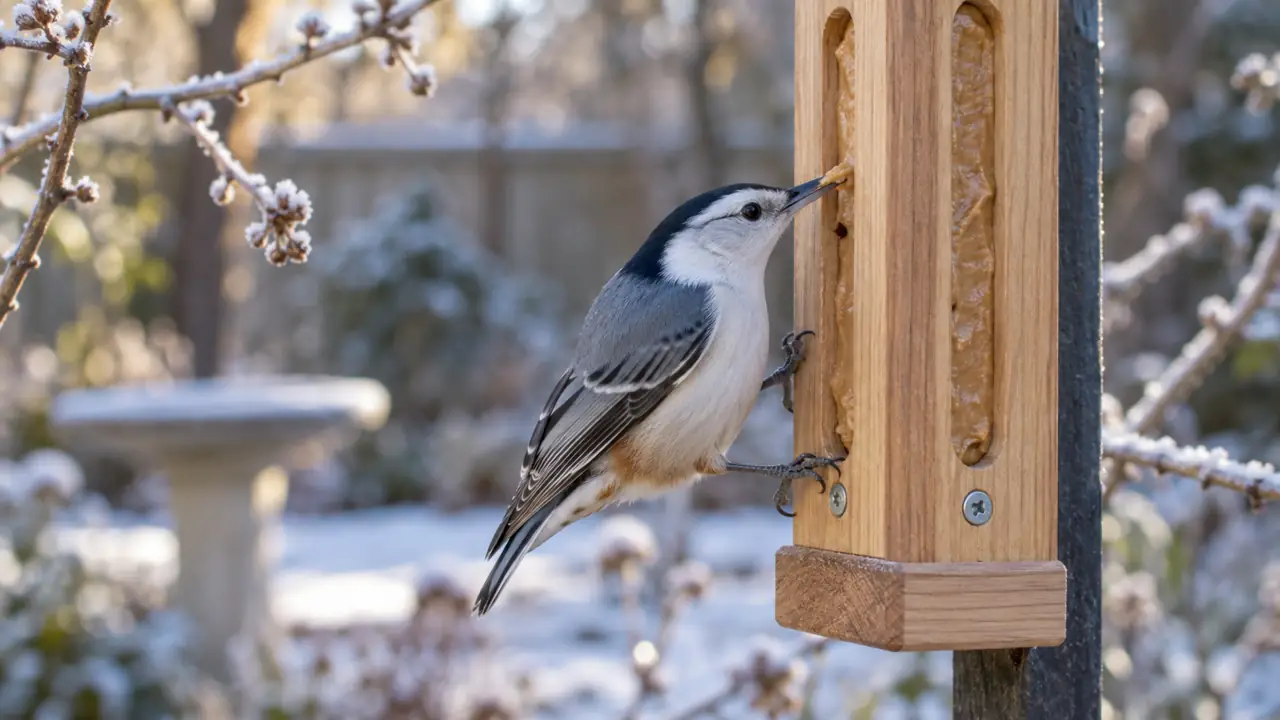
Yes, some wild birds can eat peanut butter, especially in cool weather when it stays firm. Offer only a small amount of a plain, fresh product or a bird-formulated alternative in a clean, purpose-made feeder. Remove it if it becomes soft, oily, wet, stale or moldy, and do not use it as a complete diet.
In this guide
- When peanut butter is a reasonable bird food
- Choose the simplest suitable product
- How to offer it
- Can birds choke on peanut butter?
- Should you mix in cornmeal?
- Why soft or oily food is a problem
- Which birds may try peanut butter?
- Peanut butter versus suet
- Hygiene and wildlife conflicts
- Bottom line
- Sources and verification
Wild birds can eat a small amount of peanut butter, but the safe answer depends on the product, temperature and feeder. Cornell Lab says grocery-store peanut butter can be offered when cool weather keeps it fairly hard. It should not remain outside long enough to become soft, oily or rancid.
Use peanut butter as an occasional high-energy food, not a complete diet. A small, firm portion in a clean, purpose-made feeder is easier to manage than a thick smear on bark, a railing or a pinecone.
When peanut butter is a reasonable bird food
| Condition | Decision | Reason |
|---|---|---|
| Cold or cool weather; food remains firm | Offer a small amount | Cornell identifies this as the safer condition for grocery peanut butter. |
| Warm sun; food is soft or shiny with separated oil | Remove it | Soft food can adhere to a bird, and separated oil can foul feathers. |
| Wet, dirty, stale, sour-smelling or moldy food | Discard it | Peanut products can support bacterial or fungal growth. |
| Unknown ingredients or a heavily salted, sweetened or flavored spread | Choose another product | It adds uncertainty without improving the food for birds. |
| Repeated visits by squirrels, raccoons, bears or rodents | Stop and correct the attractant | A calorie-rich food can reward unwanted wildlife as well as birds. |
Temperature matters more than the month on a calendar. A shaded winter feeder in a mild region may warm quickly, while a cold spring day may keep the food firm. Inspect the food itself.
Choose the simplest suitable product
For a U.S. backyard in cool weather, Cornell says peanut butter sold for human consumption is safe to offer while it remains fairly hard. Read the ingredient panel and favor a plain product without added flavors or coatings. If the label is complicated or the food is unusually salty or sweet, use a different option.
A low-salt peanut butter made specifically for birds is a conservative alternative. RSPB guidance favors a bird formulation in a purpose-designed feeder and advises replacing it before it becomes stale or moldy. That recommendation is useful as a handling standard even though the named products and feeding calendar are UK-specific.
Do not use recalled, expired or visibly damaged food. Peanut ingredients also need dry storage. Cornell's seed guide notes that peanuts can harbor aflatoxins and should be kept dry and used promptly.
How to offer it
- Start with a clean feeder that holds the food in a shallow recess or small cup.
- Add only a thin, bird-sized portion that can be consumed promptly.
- Place the feeder in shade and away from direct midday sun.
- Check the food at least daily and after rain or an abrupt temperature change.
- Remove leftovers before refilling; never press new food over an old layer.
- Wash, rinse and dry the feeder before the next serving.
A feeder is preferable to smearing food across a tree trunk. It controls the portion, limits the surface area that collects dirt and can be taken indoors for cleaning. Follow the feeder maker's material-specific instructions as well as the site's bird-feeder cleaning guide.
Can birds choke on peanut butter?
Cornell's winter feeding guide reports no evidence for the familiar choking claim. That does not make soft or oily food suitable: keep portions small and firm, clean the feeder and remove deteriorating food.
Should you mix in cornmeal?
Audubon describes a peanut-butter-and-cornmeal mixture, and Cornell explains that cornmeal can make peanut butter grittier. That does not make the mixture maintenance-free. Cornell warns that corn and peanuts can both support bacterial and fungal growth, so a mixture requires frequent cleaning and prompt removal.
Do not improvise a large batch and leave it outside for days. If you use a mixture, make a small portion, keep it firm and discard any remainder that becomes wet, soft, oily, dirty or moldy.
Why soft or oily food is a problem
Warmth can soften peanut butter and cause oils to separate. Cornell cautions that oil adhering to a nesting bird's feathers can be transferred to eggs and interfere with their pores. That is why the practical stop rule is simple: if the food will not stay firm, take it down.
A feeder under a roof is not automatically safe in hot weather. Air temperature, sun angle and the feeder's material can still warm the food. A bird formulation is not an exemption from the firm-food rule: follow its label and remove it if it softens, separates oil or deteriorates.
Which birds may try peanut butter?
Peanut butter tends to appeal to birds that already use peanuts or suet, including woodpeckers, nuthatches, chickadees and jays. It will not attract every species, and a bird that ignores it is not missing a necessary food.
For a broader habitat plan, see how bark, mature trees and feeder choices work together in the guide to attracting nuthatches. The woodpecker habitat guide likewise treats suet or peanuts as one part of the yard, not the whole strategy.
Peanut butter versus suet
Both are energy-dense foods that can interest similar birds. A commercial suet cake is usually easier to portion and place in a cage, while peanut butter demands close attention to texture and oil separation. Neither should be allowed to become rancid.
The comparison guide to birds that eat suet helps match a food and feeder to the visitors already present. Offer variety through natural habitat and appropriate seed rather than relying on a single fatty food.
Hygiene and wildlife conflicts
Remove droppings and food residue, and let the feeder dry fully before refilling. If sick birds appear, stop feeding and follow current local wildlife-agency advice; a peanut-butter feeder is not exempt from disease precautions.
Rich food may also attract mammals. If a camera shows repeated visits by rodents, raccoons, skunks or bears, remove the food instead of escalating with repellents. Never use peanut butter as outdoor bait around a bird-feeding station.
Bottom line
Birds can eat peanut butter when it is fresh, firm and offered sparingly in a clean feeder. Cool weather is the clearest setting for plain grocery peanut butter under Cornell guidance. A low-salt bird formulation is another option, but it must also remain firm and fresh. Remove any food that becomes soft, oily, wet, stale or moldy.
Sources and verification
- Cornell Lab: suet, mealworms and other bird foods — cool-weather use, texture, oil separation, rancidity and cleaning cautions.
- Cornell Lab: guide to bird-seed types — dry storage, prompt use and aflatoxin context for peanuts.
- National Audubon Society: Bird Feeding Basics — peanut-butter-and-cornmeal context and general winter feeding practice.
- RSPB: peanut butter for birds — low-salt bird formulation, purpose-made feeder and replacement guidance.
Questions people ask
Can birds choke on peanut butter?
Cornell's winter feeding guide reports no evidence for the familiar choking claim. Keep portions small and firm; remove food if it becomes soft, oily or spoiled.
What kind of peanut butter can birds eat?
A plain, fresh grocery product can be offered sparingly in cool weather under Cornell guidance. A low-salt bird formulation is another option, but it must also remain firm and fresh. Follow the label and remove soft or oily food.
Can you put peanut butter directly on a tree?
A clean, purpose-made feeder is easier to inspect, remove and wash than bark. It also keeps the food in a controlled portion instead of leaving residue on a living tree.
Which birds may visit peanut butter?
Woodpeckers, nuthatches, chickadees, jays and some other suet-eating birds may investigate it, but local species and individual birds differ.
Written by the Backyard Birdcam team with AI assistance. Found something we got wrong? Email shop@smarternewsnow.com and we will fix it. How we write our guides.