Quick answer
Cracked corn can be a useful, inexpensive food for doves, quail, sparrows and several larger birds, but it is not the best all-purpose seed. Offer a small amount on a clean, well-drained platform and remove leftovers the same day in rain or high humidity. Never feed red-dyed planting corn, wet corn, moldy corn, buttered popcorn or flavored corn.
In this guide
- Which birds eat cracked corn?
- Why cracked corn is not a universal feeder seed
- The main safety issue: keep corn dry
- Use a platform, not a damp tube
- Never feed red-dyed planting corn
- What about popcorn?
- Control waste and mammal visits
- When to choose another seed
- Use observation to set the portion
- Bottom line
- Sources and verification
Cracked corn can be good for some wild birds, particularly doves, quail and sparrows that readily feed on or near the ground. It is inexpensive and easy for many larger birds to handle. It is not, however, the best all-purpose food for every backyard.
Corn is highly vulnerable to moisture and aflatoxin contamination, and it also attracts mammals and several bird species people may not want to subsidize. The safe approach is a small, dry serving on a clean, well-drained platform.
Which birds eat cracked corn?
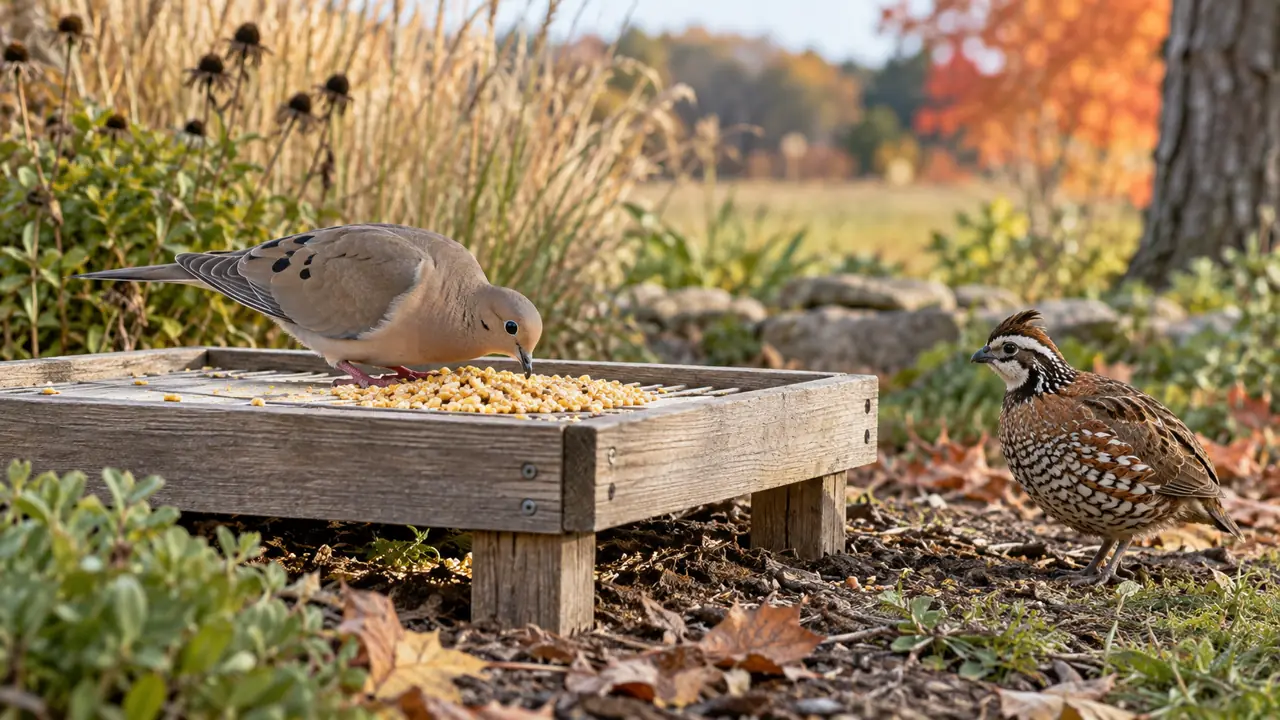
Project FeederWatch specifically lists doves, quail and sparrows as cracked-corn visitors. Cornell's broader seed guide also names grouse, pheasants, turkeys, cardinals, grosbeaks, crows, ravens, jays, ducks and cranes among corn-eating birds.
| Likely visitor | How it feeds | Practical setup |
|---|---|---|
| Mourning Doves | Walk and pick food from a flat surface | Low, stable platform with drainage |
| Quail | Forage on or near the ground, usually close to cover | Small daytime serving where local conditions allow |
| Native sparrows | Scratch and pick small pieces | Modest portion mixed only when the birds actually use it |
| Jays, crows and ravens | Take larger pieces readily | Expect fast consumption and competition |
| Turkeys and other game birds | Feed from the ground | Check local rules and avoid creating a wildlife congregation |
If the target species ignores corn, stop offering it. The site's bird-seed comparison can help match sunflower, millet, nyjer, safflower and other foods to the birds actually present.
Why cracked corn is not a universal feeder seed
Black-oil sunflower attracts a wider range of common feeder birds. Cracked corn is more specialized and often ends up on the ground, where moisture, droppings and wildlife traffic are harder to control.
Corn also appeals to House Sparrows, cowbirds, starlings, geese, raccoons, deer and bears. That does not make corn inherently bad, but it means the decision should be based on the whole feeding station, not just the birds in the camera frame.
If a serving increases unwanted wildlife, crowding or waste, remove it. Do not keep adding food in the hope that a target bird will eventually outcompete the animals already taking it.
The main safety issue: keep corn dry
Cornell identifies corn as the bird food most likely to be contaminated with aflatoxins, toxic compounds produced by certain fungi. You cannot make suspect corn safe by drying, rinsing or mixing it with fresh seed.
- Buy clean bird food from a reputable source.
- Do not buy corn packaged in a way that has trapped visible moisture.
- Store it in a closed, dry container away from pests.
- Offer no more than birds can consume promptly.
- Discard corn that is wet, musty, clumped, discolored or moldy.
- Rake or collect old pieces instead of covering them with a new serving.
During rain or very humid weather, Cornell advises limiting corn to what birds can consume in a day. The guide to keeping birdseed dry covers storage and feeder protection in more detail.
Use a platform, not a damp tube
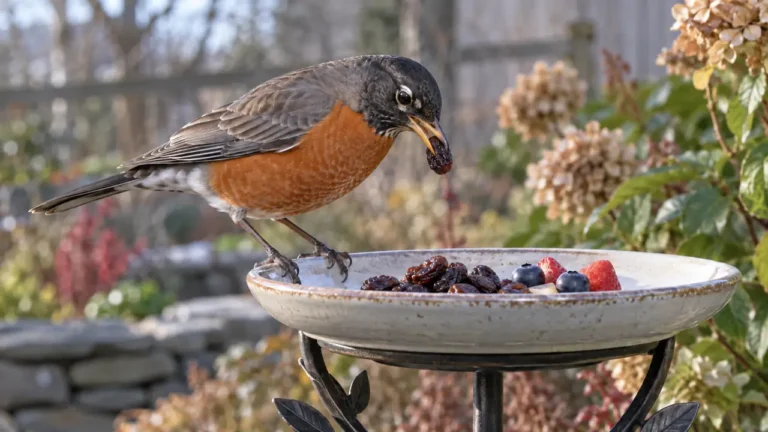
Cornell recommends offering small amounts on tray feeders and warns against tube feeders that can harbor moisture. A suitable platform has drainage, no deep corners that retain food and a surface you can empty completely.
- Start with a clean, dry platform.
- Add one small scoop rather than filling the tray.
- Watch which species use it and whether food remains.
- Remove leftovers before rain, overnight wildlife activity or a refill.
- Clean and dry the platform whenever food becomes wet or soiled.
The platform-feeder guide explains drainage, placement and the birds that need a broad landing surface.
Never feed red-dyed planting corn
Do not confuse bird food with seed corn sold for planting. Cornell warns never to offer corn covered in red dye because planting seed may be treated with fungicides and the dye serves as a warning.
When the origin is uncertain, do not feed it. A bargain bag without clear food labeling is not worth the risk.
What about popcorn?
Buttered popcorn and microwave popcorn are not bird food. They may contain salt, fats, flavorings and other ingredients, and popped corn spoils quickly. Plain cracked corn sold for bird feeding is the relevant product.
Whole dry corn and cracked corn also are not interchangeable for every bird. Project FeederWatch notes that whole corn is particularly attractive to Wild Turkeys and ducks, while smaller cracked pieces are more accessible to doves, quail and sparrows.
Control waste and mammal visits
A low feeder can be reached by rodents, raccoons and other mammals. Use a small daytime portion, collect spills and stop if nighttime visitors develop a routine. Never leave a large pile as a wildlife diversion.
For Mourning Doves, food works best with appropriate open ground and nearby escape cover. The guide to attracting Mourning Doves puts corn in that wider habitat context.
When to choose another seed
Choose black-oil sunflower for a broad mix of common feeder birds. Choose white proso millet when native ground-feeding sparrows and juncos are the target and local conditions make ground feeding appropriate. Choose hulled sunflower when shells are the main concern, while remembering that exposed kernels spoil faster.
Cracked corn makes sense when corn-eating species are present, the feeder stays dry and you can manage leftovers. It makes less sense in a wet site, bear country, a yard with persistent rodents or a station already crowded by unwanted birds.
Use observation to set the portion
A camera can help answer two practical questions: which animals take the corn, and how much remains at the end of the feeding period? Review several representative days rather than judging from one short visit. A dove taking a few pieces does not justify a trayful if most of it remains for mammals overnight.
Reduce the portion until little or no food is left, and record rain, humidity and non-target visitors. The camera cannot show invisible contamination or prove that old corn is safe, so a clean-looking image never overrides the discard rules. If the feeding station cannot keep corn dry and recoverable, choose a different food or pause that offering.
Bottom line
Cracked corn is a useful specialty food, not a default seed. Offer a small amount to doves, quail or other known corn-eaters on a draining platform. Keep it dry, discard leftovers promptly, and stop if it attracts wildlife you should not subsidize. Never use red-dyed planting corn, wet or moldy corn, buttered popcorn or flavored products.
Sources and verification
- Cornell Lab: guide to bird-seed types — corn-eating species, aflatoxin risk, dry handling, planting-corn and feeder cautions.
- Project FeederWatch: food types — cracked-corn visitors and platform or ground presentation.
- Cornell Lab: unwanted yard visitors — food-attractant and wildlife-conflict context.
Questions people ask
What birds eat cracked corn?
Project FeederWatch lists doves, quail and sparrows among likely visitors. Cornell also notes that cardinals, grosbeaks, crows, ravens, jays and several game birds may eat corn.
Can you scatter cracked corn on the ground?
A small amount may attract ground feeders, but a draining platform is easier to inspect and clean. Never leave more than birds can consume promptly.
Is cracked corn safe when it gets wet?
No. Wet corn should be discarded. Cornell identifies corn as especially vulnerable to aflatoxin contamination and advises keeping it dry and raking up old food.
Can birds eat popcorn or planting corn?
Do not offer buttered or microwave popcorn. Never offer red-dyed corn intended for planting because the dye can mark fungicide-treated seed.
Written by the Backyard Birdcam team with AI assistance. Found something we got wrong? Email shop@smarternewsnow.com and we will fix it. How we write our guides.