Quick answer
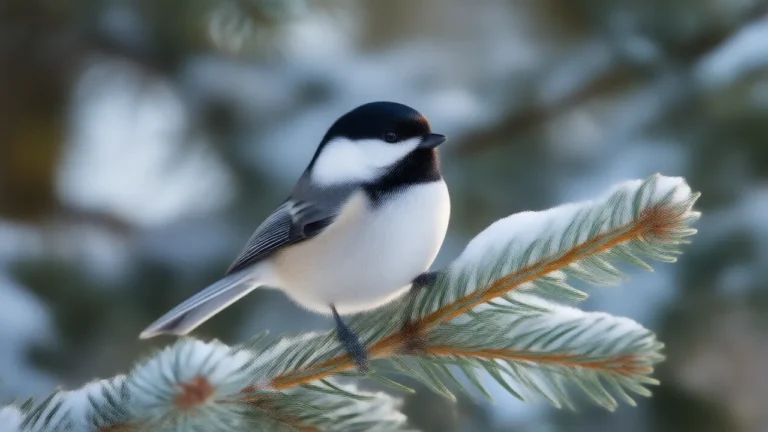
Most chickadees do not make a predictable long-distance migration every spring and fall. Carolina Chickadees are resident. Adult Black-capped Chickadees stay put, although young birds sometimes make irregular irruptive movements. Mountain Chickadees may move to lower elevations in winter, and Boreal Chickadees occasionally move south when food is scarce. Identify the species before interpreting a seasonal change in feeder visits.
In this guide
- The short answer depends on the chickadee
- Migration, dispersal and irruption are different
- Why resident chickadees still seem to come and go
- Winter flocks are evidence of survival, not migration
- Mountain movement is often vertical
- How to test what your camera is showing
- What not to infer from a feeder
- Bottom line
- Sources and verification
Do chickadees migrate? Most North American chickadees are year-round residents, not predictable long-distance migrants. The important exception is movement that depends on species and age: young Black-capped Chickadees can irrupt, Mountain Chickadees may shift to lower elevations, and Boreal Chickadees sometimes move south.
That is why a winter chickadee should not be labeled “migratory” from one feeder visit. First identify the species, then separate migration from local flock movement, dispersal and irruption.
The short answer depends on the chickadee
| Species | Cornell's movement description | What a backyard observer may notice |
|---|---|---|
| Black-capped Chickadee | Adults do not migrate; young birds sometimes make irregular irruptions. | Familiar adults remain, while unfamiliar young birds may appear beyond the usual area in some years. |
| Carolina Chickadee | Resident. | Seasonal changes are usually local use of habitat and food, not a north-south journey. |
| Mountain Chickadee | Resident, with possible movement to lower elevations in winter. | A downslope shift can change which yards see birds without being a continent-scale migration. |
| Boreal Chickadee | Resident, but sometimes moves south, apparently in response to food scarcity. | Numbers south of the core boreal range may rise in an irruptive year. |
| Chestnut-backed Chickadee | Resident; some move to higher elevations in summer. | Seasonal changes may involve elevation rather than a regular southward journey. |
| Mexican Chickadee | Nonmigratory; some local downslope movement is poorly understood. | Do not assign a fixed winter route. |
| Gray-headed Chickadee | Nonmigratory; mainly young birds occasionally move south of breeding areas in fall or winter. | Occasional movement is not an annual timetable. |
These chickadees have different ranges and movement patterns. The table is not permission to identify every small black-capped bird by geography alone. Use plumage, voice, habitat and range together; the Black-capped versus Carolina Chickadee guide covers the two easily confused eastern species.
Migration, dispersal and irruption are different
Migration is a regular seasonal movement between regions. A bird may repeat it every year, and a population can have recognizable breeding and nonbreeding ranges. That is not the usual pattern for adult Black-capped or Carolina Chickadees.
Dispersal is a bird leaving its natal area or breeding territory to establish elsewhere. Young birds often disperse even when the adults of the species are resident. A one-time movement by a juvenile is not automatically migration.
An irruption is irregular. Numbers and distances can differ sharply from one winter to the next. Cornell notes that young Black-capped Chickadees sometimes move large distances in years when chickadee reproduction is high. Cornell describes those movements as irruptions rather than migration.
Boreal Chickadees offer another version of the pattern. They are classified as nonmigratory residents, yet some make southward movements that Cornell associates with food scarcity. The trigger, timing and reach are not reliable enough to treat this as an annual timetable.
Why resident chickadees still seem to come and go
Resident does not mean motionless. Chickadees move through home ranges, join winter flocks, follow temporary food and adjust routes around shelter and disturbance. A camera aimed at one feeder samples only a few square feet of that activity.
- Natural food changes: seeds, dormant insects and insect eggs can draw a flock away from a feeder.
- Flock routes change: a group may visit several feeding patches in a different order or at different times.
- Weather changes timing: birds may concentrate feeding into safer or more productive parts of the day.
- Predators and disturbance matter: a hawk, cat, noisy project or exposed approach can suppress visits.
- Feeder condition matters: wet, stale or obstructed food can make another source more attractive.
Before concluding that the birds left the region, clean and inspect the station, then compare several days of footage at the same times. The guide to attracting chickadees explains food, cover and nest-box support without assuming a feeder controls their movement.
Winter flocks are evidence of survival, not migration
Black-capped Chickadees form winter flocks that can include nuthatches, kinglets, woodpeckers and creepers. Seeing more birds together in winter can make a yard look like a migration stop, but a mixed flock may be circulating within a shared local area.
Watch the direction and interval of visits. A flock that returns on a loose circuit is behaving differently from a sustained stream of birds passing overhead. Individual chickadees often take one item and leave, so a sequence of short visits may represent the same few birds rather than dozens of migrants.
The visual comparison in Chickadee versus Nuthatch helps separate two birds that commonly travel in the same winter flock.
Mountain movement is often vertical
Mountain Chickadees are residents of western conifer forests, but Cornell notes that they may move to lower elevations in winter. This is an elevational shift: a bird can leave a high slope for milder or more productive habitat without traveling to a distinct southern wintering range.
For a mountain homeowner, that movement can feel dramatic. A species absent near the house in summer may become regular after snow deepens upslope. Record elevation, weather and first and last observation dates instead of calling the change migration by default.
How to test what your camera is showing
- Confirm the species. Save a clear side view and note the cap, cheek, throat, wing pattern and voice.
- Check the range map. A year-round color supports residency; it does not guarantee the same individual remains in one yard.
- Review a consistent time window. Compare morning and afternoon clips across at least several days.
- Count conservatively. Use simultaneous birds, individually recognizable plumage or time-separated sequences; do not count every clip as a new bird.
- Compare regional observations. eBird weekly abundance maps can show whether a change is local or widespread, but they cannot identify an individual in your yard.
The bird-migration tracking guide explains how to combine radar and community observations. Radar is most useful for broad nocturnal migration, not proving that one chickadee changed territories.
What not to infer from a feeder
A bird appearing after a storm did not necessarily fly hundreds of miles. A week without clips does not prove it migrated. A sudden cluster of visits does not prove an irruption. Each observation has competing explanations, and a feeder camera has a narrow field of view.
Also avoid treating every chickadee as a Black-capped Chickadee. Carolina, Mountain, Boreal, Chestnut-backed and other chickadees differ in distribution and movement. A species-level identification is part of the evidence, not a decorative label added afterward.
Bottom line
Most chickadees are residents. Carolina Chickadees stay year-round. Adult Black-capped Chickadees do not migrate, though young birds may make irregular irruptions. Mountain Chickadees can move downslope in winter, and Boreal Chickadees sometimes move south when food is scarce. Identify the species and compare repeated observations before assigning a movement label.
Sources and verification
- Cornell Lab: Black-capped Chickadee range map — adult residency and juvenile irruptions.
- Cornell Lab: Carolina Chickadee range map — resident status.
- Cornell Lab: Mountain Chickadee range map — residency and possible winter movement to lower elevations.
- Cornell Lab: Boreal Chickadee range map — residency and occasional food-related southward movement.
- Cornell Lab: bird migration basics — migration terminology and observation context.
Questions people ask
Do Black-capped Chickadees migrate south for winter?
Adult Black-capped Chickadees do not make a regular seasonal migration. Young birds sometimes travel far during irregular irruptions, especially in years of high reproduction.
Where do chickadees go in winter?
Many remain within their year-round range and join winter flocks. Mountain Chickadees may move to lower elevations, while some Boreal Chickadees occasionally move south.
Why did chickadees disappear from my feeder?
Natural food, flock routes, weather, disturbance, predators or feeder condition can change local visits. A gap at one feeder is not enough to prove migration.
Is an irruption the same as migration?
No. Migration is regular and seasonal. An irruption is an irregular movement that varies greatly among years and is often linked to changing food or population conditions.
Written by the Backyard Birdcam team with AI assistance. Found something we got wrong? Email shop@smarternewsnow.com and we will fix it. How we write our guides.