Quick answer
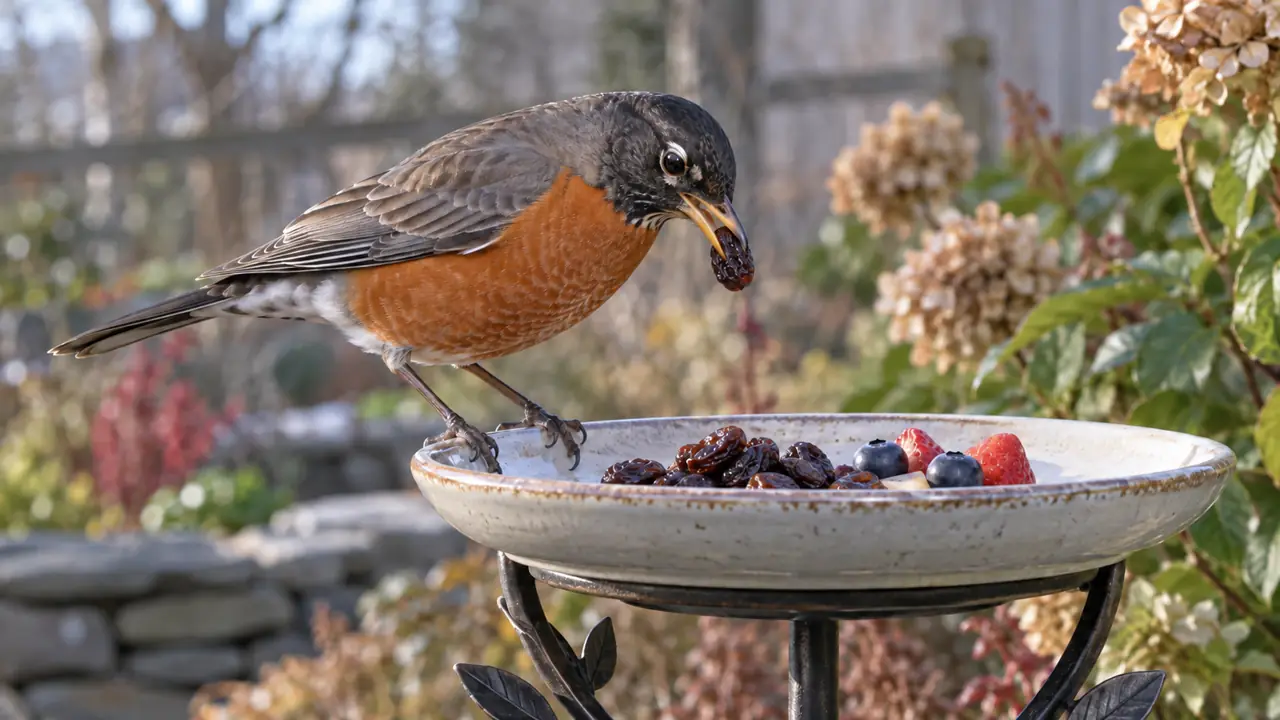
Yes. Some wild birds can eat plain raisins or currants after the fruit has been soaked in water and softened. Offer only a small, preservative-free portion on a clean, raised tray and remove leftovers promptly. Do not use sweetened, salted, flavored or moldy fruit, and do not offer raisins where a dog could reach them because grapes and raisins can cause kidney injury in dogs.
In this guide
- Which birds may eat raisins?
- How to prepare raisins for wild birds
- Choose plain fruit, not a snack mix
- Raisins or fresh fruit?
- Keep raisins away from dogs
- Use a clean, raised fruit tray
- Remove fruit before it spoils
- Natural fruit is the better foundation
- Use the camera to prevent waste
- Bottom line
- Sources and verification
Some wild birds can eat raisins and other dried fruit, but preparation matters. Cornell, Audubon and RSPB guidance recommends soaking raisins or currants in water first so they are soft. Project FeederWatch also recommends choosing fruit without preservatives.
Offer only a small portion on a clean, raised tray and remove leftovers promptly. Do not put raisins where a dog can reach them: grapes and raisins can cause kidney injury in dogs.
This guide concerns supplemental food for free-living backyard birds in the United States. It does not establish a diet for a pet parrot, a nestling or an injured bird.
Which birds may eat raisins?
Fruit-eating birds are the most likely visitors. Cornell names robins, thrushes, waxwings, bluebirds, mockingbirds, catbirds and tanagers among species that may come to a feeder for fruit. Local diet and individual experience still matter, so not every bird will recognize a raisin as food.
| Bird group | Fruit-feeder behavior | Better long-term support |
|---|---|---|
| Robins and thrushes | May take softened fruit from a broad tray | Native berry plants, leaf litter and pesticide-free foraging areas |
| Waxwings | May arrive in mobile flocks when fruit is available | Fruit-bearing native trees and shrubs |
| Bluebirds | Some individuals investigate fruit; many prefer insects or mealworms | Open habitat, nest sites and appropriate insect food |
| Mockingbirds and catbirds | Often notice exposed fruit on a tray | Dense shrubs and a sequence of native fruits |
| Tanagers and orioles | May use fruit seasonally | Native trees, insects and species-appropriate seasonal foods |
Raisins are an optional supplement, not something wild birds need. The broader guide to fruit that birds eat compares fresh berries, grapes, apples, oranges and other choices.
How to prepare raisins for wild birds
- Choose plain raisins or currants with no preservatives, coating, salt or added flavor.
- Place only the amount you plan to serve in clean water.
- Soak until the fruit is visibly plump and soft, then drain it.
- Cut unusually large pieces when necessary for a small target bird.
- Place a small portion on a clean, shallow, raised tray.
- Discard leftovers rather than returning soaked fruit to storage.
Audubon describes an overnight soak, while Cornell and RSPB state the practical goal: soften the dried fruit. The texture matters more than turning one soaking time into a universal rule. Use clean water and serve the fruit soon after preparation.
Choose plain fruit, not a snack mix
Do not use trail mix, cereal, baked goods or chocolate- or yogurt-coated raisins. Those products combine dried fruit with salt, added sugar, oils, chocolate, dairy coatings, nuts or other ingredients that the bird-feeding sources are not recommending.
Project FeederWatch's fruit guidance recommends grapes and raisins without preservatives. Choose plain fruit rather than treating a snack mix or coated product as equivalent.
Read the entire ingredient list. A package labeled “natural” can still include oil, sweetener or preservative. When the ingredients are unclear, offer a known bird food instead.
Raisins or fresh fruit?
Dried raisins need softening before serving. Fresh or thawed berries and plain apple pieces are other options for fruit-eating wild birds. Choose a small serving you can inspect and remove promptly; raisins are not essential.
Keep raisins away from dogs
Grapes and raisins can cause kidney injury in dogs. The ASPCA grape and raisin warning identifies tartaric acid as the suspected toxic component. A dropped raisin can be as relevant as food left in the tray.
- Do not offer raisins in a yard, patio or balcony a dog can access.
- Do not scatter dried fruit on the ground.
- Collect every dropped piece and all leftovers.
- Store the package in a closed cabinet or pet-resistant container.
- After suspected ingestion, contact a veterinarian or pet poison-control service promptly rather than waiting for symptoms.
This is one situation where moving a feeder higher is not enough. Birds can drop food, and a dog can find it later.
Use a clean, raised fruit tray
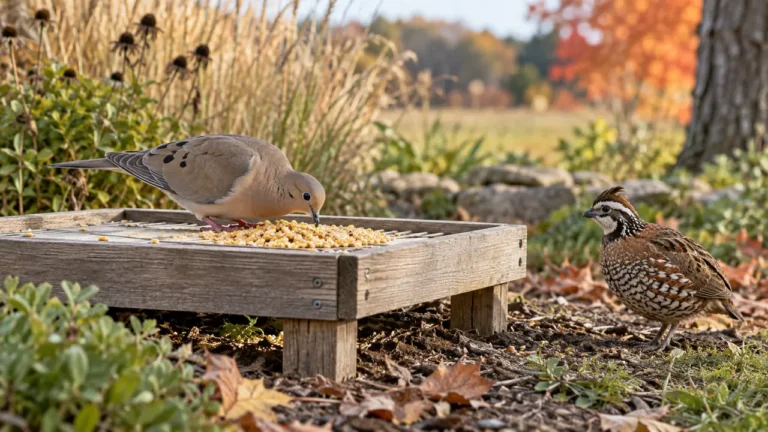
A shallow platform makes fruit visible and lets larger fruit-eating birds stand comfortably. It also lets you remove the entire serving and wash the contact surface. Choose drainage and avoid deep corners that trap wet residue.
The site's platform-feeder guide explains size, drainage and placement. Keep fruit separate from dry seed so moisture from the soaked raisins does not spread through a hopper or tube.
Remove fruit before it spoils
Fruit can deteriorate quickly, especially in warmth, direct sun or rain. Project FeederWatch says moldy fruit should be discarded because some molds create toxins harmful to birds. RSPB likewise advises a small amount that is eaten quickly.
Discard the serving when it becomes wet from weather, slimy, fermented, sour-smelling, dirty or moldy. Do not rinse spoiled fruit and put it back. Wash the tray, rinse it thoroughly and allow it to dry before the next portion.
The warning signs in the moldy birdseed guide also apply to the feeder environment, but moist fruit generally needs even faster removal.
Natural fruit is the better foundation
Native fruiting plants provide food in a form birds encounter naturally and can support insects, nesting cover and shelter at the same time. Select plants appropriate to the region rather than planting an invasive ornamental for its berries.
For robins, a varied yard with moist soil, leaf litter and fruiting plants is more useful than a permanent bowl of raisins. See the guide to attracting robins for that habitat-first approach.
Use the camera to prevent waste
A feeder camera can show whether the target birds use the fruit and how quickly. Review the quiet hours too: mammals or insects may be consuming more than the birds. Reduce the serving until it disappears promptly without leaving dropped pieces.
A camera cannot verify freshness, detect invisible toxins or make a dog-accessible setup safe. Inspect the food directly every day it is offered.
Bottom line
Wild birds can eat plain raisins or currants after the fruit is soaked and softened. Serve a small, preservative-free portion on a clean raised tray, remove leftovers promptly and discard anything wet, dirty or moldy. Do not offer raisins where a dog can reach the tray or fallen food.
Sources and verification
- Cornell Lab: suet, mealworms and other bird foods — fruit-eating species, soaking raisins and fruit-spoilage context.
- Project FeederWatch: food types — preservative-free raisins, likely visitors and mold caution.
- National Audubon Society: Bird Feeding Basics — soaking raisins or currants before using a table feeder.
- RSPB: feeding birds near you — small portions, soaking, spoilage and pet-access cautions.
- ASPCA Animal Poison Control: people foods to avoid — grape and raisin toxicity to dogs.
Questions people ask
Should raisins be soaked before feeding birds?
Yes. Cornell, Audubon and RSPB guidance recommends soaking dried raisins or currants in water to soften them before offering a small portion.
Which birds may eat raisins?
Robins, thrushes, waxwings, bluebirds, mockingbirds, catbirds and tanagers are among the fruit-eating birds that may investigate fruit feeders.
Can you feed birds sweetened or flavored dried fruit?
Choose plain fruit without preservatives, added sugar, salt, chocolate, yogurt coating or seasoning. Project FeederWatch specifically recommends grapes and raisins without preservatives.
Are raisins safe around dogs?
No accessible amount should be treated as safe. Grapes and raisins can cause kidney injury in dogs. If a dog may reach the feeder or fallen food, do not offer them; contact a veterinarian or pet poison-control service after suspected ingestion.
Written by the Backyard Birdcam team with AI assistance. Found something we got wrong? Email shop@smarternewsnow.com and we will fix it. How we write our guides.