Quick answer
To make homemade bird seed cakes, dissolve one envelope of unflavored gelatin in half a cup of hot water, whisk in three-quarters of a cup of flour and three tablespoons of corn syrup, then stir in about four cups of birdseed. Pack the mix firmly into greased molds, chill it until set, and let the cakes air-dry for a day or two before hanging them.
In this guide
- The basic gelatin seed cake recipe
- A flour binder without gelatin, and a winter fat version
- Which seeds to use, and what to leave out
- Molds: cakes, bells, wreaths and cylinders with a hole
- Drying time and storage
- Hanging seed cakes outside: weather and pests
- A holiday batch: making and giving seed cakes
- Sources and editorial verification
Homemade bird seed cakes are seed held together with a simple binder, packed into a mold and dried until firm enough to hang. The most reliable binder is unflavored gelatin with a little flour and corn syrup: it sets hard, holds up in cold weather and leaves nothing harmful behind. A flour-and-water binder works too, as long as you give it longer to dry.
The same mix makes muffin-sized cakes, bells, wreaths, cookie-cutter ornaments and cylinders with a hole through the middle for a cylinder feeder. It takes about twenty minutes of hands-on work, plus drying time.
The basic gelatin seed cake recipe
One batch is roughly enough for a standard muffin tin or a couple of small cylinders.
- 1 envelope (1/4 ounce) unflavored gelatin
- 1/2 cup hot water
- 3/4 cup all-purpose flour
- 3 tablespoons light corn syrup
- 4 cups birdseed (see the seed table below)
- Cooking spray or a little vegetable oil for the molds
- Dissolve the gelatin. Stir the gelatin into the hot water until no grains remain. Let it cool for a minute or two.
- Make the paste. Whisk in the flour and corn syrup until smooth and sticky.
- Add the seed. Pour the paste over the seed in a large bowl and stir until every seed is coated. The mix should clump when squeezed. If it is crumbly, add water a teaspoon at a time.
- Pack it hard. Grease the molds, then press the mix in firmly with the back of a spoon or your fingers. Tight packing is the single biggest factor in a cake that holds together.
- Make the hanging hole now. Push a drinking straw or a greased dowel through each cake before it sets.
- Set and dry. Chill the molds in the refrigerator for a few hours or overnight, then unmold and let the cakes air-dry as described below.
Hot water and a stove are part of this, so if you are making cakes with kids, let an adult handle the gelatin step and hand the cooled mix over for packing.
A flour binder without gelatin, and a winter fat version
No gelatin in the pantry? Mix 3/4 cup flour, 1/2 cup water and 3 tablespoons corn syrup into a paste, stir in 4 cups of seed and pack it the same way. Flour-only cakes set softer and crumble more easily, so make them smaller and give them an extra day or two to dry.
In cold weather you can also bind seed with fat. Melted rendered suet or lard, cooled until it starts to thicken and then mixed with seed, sets into a dense, high-energy cake that woodpeckers and nuthatches love. Fat cakes soften and can turn rancid in warm weather, so save them for the cold months. The guide to homemade suet covers that method in full.
Which seeds to use, and what to leave out
Smaller seeds pack tighter and hold together better than a cake made entirely of large whole sunflower seeds. A mix of big and small works well.
| Seed | Birds it draws | Notes |
|---|---|---|
| Black oil sunflower | Chickadees, titmice, nuthatches, cardinals, finches | The best all-round choice; mix with smaller seed |
| Sunflower hearts or chips | Almost every seed-eater | No shells, so less mess; packs tightly |
| White proso millet | Juncos, sparrows, doves | Small and binds well; ground birds eat the crumbs |
| Safflower | Cardinals, titmice, House Finches | Less popular with squirrels and grackles |
| Chopped unsalted peanuts | Woodpeckers, jays, nuthatches, chickadees | Raw or dry-roasted, never salted or flavored |
Leave out salted or seasoned nuts and seeds, bread crumbs, sugary cereal and anything moldy or stale. Cheap mixes heavy in red milo, wheat and oats are poor value in most regions, because many backyard birds pick around them. For more on what is safe, see foods that are bad for wild birds, and for how each seed performs, types of bird seed.
Molds: cakes, bells, wreaths and cylinders with a hole
Almost any sturdy container works as a mold. Grease it well, or line it with wax or parchment paper, so the cake releases cleanly.
- Muffin tins. The easiest start. Paper liners peel off once the cakes are dry. Push a straw through the middle of each for a hanging hole.
- Cookie cutters. Set them on a sheet of wax paper, pack the mix in, and poke a straw hole near the top. Stars, hearts and bells make good holiday ornaments.
- Bundt or small tube pans. These make a wreath with a ready-made center hole for a ribbon. A large wreath needs the longest drying time of anything here.
- Silicone molds. Easy release and fun shapes, though very thin shapes break easily.
- Bells. Use a greased paper cup or a small bell mold, and bury the knotted end of a twine loop in the mix before it sets.
How to make a cylinder with a hole
Cylinder feeders hold a tall cake on a center rod, so the cake needs a hole straight through it. Line a tall, straight-sided container, such as a clean can or a sturdy plastic cup, with parchment paper. Stand a greased wooden dowel, slightly thicker than your feeder's rod, upright in the center, pack the mix firmly around it, and chill. When the cake has set, twist the dowel out, slide the cylinder free and let it finish drying on its end.
Drying time and storage
Gelatin cakes need a few hours in the refrigerator to set, then usually a day or two of air-drying at room temperature. Flour-only cakes and large shapes, such as wreaths and tall cylinders, often need two or three days. Dry them on a wire rack and turn them once a day so the bottoms dry too.
A finished cake feels hard and dry all the way through, not tacky. Hang it too soon and it will sag, crumble or grow mold. Store extra cakes in a sealed container in the refrigerator or freezer until you need them.
Hanging seed cakes outside: weather and pests
- Rain. Gelatin and flour binders soften when wet. Hang cakes under an eave or porch roof, inside a covered feeder, or beneath a dome baffle.
- Warm, humid weather. Seed cakes can mold in muggy conditions. Make small batches in warm months and throw away any cake that looks fuzzy, discolored or smells musty.
- Freezing weather. Cold is no problem. Gelatin cakes hold up well through winter, which is when birds need the calories most.
- Squirrels. They will happily carry a whole cake away. Hang cakes on a baffled pole or where squirrels cannot jump to them, and sweep up crumbs so they do not draw mice and rats.
- Safe hangers. Use thick jute twine, a ribbon or a wire ornament hook. Skip thin thread, yarn and fishing line, which can tangle feet, and take the leftover string down when the cake is gone.
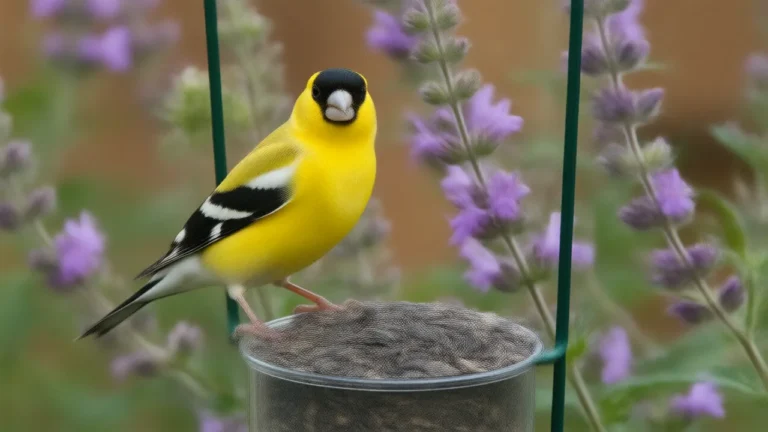
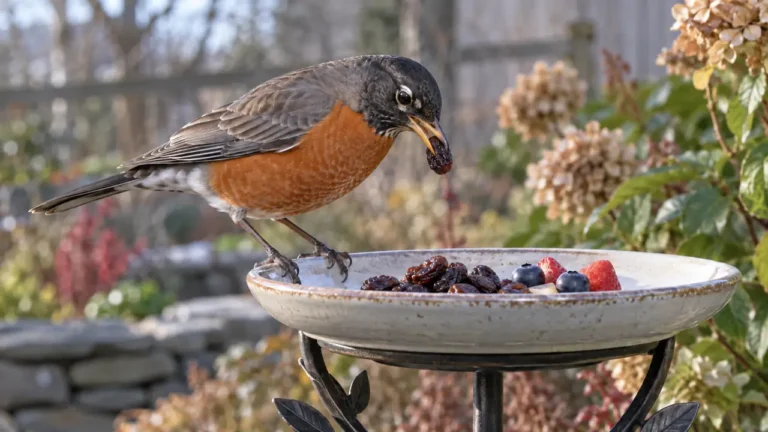
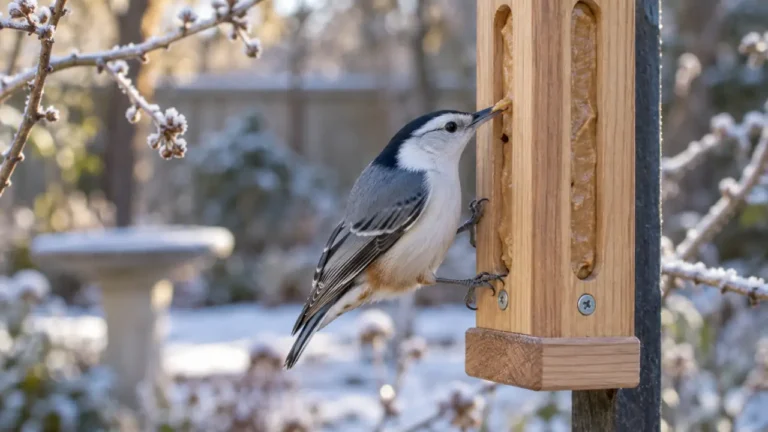
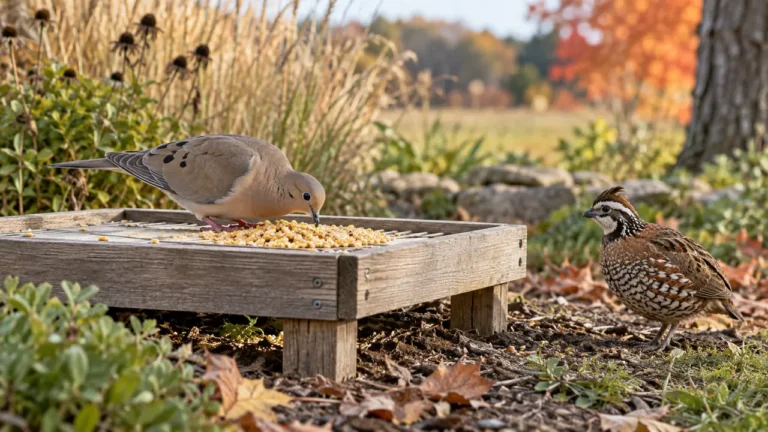
Expect chickadees, titmice, nuthatches, woodpeckers, cardinals, jays and House Finches on the cakes, with juncos, sparrows and doves cleaning up the crumbs underneath.
A holiday batch: making and giving seed cakes
Seed cakes make good homemade gifts and a good project for a cold afternoon. A simple plan:
- Make one gelatin batch per two or three gifts, in cookie-cutter shapes or small cylinders.
- Dry them fully, which is the step people rush.
- Wrap each one in wax paper or a paper bag, not airtight plastic, which can trap moisture.
- Add a tag with hanging tips: under cover, away from squirrels, and toss it if it gets moldy.
Want more ideas along these lines? Try bird seed ornaments for smaller shapes, or a Christmas tree for birds to hang a whole batch outdoors.
Sources and editorial verification
Editorial boundary for Homemade Bird Seed Cakes and Cylinders You Can Hang: A homemade cake is optional supplemental food, not a universal recipe; remove any batch that is rancid, moldy, wet or accessible through an entangling hanger; Food examples are optional supplemental feeding, not a complete or universally suitable diet; avoid spoiled, salty, sweetened or contaminated food and prioritize habitat. Check linked sources and the responsible local authority again before acting because product documentation, disease conditions, wildlife rules and seasonal observations can change.
- National Audubon Society — checked for peanut butter and cornmeal mixture.
- Cornell Lab of Ornithology — checked for peanut butter.
- Cornell Lab Project FeederWatch — checked for seed and food types.
- Cornell Lab Project FeederWatch — checked for responsible feeding basics.
- Cornell Lab of Ornithology — checked for feeder cleaning procedure.
- Cornell Lab of Ornithology — checked for cracked corn.
Questions people ask
How long do homemade bird seed cakes take to dry?
Gelatin cakes set in the refrigerator in a few hours and then need a day or two of air-drying. Flour-only cakes and large shapes such as wreaths or tall cylinders often need two or three days.
Do bird seed cakes need gelatin?
No. A paste of flour, water and corn syrup also binds seed, but the cakes are softer and crumble more easily, so make them smaller and dry them longer.
Can bird seed cakes get wet?
They soften in rain, so hang them under an eave, inside a covered feeder or beneath a dome baffle. Throw away any cake that turns moldy.
How do you make a bird seed cylinder with a hole?
Pack the mix around a greased wooden dowel standing in a lined, straight-sided container. Once it has set, twist the dowel out and let the cylinder finish drying.
Written by the Backyard Birdcam team with AI assistance. Found something we got wrong? Email shop@smarternewsnow.com and we will fix it. How we write our guides.