Quick answer
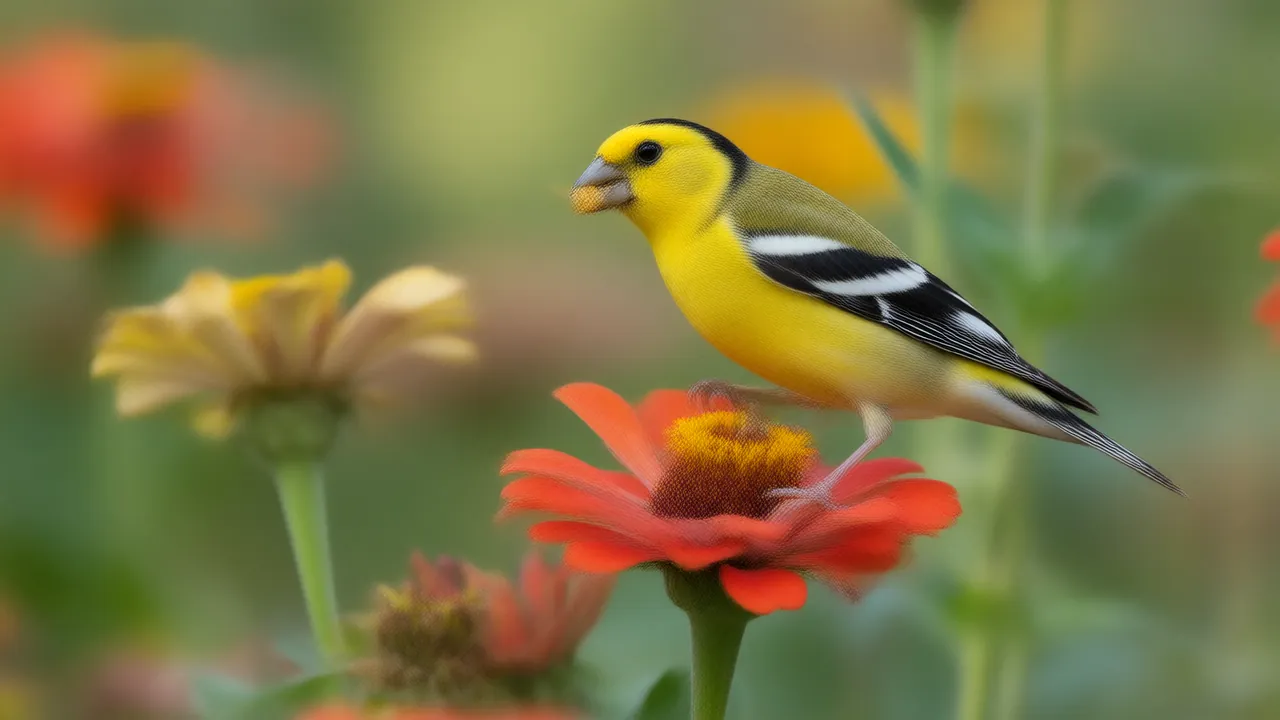
Zinnias are an excellent flower for goldfinches. As the blooms age in late summer, American Goldfinches, and Lesser Goldfinches in the West, pull the petals loose and eat the seeds at their base and in the flower's center. Stop deadheading by late August, leave the plants standing after frost, and the birds will keep feeding on the dried heads into early winter.
In this guide
Zinnias are one of the easiest flowers you can grow for goldfinches. Once the blooms start to age in late summer, American Goldfinches land on them, tug the petals loose and eat the seeds that sit at the base of each petal and in the flower's center. They keep coming back until frost, and after it, as long as dried heads are left standing.
Zinnias grow fast from seed, bloom all summer, and feed butterflies before they feed birds. If you want goldfinches in your yard in fall, a row of zinnias is a cheap, reliable place to start.
Which birds eat zinnia seeds
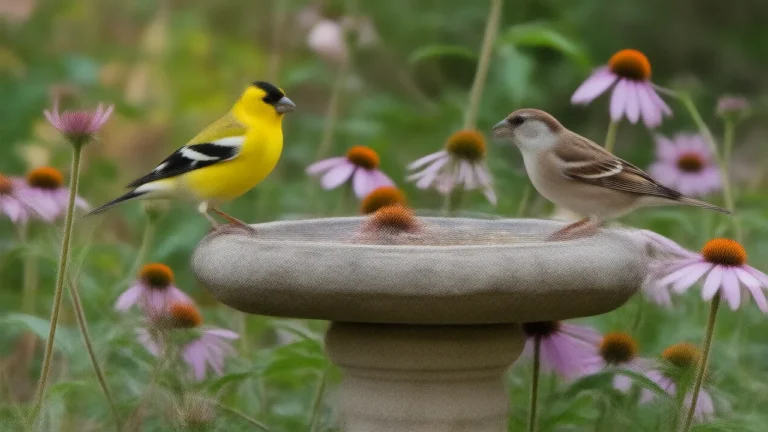
Goldfinches are the main customers. Across most of the country that means the American Goldfinch; in the Southwest and along the West Coast, the smaller Lesser Goldfinch does the same work. Both live mostly on seeds, and both favor the aster family, which includes zinnias, sunflowers, coneflowers and cosmos.
- American Goldfinch. The most frequent visitor. From September on, many look patchy or olive-drab rather than bright yellow, because they are molting into winter plumage.
- Lesser Goldfinch. Smaller than the American Goldfinch, with yellow underparts; males have a black cap and a greenish or black back. Found in the West, the Southwest and much of Texas.
- House Finch. Picks at drying heads now and then. Males have red on the head and breast; females are plain brown and streaky.
- Ground-feeding birds. Native sparrows, and juncos where they spend the winter, pick up seeds that fall under the plants.
Zinnias also draw butterflies all summer, and hummingbirds sometimes check the red and orange blooms, so the same bed works for wildlife from early summer until frost.
What goldfinches do on a zinnia
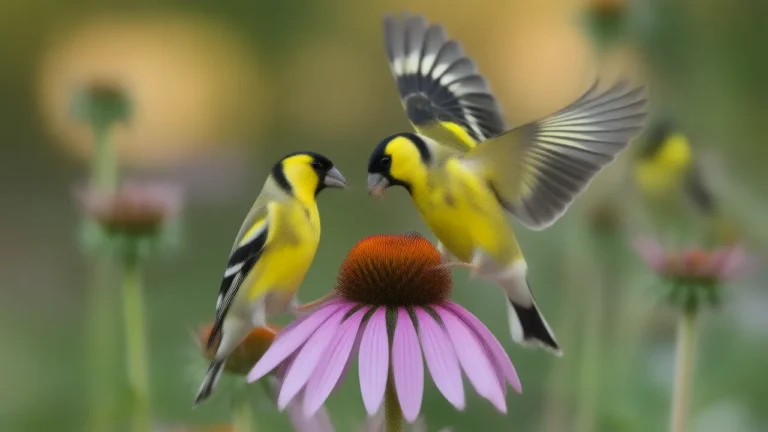
A goldfinch on a zinnia rarely waits for a neat, fully dry seedhead. It perches on the flower or on a stem beside it, grabs a petal, pulls, and eats the seed attached to its base, then drops the petal and reaches for the next. Scattered, half-chewed petals on the ground under your zinnias are a sure sign that goldfinches have found them.
They also pick seeds from the center of the flower, where the small tube-shaped florets set seed as the head ages. Birds often work one plant for several minutes, so a zinnia bed in view of a window gives you long, easy looks.
If goldfinches are tearing up blooms you want for the vase, cut your flowers in the morning and leave the older, fading heads for the birds. Cutting also keeps the plants producing new buds.
When zinnia seedheads are ready
Zinnias usually start blooming about two months after sowing and keep flowering until the first hard frost. Each flower lasts a while, then fades, and seed forms as it ages. You can tell a head is ripening when the petals lose color and dry, the center turns brown, and the head feels papery.
In most regions goldfinches start working zinnias in earnest in late summer and early fall. Timing moves with your climate: in the South and Southwest the season runs longer and later, while in the North the first frost can arrive in September or October and ends the flowering for the year.
Do birds eat zinnia seeds in winter?
Yes, if you leave the plants up. Frost kills zinnias, but the dried heads hold seed for a while, and goldfinches and sparrows keep picking at them into early winter. Zinnia stems are weaker than coneflower stems, so they often flop over after frost or under heavy snow. Fallen heads still feed ground-feeding birds.
If your plants collapse early, you can clip a few dry heads, store them in a paper bag somewhere dry, and scatter them on a platform feeder in midwinter.
Growing zinnias for birds
- Sun. Plant in full sun, at least six hours a day. Zinnias flower poorly in shade.
- Timing. Sow seed directly in the garden after your last frost date, once the soil is warm. Zinnias sprout quickly and dislike cold, wet soil.
- Stagger your sowing. A second sowing two to four weeks after the first gives you fresh flowers, and fresh seed, later into fall.
- Choose open-centered forms. Single and semi-double zinnias show their centers, which butterflies and bees can use. Fully double forms still set some seed, but they offer less to pollinators.
- Give them air. Space plants so air moves between them. Powdery mildew, a gray coating on the leaves, is common on zinnias in late summer. It looks untidy but does not stop seed from forming.
- Skip insecticides. The same beds feed bees and butterflies. If you buy seedlings rather than seed, ask whether they were treated with a systemic insecticide.
- Plant near cover. A shrub or small tree within 10 to 20 feet gives goldfinches a quick escape when a hawk flies over.
How many, and where
A single zinnia will get a visit now and then, but a block of a dozen or more plants holds enough seed to keep a flock coming back. A strip along a sunny fence, the edge of a vegetable garden, or a bed below a window you use often all work well.
No yard? Compact zinnias grow well in large pots on a sunny patio or balcony. Use a container at least 10 to 12 inches across with drainage holes, water whenever the top inch of soil is dry, and set it where you can see it from indoors. Goldfinches may find a few pots, especially if they already visit a feeder nearby.
Garden zinnias come originally from Mexico. A few zinnia species are native to the American Southwest, and if you live there they are worth seeking out for dry, sunny spots.
A fall seed-flower plan
Zinnias do their best work as part of a bed that ripens seed in sequence, so there is always something ready from midsummer into winter. Mix fast annuals with sturdy perennials.
| Plant | Type | Seed for birds (most regions) |
|---|---|---|
| Sunflower | Annual | Late summer |
| Zinnia | Annual | Late summer until frost, and dried heads after |
| Cosmos | Annual | Late summer until frost |
| Purple coneflower | Perennial | Late summer through fall, heads stand into winter |
| Black-eyed Susan | Short-lived perennial or annual | Late summer through fall |
| Asters | Perennial | Fall |
Coneflowers are the backbone of a bed like this because their stems stand up all winter. Our guide to whether goldfinches eat coneflower seeds covers them in detail, and growing sunflowers for goldfinches explains which sunflowers suit small finches best. For a whole bed built around seed, see our bird seed garden plan.
What to do this fall
- Stop deadheading by late August. Leave every fading zinnia on the plant from then on.
- Watch for scattered petals. They tell you goldfinches have started, often before you have seen one.
- Leave the plants standing after frost. Pull or cut them back in late winter or spring instead. Our guide to a bird-friendly fall garden cleanup explains what else to leave.
- Add a feeder when the flowers run out. A nyjer or sunflower-heart feeder near the same bed keeps the flock visiting through winter. More ideas are in our guide on how to attract goldfinches.
- Save seed for next year. Pull a few dry heads, let them dry indoors, and store the seed in a paper envelope. Seed from hybrid varieties may not look like its parent, but the birds won't mind.
Questions people ask
Do birds eat zinnia seeds?
Yes. Goldfinches eat them most, and House Finches sometimes pick at the drying heads. Native sparrows and juncos eat seeds that fall to the ground.
Why are goldfinches pulling the petals off my zinnias?
Zinnia seeds are attached to the base of the petals. Goldfinches pull each petal, eat the seed, and drop the petal, which is why you find petals scattered under the plants.
Do birds eat zinnia seeds in winter?
Yes, if the plants are left standing. Frost kills zinnias, but the dried heads hold seed into early winter, and fallen heads still feed ground-feeding birds.
Should you deadhead zinnias for birds?
Deadhead through midsummer to keep the plants blooming, then stop by late August so the remaining flowers can set seed for fall.
Written by the Backyard Birdcam team with AI assistance. Found something we got wrong? Email shop@smarternewsnow.com and we will fix it. How we write our guides.