Quick answer
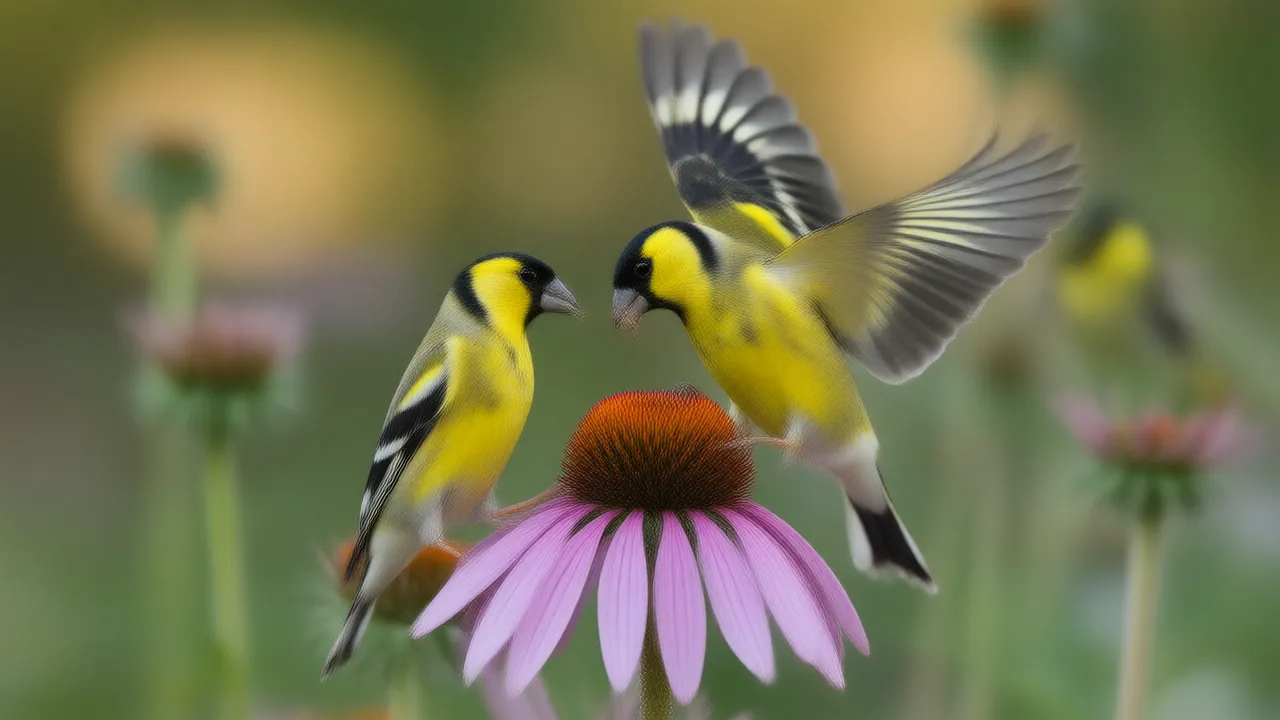
Yes. American Goldfinches eat coneflower seeds and are among the most regular visitors to coneflower seedheads from late summer into fall. They cling to the drying cones and pull the seeds out with their bills. Stop deadheading by late summer, leave the seedheads standing through fall and winter, and cut the plants back in late winter or early spring.
In this guide
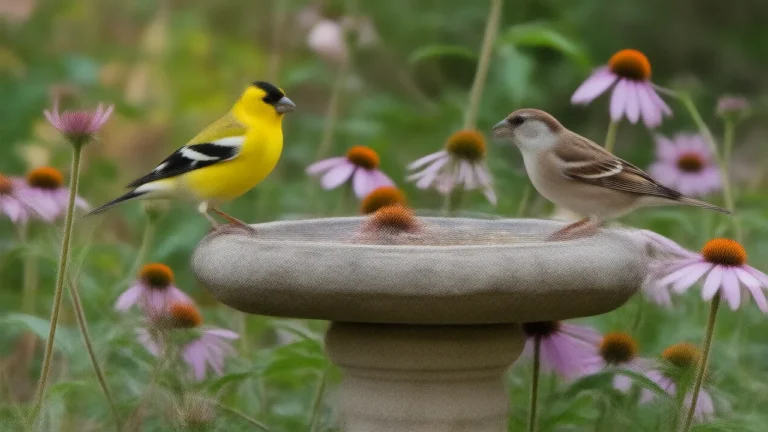
Yes. Goldfinches eat coneflower seeds, and a patch of purple coneflowers is one of the easiest ways to bring them into a garden. From late summer into fall, American Goldfinches land on the spiky brown cones, hang on at odd angles, and pry the seeds out one at a time. In the West and Southwest, Lesser Goldfinches do the same thing.
The only thing that stops it is a tidy gardener. Deadhead every faded bloom, or cut the bed down in September, and there is nothing left for the birds. Leave the seedheads standing and they can feed goldfinches for weeks.
Why goldfinches go for coneflowers
Goldfinches are among the most strictly vegetarian songbirds in North America. Adults eat seeds almost exclusively, and they even raise their nestlings on seed instead of insects. That diet pulls them to the aster family, the daisy-like flowers whose centers are packed with small seeds: coneflowers, sunflowers, black-eyed Susans, asters, coreopsis and native thistles.
Timing matters too. Goldfinches nest later than almost any other backyard bird, usually from July into early September, when seed is at its most plentiful. Coneflower seed ripens right in that window, so it feeds adults while they are raising young. In late summer you may see an unstreaked, buffy-brown juvenile with cinnamon wing bars following an adult across the seedheads and begging to be fed.
Coneflowers are also built to last. Their stiff stems hold the cones upright well after frost, above light snow, so the birds can keep working on them into early winter.
When coneflower seedheads are ready
Purple coneflower (Echinacea purpurea) blooms from early or midsummer into late summer, depending on where you live. Seeds form in the central cone as each flower ages. You can tell the seed is ripening when the petals droop and fade and the cone darkens from orange-brown to dark brown or nearly black, turning dry and prickly to the touch.
Goldfinches rarely wait for a perfectly dry cone. They often start while a few faded petals still hang on: from late July in warmer parts of the country, and more often late August or September in the North. They keep coming back through fall. By midwinter most of the seed is gone, although juncos and native sparrows keep searching the ground under the plants for seeds that fell.
Which coneflowers make the most seed
- Purple coneflower and pale purple coneflower. The wild species and single-flowered garden varieties, with a clear raised cone, set plenty of seed.
- Double or "pom-pom" varieties. Their fluffy centers are made of extra petal-like parts instead of seed-bearing florets, so they offer the birds far less. Grow them for looks, not for goldfinches.
- A group, not a single plant. Several plants of one kind in a clump hold far more seed than a lone plant and give a flock a reason to stay.
Other flowers goldfinches strip in late summer and fall
Coneflowers are only one course. A goldfinch that finds a garden full of seedheads will work through all of them, often moving from one plant to the next as each crop ripens.
| Flower | Seed ready (most regions) | What to know |
|---|---|---|
| Black-eyed Susan | Late summer to fall | Goldfinches cling to the dark center just as they do on coneflowers. The heads stay on the stems into winter. |
| Sunflower | Late summer | Heads droop when the seed is ripe. Branching types with many small heads suit goldfinches well. |
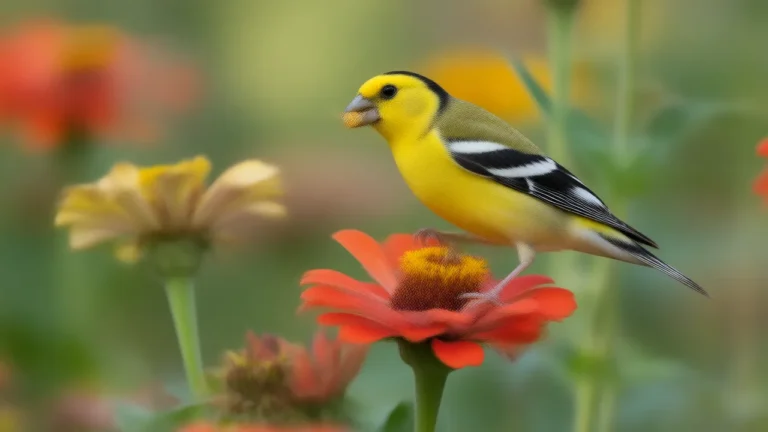
| Zinnia | Late summer until frost | Birds tug the petals loose to reach the seed at their base. |
| Cosmos | Late summer until frost | Thin, needle-like seeds that goldfinches pick from the drying heads. |
| Coreopsis | Midsummer to fall | Small seeds, and a long bloom season if you deadhead early on. |
| Asters | Fall | Among the last seed crops of the year. |
| Native thistles | Mid to late summer | Goldfinches eat the seed and line their nests with the silky down. |
| Dandelion | Spring | One of the first seed crops of the year, eaten straight from the puffball heads. |
Ripening dates shift with region and weather. Seeds ripen earlier in the South and in hot, dry summers, and later in the North and at higher elevations. If you plant thistles, choose species native to your area; several non-native thistles are invasive weeds.
Once the garden is picked clean, goldfinches turn to tree seeds such as birch and alder, and to feeders. That is the time to fill a nyjer or sunflower-heart feeder. Our guide on how to attract goldfinches covers feeders and seed for the rest of the year.
What a goldfinch on coneflower looks like in fall
If you picture goldfinches as bright lemon-yellow, a fall visitor to your coneflowers may fool you. American Goldfinches molt in late summer and fall, and the males lose their black cap and most of their yellow. By October many look olive-brown with a yellowish throat, black wings and pale wing bars. The females and the young birds of the year look much the same.
So a small, dull, olive bird with black wings hanging upside down on an echinacea cone in October is still almost always a goldfinch. The details are in our guide to goldfinch winter plumage. A small streaky brown bird on the same plant is more likely a House Finch or a sparrow.
Plant coneflowers where you can see them from a window you use every day. Goldfinches flush easily when you walk outside, but they are much less bothered by movement behind glass, so a bed in view of the kitchen or a favorite chair gives you the best seats.
When to cut back the garden
Leave coneflowers, black-eyed Susans and other seedheads standing through fall and winter. Cut them back in late winter or early spring, before new leaves push up from the base. That usually means February or March in the South and March or April in the North. By then the birds have taken almost all of the seed.
Standing stems do more than feed goldfinches. They catch leaves and snow, which shelter insects through the cold months, and some native bees spend the winter inside old plant stems. When you do cut back, leaving a foot or so of stem standing gives those bees somewhere to be. More ideas are in our guide to a bird-friendly fall garden cleanup.
The exceptions
- Diseased plants. Coneflowers with twisted, green, tufted flower heads may have aster yellows, a plant disease. Pull those plants and put them in the trash rather than the compost.
- Stems that block a path or crowd a doorway. Trim those and leave the rest.
- A neighborhood that expects tidy beds. Keep a crisp edge, trim the front row, and let the back of the bed stand. A clean border makes a seed garden look intentional.
Coneflowers drop some seed, so expect a few seedlings next spring. Thin them, move them, or give them away.
A simple seed-garden plan for goldfinches
- Plant a clump of single-flowered coneflowers in full sun. They want at least six hours of direct sun and tolerate dry spells once established.
- Add black-eyed Susans and a few annuals. Zinnias and cosmos keep seed coming until frost. Our guide to zinnias for goldfinches explains how to grow them for birds.
- Keep cover nearby. A tree or dense shrub within 10 to 20 feet gives goldfinches a place to flee to when a hawk passes.
- Deadhead until midsummer, then stop. Removing early blooms keeps plants flowering. From late July or August, let every head go to seed.
- Skip insecticides on these beds. The same flowers feed bees and butterflies all summer.
- Put up a feeder for winter. When the seedheads are empty, a nyjer or sunflower-heart feeder near the same bed keeps the flock coming back.
- Cut back in late winter. Leave a foot of stem, and let the new growth take over.
Native perennials give the most for the least work year after year. Our list of native plants for birds suggests more seed and berry plants to pair with your coneflowers.
Questions people ask
When do goldfinches eat coneflower seeds?
From late summer through fall, starting as the petals fade and the cones darken. In warmer regions that can begin in late July; farther north it is usually late August or September.
Should you deadhead coneflowers if you want goldfinches?
You can deadhead early blooms to keep the plants flowering, but stop by late July or August. Every head you leave after that becomes food for goldfinches.
Do goldfinches eat black-eyed Susan seeds?
Yes. They cling to the dark centers of black-eyed Susans the same way they do on coneflowers, and the seedheads stay on the plants into winter.
What other birds eat coneflower seeds?
House Finches sometimes join goldfinches on the cones, and ground-feeding birds such as juncos and native sparrows pick up seeds that fall under the plants.
When should you cut back coneflowers?
In late winter or early spring, before new growth appears at the base. Leaving about a foot of stem gives overwintering native bees a place to nest.
Written by the Backyard Birdcam team with AI assistance. Found something we got wrong? Email shop@smarternewsnow.com and we will fix it. How we write our guides.