Quick answer
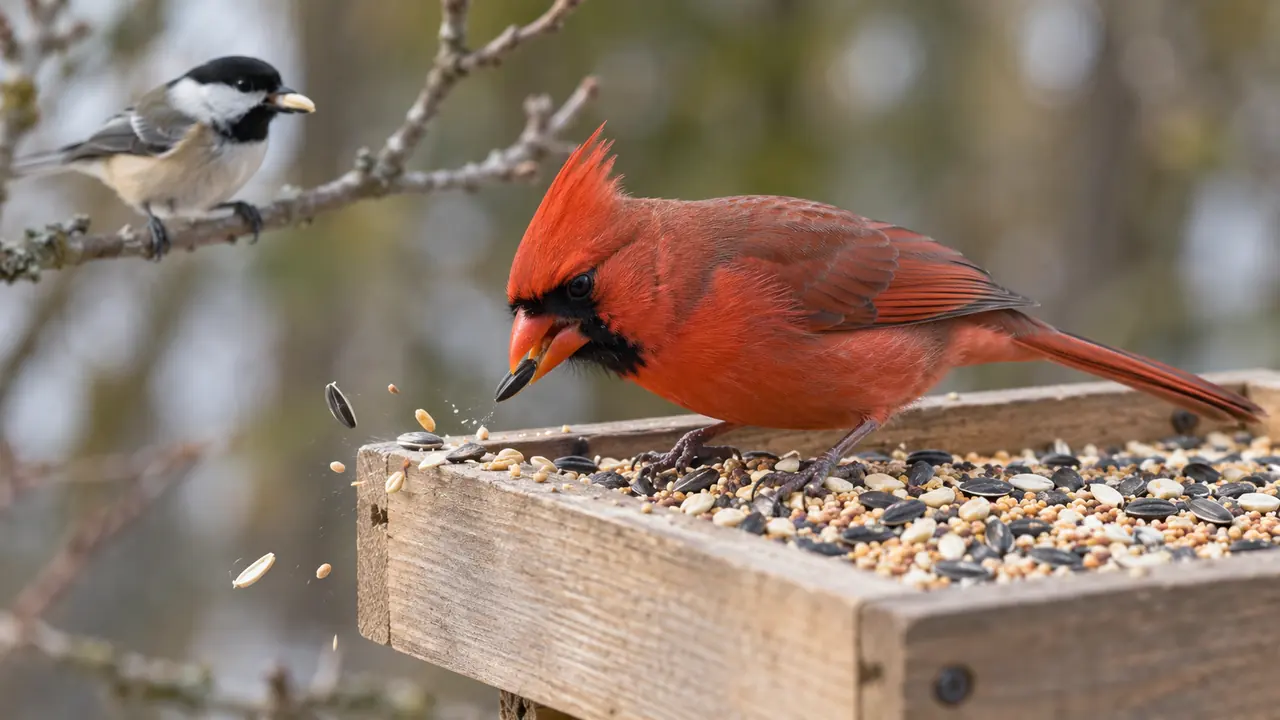
Birds usually throw seed out because they are sorting a mix for preferred items, opening seeds and dropping empty hulls, or taking food away to eat or cache. If seed falls without birds present, overfilling, wind or mismatched ports may be responsible. Identify whole seed versus hulls before changing food or hardware.
In this guide
- Identify the behavior first
- Birds sort mixed seed
- Empty hulls can look like wasted seed
- Some birds carry food away
- Natural bill movements create small spills
- Rule out a feeder problem
- Reduce waste without restricting birds
- When discarded seed is a warning
- Use camera clips as a simple test
- Bottom line
- Sources and verification
Birds usually throw seed out of a feeder because they are sorting a mix for preferred items, opening seeds and dropping empty hulls, or taking one seed away to eat or cache. Some apparent “throwing” is actually seed leaking from an overfilled or poorly matched feeder.
Watch what leaves the tray before changing anything. A pale empty sunflower hull, an uneaten red grain and a whole seed carried to a branch tell three different stories.
Identify the behavior first
| What the camera shows | Likely explanation | Best first change |
|---|---|---|
| A bird sweeps small grains aside and takes sunflower | Sorting for a preferred food | Offer a simpler mix or the preferred seed separately. |
| A bird cracks a seed and pale pieces fall | Empty hulls, not rejected kernels | Clean below the feeder or try hulled seed in small dry quantities. |
| A chickadee takes one seed and flies to a branch | Normal carry-away feeding behavior | No fix needed. |
| A jay leaves with several peanuts | Possible caching for later | No fix needed unless wildlife or mess is a concern. |
| Seed falls when birds land, the feeder sways or no bird is present | Mechanical spill | Reduce fill level and check ports, tray and mounting. |
| Birds avoid clumped, wet or musty seed | Food-quality problem | Discard it, clean and dry the feeder, then refill with fresh food. |
Birds sort mixed seed
Many mixes contain ingredients that appeal to different species. A cardinal, chickadee or finch may move several grains before finding the one it wants. Cornell Lab’s seed guide notes that mixtures high in red millet, oats and other less-attractive ingredients can create substantial waste as birds sort through them.
That does not mean every bird dislikes the same seed. Project FeederWatch documents different preferences by species and region: black-oil sunflower attracts a broad range, millet appeals to many ground-feeding birds, and milo is used more by some western birds than eastern feeder visitors.
Before replacing a mix, place a shallow, clean sample of the discarded material on a light tray and examine it. Whole intact grains suggest rejection or mechanical spill. Split, lightweight shells suggest normal feeding.
Empty hulls can look like wasted seed
Sunflower kernels sit inside shells. Seed-eating birds can crack or manipulate the shell, consume the kernel and let the hull fall. From a window or low-resolution camera, the empty shell may look like a complete seed.
Hulled sunflower reduces chaff, and Project FeederWatch notes that birds eating sunflower also use the hulled form. The tradeoff is shorter storage life: without the shell, kernels spoil faster when damp. Offer only a modest amount, keep it dry and remove leftovers promptly.
The bird-seed comparison explains shell, size and feeder differences. Do not switch to a “no mess” product without checking its ingredients and moisture requirements.
Some birds carry food away
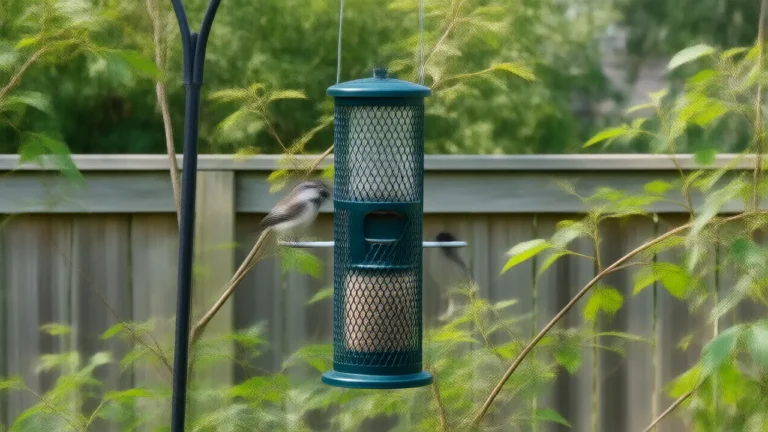
Carolina Chickadees typically take a seed from a feeder, carry it to a somewhat isolated branch and hold it against the perch with their feet while pecking it open. The camera may capture only the pickup and departure, making the visit look incomplete.
Jays may take multiple peanuts and hide them for later. Project FeederWatch describes this as caching. Other birds remain on the feeder and process food in place. Species, food size, social rank and nearby cover all influence what the clip shows.
Do not redesign a feeder merely because a bird leaves with food. Carry-away feeding and caching are normal behaviors; the relevant question is whether unsafe amounts of food are accumulating below or attracting unintended wildlife.
Natural bill movements create small spills
A bird uses its bill to grasp, test, rotate and open food. On an exposed tray, those movements can push nearby grains over the edge. Larger birds may shift more seed simply because their bills and feet occupy more space.
A few displaced grains are normal. Repeated sweeping that removes a large part of every refill points toward an unsuitable mix, excessive fill depth or a tray edge that is too low for the food and visitors using it.
Rule out a feeder problem
Review camera footage from periods with no birds. If seed still drops, behavior is not the cause. Check for:
- ports that are too large for fine seed;
- a cracked port, loose base or warped tray;
- seed piled above a tray lip;
- wind or a mounting point that makes the feeder swing;
- squirrels or mammals shaking the pole;
- clumps that break loose after damp seed dries.
Match the feeder to the food. Project FeederWatch recommends a feeder with very small ports for tiny nyjer seed. Filling a large-port tube with fine seed can produce constant leakage even when no bird is wasteful.
Reduce waste without restricting birds
- Identify whether the material below is whole food, empty hulls or spoiled seed.
- Offer one seed type for several days and compare the amount discarded.
- Fill the feeder less deeply so bills do not push through a large layer.
- Use the correct port and tray design for the seed size.
- Add a cleanable catcher tray only if it drains, does not crowd birds and is washed often.
- Remove accumulated food from the ground instead of letting it become a second feeder.
The guide to choosing a bird-seed mix helps compare ingredients. A seed catcher tray can limit spread, but it becomes another food-contact surface and must not hold wet debris.
When discarded seed is a warning
If seed is wet, clumped, discolored, musty or visibly moldy, discard it rather than testing whether birds will eat it. Clean the feeder, rinse and dry it completely, then refill with fresh seed. See the moldy-seed safety guide.
Large amounts of food below feeders can attract rodents, skunks, raccoons, bears and other wildlife. It can also mix with droppings and moisture. Collect buildup regularly, feed smaller amounts and store seed in a clean, dry, pest-resistant container.
Use camera clips as a simple test
Save three short periods: active feeding, the minute after birds leave and a windy period with no birds. Compare which particles move, which foods birds take and whether the feeder leaks on its own.
Slow playback can distinguish a whole seed from an opened hull. Do not assign intent from one dramatic frame; use repeated behavior across several visits and identify the species when possible.
Bottom line
Most seed throwing is normal sorting, shell removal, carry-away feeding or caching. Diagnose the material and behavior before changing the feeder. Use simpler fresh food, correct ports, smaller fills and regular ground cleanup when whole edible seed is genuinely being wasted.
Sources and verification
- Project FeederWatch: food types — seed preferences, hulled sunflower, nyjer ports and caching examples.
- Cornell Lab: seed types — mix sorting, less-preferred ingredients and spoilage tradeoffs.
- Cornell Lab: Carolina Chickadee life history — carrying a seed to a branch and processing it with the feet.
Questions people ask
Are birds wasting seed when they throw it out?
Not always. Material below a feeder may be an empty hull, a less-preferred grain moved during sorting or a mechanical spill. Inspect it before deciding that edible seed is being wasted.
Why do chickadees take one seed and fly away?
Carolina Chickadees commonly carry a seed to a more isolated branch, hold it with their feet and peck it open. That is normal feeding behavior.
Will hulled sunflower stop the mess?
It reduces empty shells, but kernels spoil faster without protective hulls. Offer small amounts, keep them dry and remove leftovers promptly.
How can you tell whether the feeder is leaking?
Review footage when no birds are present, especially during wind. Check port size, cracks, loose bases, fill depth and movement from squirrels or a swinging mount.
Written by the Backyard Birdcam team with AI assistance. Found something we got wrong? Email shop@smarternewsnow.com and we will fix it. How we write our guides.