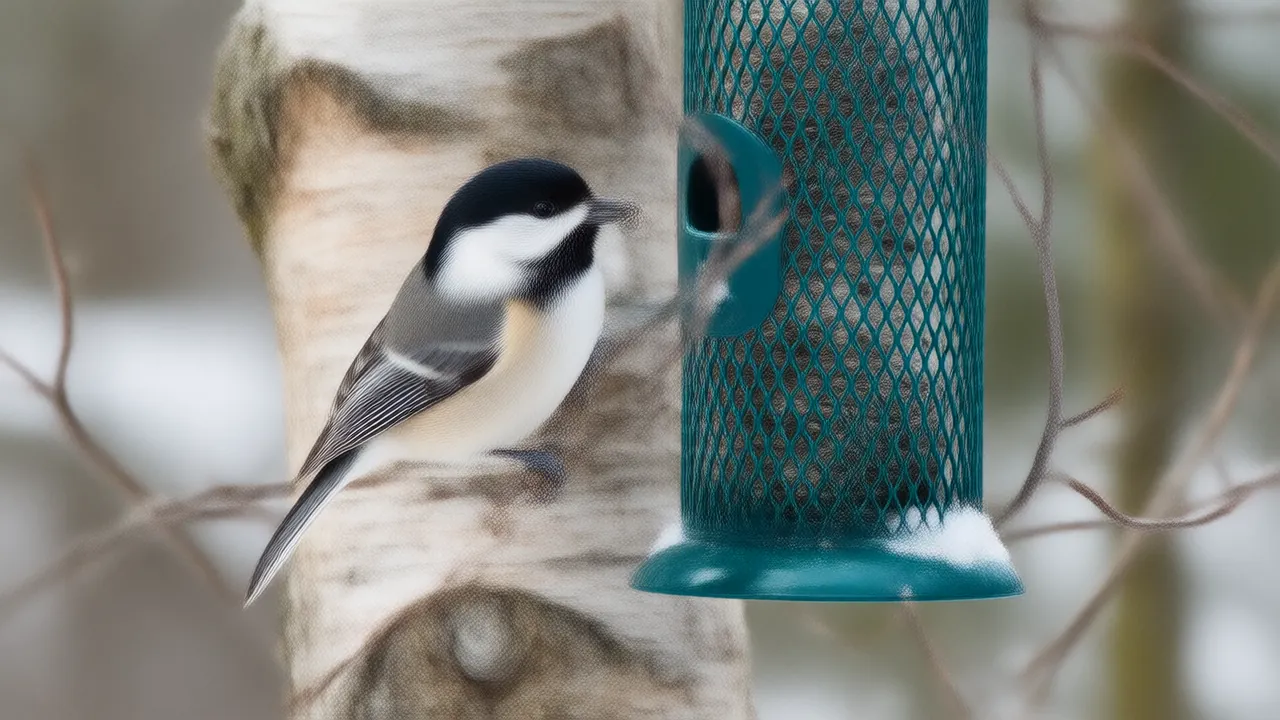
Quick answer
Offer black oil or hulled sunflower seed, suet and shelled peanuts in a small tube, hopper or window feeder about 5 feet high, within 10 to 12 feet of trees or shrubs. Chickadees grab one seed and fly to cover to eat it, so nearby branches matter. Add a bird bath, skip pesticides, and put up a nest box with a 1 1/8-inch hole by late winter.
In this guide
To attract chickadees, offer black oil or hulled sunflower seed, suet and shelled peanuts in a small feeder about 5 feet up and within 10 to 12 feet of trees or shrubs, keep water out, and put up a nest box with a 1 1/8-inch entrance hole by late winter. Chickadees are curious, not very shy, and live all year in most of the US, so they are often the first birds to find a new feeder. For the distinction between year-round residents and irregular seasonal movements, see do chickadees migrate.
The key is understanding how they feed. A chickadee rarely sits and eats at a feeder. It grabs one seed, flies to a nearby branch, holds the seed with its feet and hammers it open with its bill, then comes back for another, or tucks the seed away to eat later.
Which chickadee lives near you
The US has several chickadee species, and which one visits depends on where you live:
- Black-capped Chickadee: the northern half of the country, from New England across the Midwest and northern Plains to the Pacific Northwest and Alaska.
- Carolina Chickadee: the Southeast and south-central states, from the Atlantic coast west to Texas and Oklahoma.
- Mountain Chickadee: western mountain forests; look for a white stripe over the eye.
- Chestnut-backed Chickadee: the Pacific coast, with a rich chestnut back.
- Boreal Chickadee: spruce forests of Alaska and the far northern edge of a few border states, with a brown cap.
All of them eat and nest in much the same way, so the advice below works for any of them. If you live where Black-capped and Carolina ranges meet, see black-capped vs Carolina chickadee. Their calls say a lot too, from the familiar "chick-a-dee-dee-dee" call, which doubles as an alarm, to the whistled spring song; what chickadee calls mean explains them.
What chickadees eat
In the wild, chickadees eat insects, spiders and insect eggs picked from bark, twigs and leaves, plus seeds and berries. In spring and summer, insects, and especially caterpillars, are the main food they feed their young. In fall and winter they rely more on seeds and on fat-rich foods, which is when feeders help most.
| Food | How to offer it | Why chickadees like it |
|---|---|---|
| Black oil sunflower | Tube, hopper or window feeder | Thin shell they can open; rich in fat |
| Hulled sunflower (hearts or chips) | Tube or small tray | No shell to crack; quick energy on cold days |
| Suet | Suet cage or suet log | Fat for winter; plain or mixed with seeds, nuts or insects |
| Shelled peanuts | Mesh peanut feeder, or chopped on a tray | Fat and protein; unsalted only |
| Safflower | Hopper or tube | Eaten readily; less appealing to many squirrels and grackles |
| Mealworms | Small dish or tray | Insect protein, especially in the nesting season |
Plain peanut butter can be an occasional cold-weather food when it stays firm. Offer a small amount in a purpose-made feeder that can be thoroughly washed, rather than smearing it on bark or a pinecone. Remove it if it softens, separates into oil or becomes soiled, and clean the feeder frequently. Read the peanut-butter feeding precautions before offering it. Cornell's bird-food guidance explains the temperature and oil-transfer concerns.
Feeder type, height and placement
Because chickadees grab and go, the distance from the feeder to cover matters more for them than for most birds.
- Within 10 to 12 feet of trees or shrubs. That short flight to a branch is what lets a chickadee feed comfortably, and the cover gives it an escape from hawks.
- About 5 feet high. Chickadees feed happily at eye level and higher, and a feeder at this height is easy to fill and to protect from squirrels with a pole baffle.
- Small feeders suit them. Tube feeders with short perches, small hoppers and window feeders let chickadees in while giving bigger birds less room.
- Window feeders work well because chickadees are bold, but feeder distance alone does not make glass safe. Treat nearby reflective windows on the outside with a dense, full-surface pattern or a suitable external screen. Cornell's current window-collision guidance explains why older safe-distance rules are no longer reliable.
Chickadees often travel in mixed flocks with titmice, nuthatches, kinglets and Downy Woodpeckers, especially in fall and winter. Once the chickadees find your feeder, the rest of the flock tends to follow. See how to attract titmice for their close cousins.
Why chickadees hide seeds
Watch a chickadee for a few minutes in fall and you will see it fly off with seed after seed without eating any. It is caching: tucking seeds one at a time into bark crevices, under lichen, into clusters of pine needles and knotholes, to eat later. Each seed goes in a different spot, and chickadees have a well-known talent for remembering where they put them.
That habit is good news for anyone watching, because it means a steady stream of visits. It also means a feeder can empty surprisingly fast in autumn even when only a few birds are using it. Offer seed in a small feeder and refill it often, rather than filling a big feeder and letting the seed sit.
Nest boxes for chickadees
Chickadees nest in cavities. In the wild they dig out soft, rotting wood in dead trees and branches or reuse old woodpecker holes. They also take to nest boxes, especially boxes placed near where they already feed.
| Nest box feature | Size |
|---|---|
| Entrance hole | 1 1/8 inches across, which helps keep out House Sparrows |
| Floor | About 4 by 4 inches |
| Inside height | 8 to 10 inches |
| Hole above the floor | 6 to 8 inches |
| Mounting height | 5 to 15 feet |
- Put boxes up by late winter. Chickadees start looking for nest sites early, and nesting runs from about March to June depending on your region.
- Mount the box on a pole or tree trunk near a woodland edge or shrubs, with a predator guard where raccoons, cats or snakes are around.
- Leave off any perch below the hole. Chickadees do not need one, and it gives predators a foothold.
- An inch of clean wood shavings, not sawdust, in the bottom lets the birds do a little digging, as they would in a tree.
- Never open a box with an active nest or touch eggs or young. Clean out the old nest after the young have fledged and the season is over.
The guide to the chickadee nesting box has building plans and more on placement.
A chickadee-friendly yard beyond the feeder
- Native trees and shrubs such as oaks, birches, willows, maples and native conifers carry the caterpillars chickadees feed their young, and they give shelter in winter.
- Dead limbs and snags, wherever they are safe to leave standing, provide natural nest sites.
- No pesticides. Spraying the insects in your yard removes the food nestlings depend on.
- Water all year, including a heated bird bath in winter where water freezes.
- Keep cats indoors. Chickadees sometimes feed low in shrubs and on the ground, where they are easy prey.
- Be patient in summer. Chickadees visit feeders less from late spring through summer, when insects are plentiful and they are busy raising young. Keep a little seed out, and expect them back in bigger numbers when the weather cools in fall.
Questions people ask
What is a chickadee's favorite food?
Black oil sunflower seed is the favorite at most feeders, with suet and shelled peanuts close behind. In spring and summer they eat mostly insects and caterpillars.
How high should a chickadee feeder be?
About 5 feet off the ground, within 10 to 12 feet of trees or shrubs, so the birds can dart to cover with each seed.
What size hole do chickadees need in a birdhouse?
An entrance of 1 1/8 inches. That fits chickadees and helps keep out House Sparrows.
Why do chickadees take one seed and fly away?
They either eat it on a nearby branch, where they can hold it with their feet and crack it safely, or hide it in bark or needles to eat later.
Written by the Backyard Birdcam team with AI assistance. Found something we got wrong? Email shop@smarternewsnow.com and we will fix it. How we write our guides.