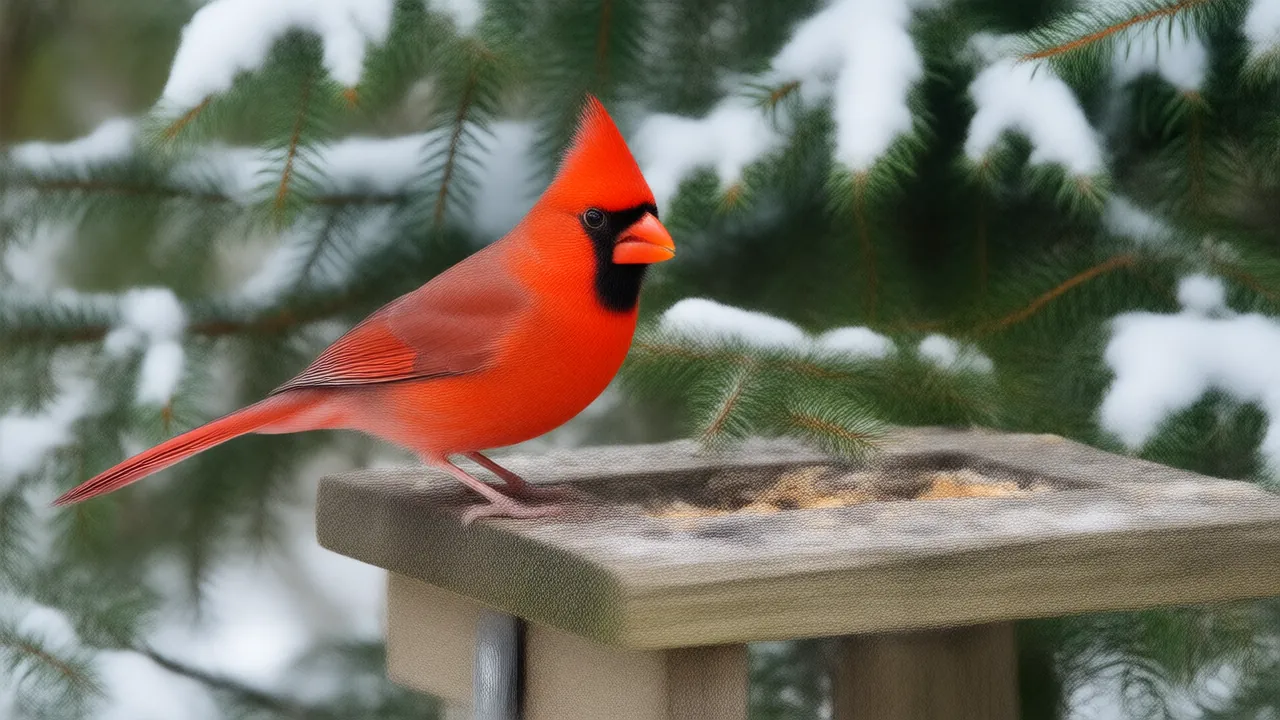
Quick answer
To attract cardinals, offer black oil sunflower or safflower seed on a hopper or platform feeder with room to perch, place it about 10 feet from dense shrubs or evergreens, and add a shallow bird bath. Cardinals don't migrate, so a yard with steady food, thick cover and water can support resident cardinals year-round; sightings alone do not identify the same individual birds.
In this guide
Cardinals settle in yards that offer three things close together: seed they can crack, a feeder they can sit on comfortably, and dense shrubs to dive into. Put black oil sunflower or safflower on a hopper or platform feeder about 10 feet from thick cover, keep water nearby, and you have done most of the work.
The Northern Cardinal lives year-round across the East, Midwest and South, and into parts of the Southwest. It does not migrate, so a pair that finds a good yard tends to stay in the area through every season. In the Pacific Northwest, the Rockies and most of California, cardinals are scarce or absent, and no seed will change that.
What cardinals eat
A cardinal's thick, cone-shaped bill is built for cracking seeds. At feeders, these are the foods they take most readily:
- Black oil sunflower. Thin shell, lots of oil, and eaten by nearly every other feeder bird too.
- Safflower. A white, slightly bitter seed that cardinals eat happily. Many squirrels, grackles and starlings show little interest in it, which makes it a good way to feed cardinals without feeding everyone else. The guide to safflower seed for birds lists who eats it.
- Hulled sunflower. Sold as hearts or chips, with no shells to crack or sweep up.
- Cracked corn and white millet. Scattered on the ground or on a low tray, where cardinals often forage.
Away from feeders they eat weed seeds, wild fruit such as dogwood berries, wild grapes and sumac, and plenty of insects in the warm months. Nestlings are raised mostly on insects, so a yard with native plants, and without insecticides, helps cardinals through the nesting season more than any feeder can.
Switching from sunflower to safflower? Mix the two half and half, then shift the blend toward safflower over two or three weeks. Birds faced with a feeder full of unfamiliar seed sometimes ignore it at first.
A feeder cardinals can actually use
Cardinals are stocky birds, about 8 to 9 inches long, and they like to sit facing their food on a steady surface. Small tube feeders with short perches often leave them picking up spilled seed on the ground instead.
- Hopper feeders with a wide ledge work well.
- Platform or tray feeders, hanging or on a post, suit them best; cardinals will sit right in the seed. Choose one with drainage holes or a mesh floor so seed doesn't sit in water.
- Tube feeders with a tray attached underneath give them somewhere to stand.
- Weight-activated squirrel-resistant feeders can work if the perch is set to carry a cardinal's weight. The options are compared in squirrel-resistant feeders for cardinals.
Hang or mount the feeder about 5 feet off the ground, where it is easy to fill and to see from the house. Leave a little seed on the ground or a low tray below it as well. Cardinals often feed low, especially early in the morning and toward dusk, when they are frequently the first and last birds in the yard.
Cover: the part most yards are missing
Cardinals rarely stray far from dense cover. They approach a feeder by hopping through shrubs, grab a few seeds and duck back in at the first sign of a hawk. A feeder in the middle of an open lawn may get an occasional cardinal. One about 10 feet from thick shrubs is far more likely to become part of their daily routine, while still leaving enough open ground that a cat can't ambush from the leaves.
Good cover plants include:
- Evergreens such as eastern red cedar, junipers, hollies and dense arborvitae, which give shelter on winter nights.
- Fruiting shrubs such as dogwoods, viburnums, serviceberry, elderberry and sumac, which give food and cover at once.
- Tangles of native vines like wild grape or Virginia creeper along a fence.
Choose species native to your region; a local native plant nursery can tell you which thrive where you live. More options are in the best shrubs for birds.
Where cardinals nest
Cardinals build open cup nests hidden in dense shrubs, thickets and vine tangles, usually somewhere between a few feet and about 15 feet off the ground. The female does the building; the male may bring her nesting material and often feeds her. Pairs often raise two broods in a season and sometimes more, especially in the South, where the nesting season runs long.
They do not use birdhouses, so a nest box won't help, but a thick, unpruned shrub might; see do cardinals use birdhouses. Hold off on heavy pruning from spring through midsummer, when nests may be active. Cardinals, like all native songbirds, are protected by federal law, so an active nest should be left alone.
Water all year
A bird bath with shallow water, 1 to 2 inches deep over a rough bottom, draws cardinals to drink and bathe in every season. Place it near cover but with a clear view around it, so a bathing bird can see a cat coming. Refresh the water every couple of days and scrub the basin when it turns slimy.
Where winters freeze, a heated bird bath is one of the most effective winter attractions you can offer. Open water is hard to find in January, and cardinals will come for it even when they have seed elsewhere.
Cardinals through the year
| Season | What cardinals are doing | What to offer |
|---|---|---|
| Winter | Gathering in loose flocks around reliable food; feeding early and late in the day | Sunflower and safflower, evergreen cover, open water |
| Late winter to spring | Males sing and defend territory; pairs form, and males feed their mates seed beak to beak | Full feeders; leave shrubs unpruned |
| Late spring and summer | Nesting and raising young on insects; fledglings follow parents to feeders | Seed, native plants that host insects, water |
| Late summer to fall | Adults molt, and some look briefly bald; young males turn patchy red | Steady seed, fruiting shrubs, water |
Seeing a brown bird among the cardinals? One with an orange-red bill is a female; one with a dark bill is a young bird that has not grown its adult colors yet. The differences are laid out in male vs female cardinal.
If cardinals still aren't coming
- Give it time. Birds can take days to a few weeks to find a new feeder. Scatter a little seed on the ground beneath it so they notice.
- Check the perch. If all you have is a small tube feeder, add a tray or switch to a hopper or platform.
- Move closer to cover. Twenty feet of open lawn is a long way for a cardinal.
- Keep seed fresh and dry. Clumped or moldy seed gets ignored. Empty and clean the feeder if seed has sat through rain.
- Look at the right time. Check at first light and in the last half hour before dark. Cardinals are easy to miss if you only look at midday.
- Consider the neighborhood. An area with no shrubs or woodland edge nearby may simply have no resident pair yet. Planting cover is the long-term fix.
- Don't worry about window fighting. In spring, a cardinal, usually a male but sometimes a female, may attack its reflection for hours. It is territorial behavior, not illness. Covering the outside of that window for a few weeks usually ends it.
Questions people ask
What is the best bird seed for cardinals?
Black oil sunflower and safflower. Safflower has the advantage that many squirrels, grackles and starlings leave it alone.
What time of day do cardinals come to feeders?
They visit through the day, but they are especially active early in the morning and around dusk, and are often the first and last birds at the feeder.
Do cardinals use birdhouses?
No. Cardinals build open cup nests hidden in dense shrubs, thickets and vine tangles, so thick native shrubs help far more than a nest box.
Do cardinals stay all winter?
Yes. Northern cardinals don't migrate, so feeders, evergreen cover and open water matter most to them in winter.
Written by the Backyard Birdcam team with AI assistance. Found something we got wrong? Email shop@smarternewsnow.com and we will fix it. How we write our guides.