Quick answer
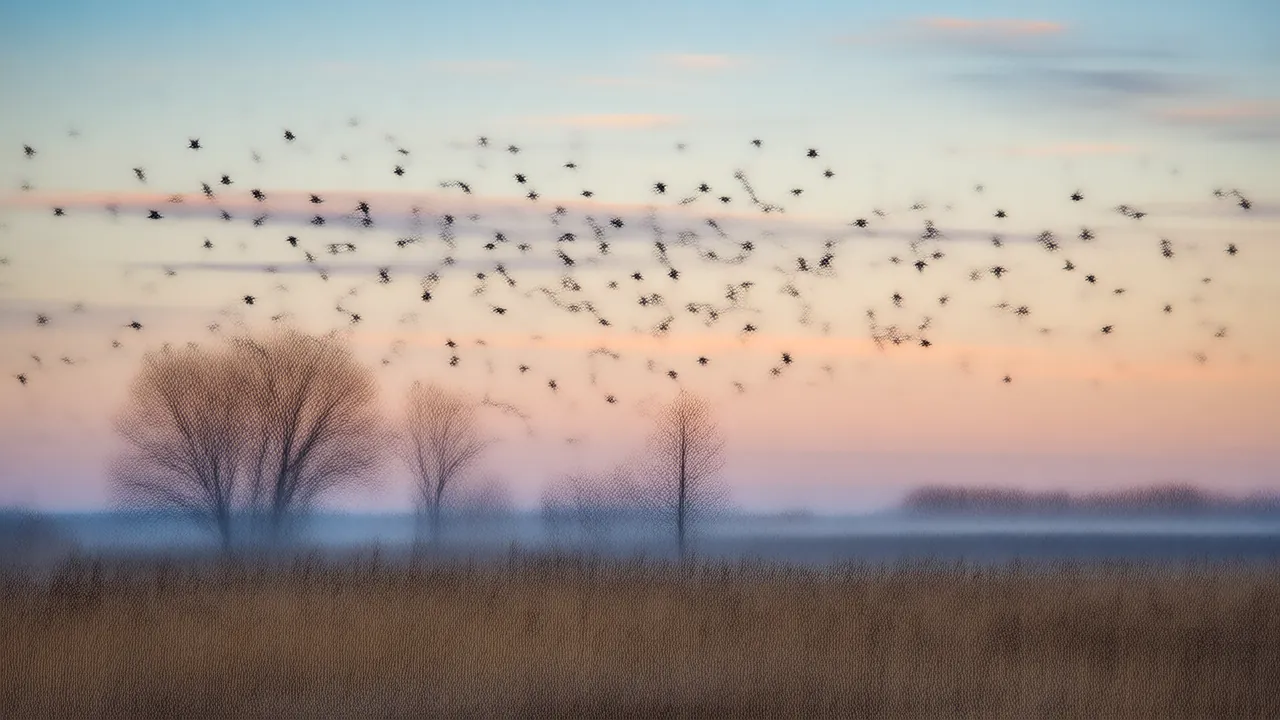
Starlings form murmurations mainly for safety. As thousands of birds gather at dusk before settling into a shared roost, they swirl in a tight, shifting flock that makes it hard for a falcon or hawk to single out one bird. The swirling flock may also help draw scattered groups into one roost, where the birds keep warm together overnight. Look for murmurations near sunset from fall through winter.
In this guide
Starlings form murmurations mostly for safety. Before they settle into a shared night roost, thousands of European Starlings swirl together at dusk in a shape-shifting cloud, and a hawk or falcon diving at that cloud has a hard time picking out a single bird. The flock builds as birds arriving from miles around merge, and then they drop into one roost, where they spend the night packed together.
Murmurations happen around sunset, mainly from fall through winter, and end suddenly when the flock pours down into reeds, trees or the girders of a bridge. Here is what is going on, why no bird is in charge, and where to watch one in the United States.
What a murmuration is
A murmuration is a large flock of starlings flying in tight, coordinated waves above its roost at dusk. The flock stretches, folds, splits and joins again, dark in one moment and almost transparent the next as thousands of birds bank at once. The name comes from the soft rushing murmur of all those wings, and "a murmuration of starlings" is an old English collective noun.
The European Starling is not native to North America. A small number were released in New York City in the early 1890s, and their descendants spread across the continent. Today starlings live in almost every American town and farm region, and in fall and winter they gather in big flocks to feed in fields and lawns by day and roost together at night.
Why starlings form murmurations
Safety in numbers
Roosts attract predators. Peregrine Falcons, Merlins and hawks hunt starlings as they arrive in the evening. In a large, tight flock, each bird's chance of being the one caught is small, and a predator faced with a mass of moving birds struggles to lock onto one target. When a falcon strikes, you can often see the flock ripple, bulge away from it, or split into pieces and rejoin. The most dramatic shapes often appear when a predator is nearby.
Gathering for the night
By day, starlings feed in scattered groups over fields, lawns and farmland. In late afternoon they stream toward a communal roost from many directions. The murmuration forms as these groups arrive and merge, and it may help pull more birds in, since a swirling cloud is easy to see from far away. Once enough birds have gathered and the light fades, the flock often drops into the roost very quickly.
Warmth and information
Roosting in a crowd saves heat on cold nights, since birds packed into reeds or trees are sheltered from wind. Communal roosts may also help starlings find food: birds that fed poorly can follow others out to good fields in the morning. Biologists still debate how much each of these reasons matters, and they probably work together.
How thousands of birds move as one
No starling leads a murmuration. Each bird watches its nearest neighbors, about six or seven of them, and matches their speed and direction while keeping a small gap. When one bird turns, its neighbors turn, and theirs turn, and the change sweeps across the whole flock in a rapid wave.
That is why the cloud looks alive. The dark bands that sweep across it are places where birds have tilted, showing you more wing, or packed a little closer. Starlings are fast, agile fliers with short tails and pointed, triangular wings, which is what lets them make those sharp shared turns without colliding.
In the air, a starling's short tail and pointed wings give it the look of a small four-pointed star. If a flock of mid-sized dark birds flies with long tails trailing, you are probably looking at grackles instead.
When and where to see a murmuration in the US
- Season. Fall through winter, roughly October to March, as flocks grow and birds settle into winter roosts. Timing varies by region and from year to year.
- Time of day. Arrive 30 to 45 minutes before sunset. The display usually peaks as the light starts to fade.
- Places. Marshes and reed beds, groves of evergreen trees, city trees along busy streets, bridges, piers and highway overpasses. Look for places where large numbers of starlings spend the night.
- Finding a roost. In late afternoon, watch for streams of birds all flying in the same direction. Follow the direction on a few evenings and you will often find the roost.
The classic tight, swirling murmuration is seen in the United States, but many American winter roosts look different. They are mixed blackbird roosts, and the birds arrive in long rivers across the sky rather than one giant twisting ball.
Watching and filming responsibly
- Stay well back from the roost and never try to flush the birds for a better view.
- Skip the drone. A drone over the flock can scatter it or act like a predator.
- For video, use a tripod, frame wide with plenty of sky, and start recording before the flock builds. Shooting toward the sunset turns the birds into sharp silhouettes. A tree line or building in the frame gives viewers a sense of scale.
- Stop talking when the flock drops. The roar of wings as it lands is part of the show.
Grackles, blackbirds and other big flocks
Starlings are not the only birds that gather in huge numbers in the evening.
- Grackle and blackbird roosts. In fall and winter, Common Grackles, Red-winged Blackbirds, Brown-headed Cowbirds and starlings often roost together, especially across the South and East. Some of these winter roosts are among the largest bird gatherings in North America. A Common Grackle is larger than a starling, with a long, keel-shaped tail and, in adults, a pale yellow eye. Our guide to grackles vs starlings covers the differences.
- Tree Swallows. In late summer and fall, big flocks swirl over marshes at dusk before dropping into the reeds, sometimes in a funnel that looks like a small tornado.
- Chimney Swifts. During fall migration they circle above a large chimney at dusk and then pour into it in a spinning column.
- Shorebirds. Flocks of sandpipers over beaches and mudflats turn in unison, flashing white bellies and dark backs.
Many of these gatherings build as migration gets under way; our guide on when birds migrate in the fall has the timing.
When the flock comes to your feeders
A murmuration is a thrill at dusk. The same flock arriving at your suet feeder at breakfast is less fun. Starlings are non-native and are not protected like native songbirds, but the kindest and most effective approach is still to make your feeders less appealing to them rather than to harm them.
- Use an upside-down suet feeder. Woodpeckers, nuthatches and chickadees feed from below easily; starlings struggle. Our guide on how to keep starlings off suet has more options.
- Switch hulled seed to whole seed or safflower. Starlings eat sunflower hearts and chips readily but have a harder time cracking shells, and they show little interest in safflower.
- Choose feeders that exclude bigger birds, such as tube feeders with short perches or caged feeders sized for small songbirds.
- Stop offering bread and kitchen scraps, which draw starlings and are poor food for any bird.
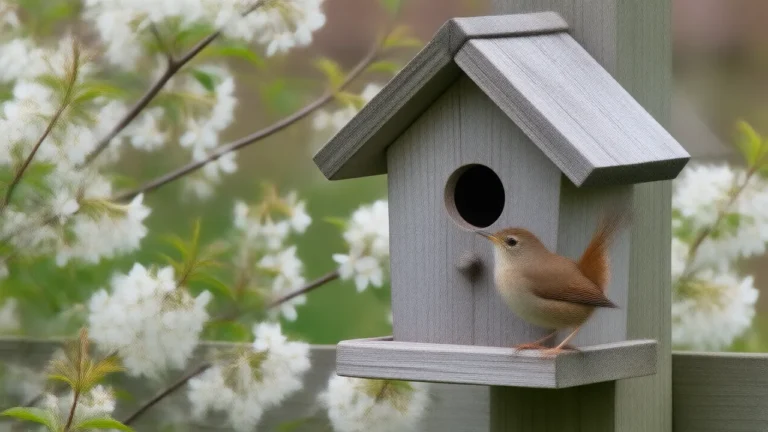
- Keep starlings out of nest boxes. An entrance hole no bigger than 1½ inches, the standard size for bluebird boxes, keeps adult starlings out.
For the full picture, see our guide to European starlings at bird feeders.
Questions people ask
What time of year do starlings form murmurations?
Mainly from fall through winter, roughly October to March in the US, when starlings gather in large flocks and share night roosts.
What time of day do murmurations happen?
Around sunset. Arrive 30 to 45 minutes before sundown; the display usually peaks as the light fades and ends when the flock drops into its roost.
Is there a leader in a starling murmuration?
No. Each bird tracks its nearest neighbors, about six or seven of them, and matches their speed and direction, so turns spread through the flock like a wave.
Do grackles form murmurations?
Grackles and other blackbirds form huge winter roosts, often mixed with starlings, but they usually arrive in long streams rather than the tight swirling shapes starlings make.
Written by the Backyard Birdcam team with AI assistance. Found something we got wrong? Email shop@smarternewsnow.com and we will fix it. How we write our guides.