Quick answer
Mix 1 part plain white table sugar with 4 parts water, for example 1/4 cup of sugar in 1 cup of water. Stir until fully dissolved, let it cool to room temperature, and fill a clean feeder. Don't add red dye, honey, brown or raw sugar, or sweeteners. Change the nectar every few days, and daily in very hot weather.
In this guide
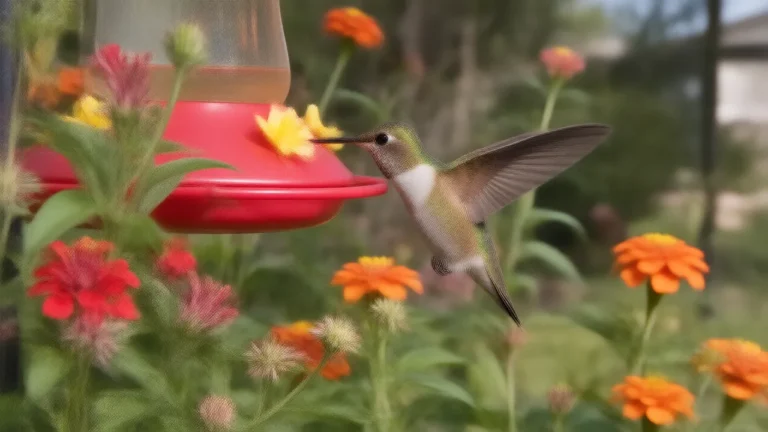
Hummingbird nectar is one part plain white sugar to four parts water. That is the whole recipe: no dye, no honey, no additives. It takes a couple of minutes, costs very little, and gives a sweetness close to the flower nectar hummingbirds seek out.
The part that needs care is freshness. Sugar water spoils fast in warm weather, so how often you change it matters as much as how you mix it.
The recipe
- Measure 1 part plain white granulated sugar. Ordinary table sugar, from cane or beet, is exactly right.
- Measure 4 parts water. Use water you would drink. If your tap water has a strong chlorine, sulfur or iron taste, use filtered or bottled water.
- Stir until the sugar is completely dissolved and the liquid is clear. Warm water dissolves it faster.
- Let it cool to room temperature if you heated it.
- Fill a clean feeder, and refrigerate any extra in a covered jar.
Do you need to boil it? No. Some people bring the water to a boil first because it helps the sugar dissolve and gives a slightly cleaner start to a batch that will sit in the fridge. Either way works. A clean feeder and a regular change schedule matter far more than boiling.
Why 1 part sugar to 4 parts water?
The 1 to 4 mix has been the standard for a long time because it sits close to the sweetness of many flowers hummingbirds feed from, delivers plenty of energy in each sip, and stays thin enough to flow easily through feeder ports. It works in every season and every region, so there is no need to change it for spring, summer or migration.
Ready-made nectar is fine if it is clear and dye-free; follow the label's mixing directions. It offers nothing that sugar and water don't, so most people end up making their own.
Batch sizes
| Sugar | Water | Roughly fills |
|---|---|---|
| 2 tablespoons | 1/2 cup | A small 4-ounce feeder, handy early and late in the season |
| 1/4 cup | 1 cup | An 8-ounce feeder |
| 1/2 cup | 2 cups | A 16-ounce feeder, or two 8-ounce feeders |
| 1 cup | 4 cups | Several feeders, or a few refills with the rest in the fridge |
The ratio is by volume, so any cup works. One coffee mug of sugar to four mugs of water makes the same nectar as a measuring cup would.
Only fill a feeder with what the birds will drink before it is due for a change. Early in the season, with one or two birds around, a feeder a quarter full is plenty; fill it higher as more birds arrive in midsummer. Nectar poured out unused is cheaper than nectar that spoils in the feeder.
What not to add
- Red dye. Hummingbirds find feeders by the red parts on the feeder itself, so dye adds nothing, and there is no reason to feed them artificial coloring. Ready-made red nectar falls in the same category. More in is red dye bad for hummingbirds.
- Honey. Diluted honey ferments quickly and can grow a fungus that is dangerous to hummingbirds. Never use it; see can you use honey in a hummingbird feeder.
- Brown, raw or unrefined sugar. These carry molasses and more iron than refined white sugar, and excess iron can harm hummingbirds.
- Powdered sugar. It contains cornstarch.
- Artificial sweeteners. They have no calories, so a bird that fills up on them gets no energy at all.
- Vitamins, electrolytes or nectar "boosters." Hummingbirds get protein and nutrients from the small insects and spiders they catch. The feeder only needs to supply energy.
- Extra sugar. Stick with 1 to 4. A stronger mix isn't necessary, and a weaker one gives birds less fuel for each visit.
How long nectar lasts
In the feeder
Heat is what spoils nectar, so the schedule follows the weather:
| Daytime highs | Change the nectar |
|---|---|
| Below 75°F | Every 5 to 6 days |
| 75 to 84°F | Every 3 to 4 days |
| 85 to 90°F | Every 2 days |
| Above 90°F | Every day |
A feeder in full sun spoils faster, so move one step down the table if yours gets afternoon sun. Change it at once, whatever the date, if the nectar looks cloudy or milky, has stringy bits or black specks, or smells sour. Those are signs of fermentation or mold. Always empty and clean the feeder when you change the nectar rather than topping it up. The full schedule is in how often to change hummingbird nectar.
In the refrigerator
Extra nectar keeps in a clean, covered jar in the fridge for about a week. If it turns cloudy before then, pour it out and make a fresh batch. Mixing small batches often is easier than trying to store a big one.
Cleaning between fills
Every time you change the nectar, empty the feeder and scrub it with hot water and a bottle brush. A small pipe-cleaner-style brush reaches into the feeding ports, where mold likes to start. If you use dish soap, rinse until no trace of it is left.
For a deeper clean once a week or so, or whenever you spot black mold, soak the parts in a mix of white vinegar and hot water, scrub, and rinse thoroughly before refilling. Step-by-step instructions, including stubborn mold, are in how to clean a hummingbird feeder.
A feeder that is hard to take apart is hard to clean. Saucer-style feeders and bottles with wide mouths make the job much quicker, which means it actually gets done in August.
Where and when to put the nectar out
- Shade: hang the feeder in partial shade. Full afternoon sun speeds up spoilage.
- Spring: along the Gulf Coast, hummingbirds can arrive by late February or March; in the northern states, usually late April or May. Put a feeder out a week or two before they normally show up in your area.
- Fall: keep it up for a couple of weeks after you see your last hummingbird, for late migrants passing through. A feeder does not stop hummingbirds from migrating.
- Winter: where hummingbirds stay, such as along the Pacific Coast and in parts of the Gulf states, keep nectar going. Sugar water freezes only a couple of degrees below plain water, so on freezing nights bring the feeder in and put it back out at first light. More on cold snaps in will hummingbird nectar freeze.
- Other visitors: orioles, and woodpeckers such as the Downy and Red-bellied, sometimes drink from hummingbird feeders. That is harmless, and the same 1 to 4 nectar suits them. In parts of southern Arizona and New Mexico, nectar-feeding bats may drain feeders overnight in late summer.
- Ants and bees: an ant moat filled with water above the feeder stops ants. Never put oil, petroleum jelly or insecticide on the feeder or its hanger.
Questions people ask
What is the ratio of sugar to water for hummingbirds?
One part plain white sugar to four parts water, by volume. For example, 1/4 cup of sugar in 1 cup of water.
Do you have to boil water for hummingbird nectar?
No. Boiling is optional. What matters is that the sugar is fully dissolved, the nectar is cool, and the feeder is clean.
Can you use tap water for hummingbird nectar?
Yes, if it is safe to drink. If your tap water has a strong chlorine, sulfur or iron taste, use filtered or bottled water.
How long does homemade hummingbird nectar last?
About a week in a covered jar in the fridge. In the feeder, anywhere from one day in very hot weather to five or six days when highs stay below 75°F.
Can you use brown sugar or honey in a hummingbird feeder?
No. Use only plain white table sugar. Honey ferments and can grow harmful fungus, and brown or raw sugar carries extra iron.
Written by the Backyard Birdcam team with AI assistance. Found something we got wrong? Email shop@smarternewsnow.com and we will fix it. How we write our guides.