Quick answer
In the East, Ruby-throated Hummingbirds return from late February on the Gulf Coast to mid-May in the far north, and leave from July to October, with adult males going first. In the West, Rufous Hummingbirds fly north along the Pacific Coast in spring and return south through the Rockies in mid to late summer. Anna's Hummingbirds stay year-round on the Pacific Coast.
In this guide
Hummingbird migration follows the flowers. Most US hummingbirds spend the winter in Mexico and Central America, come north in spring as blossoms and insects appear, and head south again between midsummer and fall. Exactly when depends on where you live and which species you have.
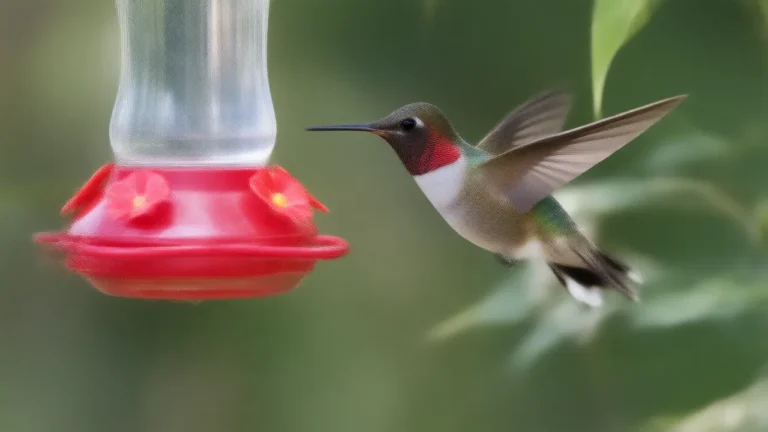
East of the Great Plains, that almost always means one bird: the Ruby-throated Hummingbird, which reaches the Gulf Coast from late February and the northern states by early to mid-May, then heads south from July (adult males first) through October. The West has several species, some of which travel enormous distances and a few of which hardly migrate at all.
When hummingbirds arrive and leave, by region
These are typical windows. Weather moves them by a week or two in either direction, and early and late birds turn up every year.
| Region | Main species | Spring arrival | Fall departure |
|---|---|---|---|
| Gulf Coast and Florida | Ruby-throated | Late February to March | September to October; a few stay all winter |
| Southeast and eastern Texas | Ruby-throated; Black-chinned in central and west Texas | March to early April | September to mid-October |
| Mid-Atlantic, Ohio Valley, central states | Ruby-throated | Mid to late April | September, with a few into early October |
| Northeast, Great Lakes, upper Midwest | Ruby-throated | Late April to mid-May | Late August to September |
| Pacific Northwest | Rufous; Anna's all year | March to April | July to August |
| California | Anna's all year; Allen's, Black-chinned, Costa's | Allen's from late January; others February to April | Summer to September |
| Rocky Mountains | Broad-tailed, Black-chinned; Rufous and Calliope passing through | April to May | Rufous pass July to September; nesting birds leave by September |
| Desert Southwest | Anna's all year; Costa's and Black-chinned for part of the year | February to March | Summer to September |
For a closer look at timing where you live, see when to put out hummingbird feeders and when to take down hummingbird feeders.
Ruby-throated Hummingbird: the eastern migrant
Ruby-throats spend the winter from southern Mexico to Central America, with small numbers in south Florida and along the Gulf Coast. In spring many of them cross the Gulf of Mexico in a single nonstop flight of about 500 miles, landing on the coast between Texas and Florida. Others take the land route around the western Gulf through Texas.
From the coast they move north at the pace of spring. Males lead, usually arriving a week or more before females, and claim territories around the best flowers and feeders. By mid-May they reach the northern states and southern Canada.
Fall migration starts sooner than most people expect. Adult males take no part in raising young, and they begin drifting south as early as July. Females follow in August and September, and the young of the year, which have never made the trip, often come last. That is why feeders can seem busiest in late August: local families and migrants from farther north are refueling at the same time.
Before crossing the Gulf, Ruby-throats put on a large amount of fat, in some cases nearly doubling their body weight. That fat is the fuel for the crossing.
Western hummingbirds and the Rufous loop
The West has more species and more variety in how they travel. The main types of hummingbirds each have their own pattern:
- Rufous Hummingbird: for its size, one of the longest migrations of any bird. Rufous fly north along the Pacific Coast from late winter into spring, nesting as far north as Alaska, then return south through the Rocky Mountains from July to September, feeding on mountain wildflowers. Most winter in Mexico, and a growing number winter along the Gulf Coast and in the Southeast.
- Calliope Hummingbird: the smallest bird that nests in the US, about 3 inches long. It takes a similar loop, north through the Pacific states and south through the Rockies.
- Broad-tailed Hummingbird: the common summer hummingbird of the Rockies, known for the male's metallic wing trill. It arrives in April and May and leaves by September.
- Black-chinned Hummingbird: the western counterpart of the Ruby-throat, nesting from Texas and the Southwest north into the interior West.
- Anna's Hummingbird: the exception. It stays all year along the Pacific Coast and in parts of the Southwest, getting through frosty nights by going into torpor.
Because of that loop, a Rocky Mountain feeder can suddenly fill with feisty orange Rufous Hummingbirds in July, weeks after they left the Pacific Northwest, while the local Broad-tails are still nesting.
What starts migration, and two myths
Hummingbirds do not wait for food to run out. Changing day length triggers the internal changes that make them fatten up and grow restless, and weather fine-tunes the timing. Food along the route matters, but the urge to go comes from within.
That answers the most common worry: leaving your feeder up in fall does not stop hummingbirds from migrating. Healthy birds leave on schedule. A feeder simply helps late migrants and young birds refuel on the way. The usual advice is to keep feeders up until about two weeks after you see your last hummingbird.
The second myth is that hummingbirds ride south on the backs of geese. They do not. Hummingbirds migrate alone, mostly by day, flying low and stopping often to feed, and they manage the whole trip on their own wings.
How to read a hummingbird migration map
Every spring, several websites publish hummingbird migration maps built from sightings that people report. Each dot is usually someone's first hummingbird of the year, so the dots creep north week by week, which makes the map a useful cue for when to hang your feeder.
Read them with a little caution:
- Dots show first sightings, not the main wave. The first bird in a county can be two or three weeks ahead of most of the others.
- Reports follow people. Cities and suburbs fill in fast, while rural areas can look empty even when birds are there.
- Species can be mixed together. Eastern maps are nearly all Ruby-throats, but in the West several species may be reported as one.
- Fall maps are thinner. People notice the first bird of spring far more than the last bird of fall.
The best use is local. When reports reach the next state or two to your south, it is time to put nectar out. For following other migrants the same way, see how to track bird migration.
How to help migrating hummingbirds
- Put feeders out early. By late February or early March on the Gulf Coast, mid to late March across the rest of the South, early to mid-April in the central states, late April in the far north. Early arrivals find few flowers.
- Keep nectar simple and fresh. Mix 1 part white sugar to 4 parts water, with no red dye, honey or other sweeteners. Change it every two days in hot weather and at least weekly in cool weather.
- Leave feeders up through fall. Take them down about two weeks after your last sighting.
- Plant a relay of flowers. Early bloomers such as red columbine and coral honeysuckle help spring migrants, and late ones such as salvias, cardinal flower and jewelweed help in fall.
- Skip pesticides. Small insects are the protein hummingbirds need, especially young birds.
- For Hummingbird Migration: When They Leave and Return, treat hazardous glass with a maintained exterior collision-prevention solution and inspect the actual flight path. Feeder distance alone is not a universal safety rule.
A late hummingbird in the East after mid-November is worth a second look. It may be a western species far from home, and the guide to hummingbirds in winter explains how to help it.
Sources and editorial verification
Editorial boundary for Hummingbird Migration: When They Leave and Return: Nectar, cleaning frequency, migration timing and feeder placement vary with weather, contamination and region; inspect conditions and use current guidance; Migration timing and abundance are probabilistic and location-specific; live forecasts and current regional data supersede fixed calendar dates. Check linked sources and the responsible local authority again before acting because product documentation, disease conditions, wildlife rules and seasonal observations can change.
- Smithsonian's National Zoo and Conservation Biology Institute — checked for one-part refined white sugar to four-parts water.
- US National Park Service — checked for nectar and insect diet.
- Cornell Lab of Ornithology — checked for species identification.
- Cornell Lab of Ornithology — checked for migration terminology.
- Cornell Lab of Ornithology eBird Science — checked for modeled seasonal abundance.
- Cornell Lab of Ornithology and Colorado State University — checked for nightly migration forecasts.
Questions people ask
When do hummingbirds leave for the winter?
In the East, adult males start leaving in July and August, and most Ruby-throats have left the northern states by late September and the Gulf Coast by October. In the West, Rufous Hummingbirds head south in July and August.
When do hummingbirds come back in spring?
Ruby-throats reach the Gulf Coast in late February and March, the central states in April, and the northern states by early to mid-May. Males usually arrive before females.
Do hummingbirds migrate at night?
Mostly not. Hummingbirds usually migrate by day, flying low and stopping to feed, although the nonstop crossing of the Gulf of Mexico continues through the night.
Will leaving my feeder up stop hummingbirds from migrating?
No. Day length triggers migration, not food. A feeder simply helps late migrants and young birds refuel.
Written by the Backyard Birdcam team with AI assistance. Found something we got wrong? Email shop@smarternewsnow.com and we will fix it. How we write our guides.