Quick answer
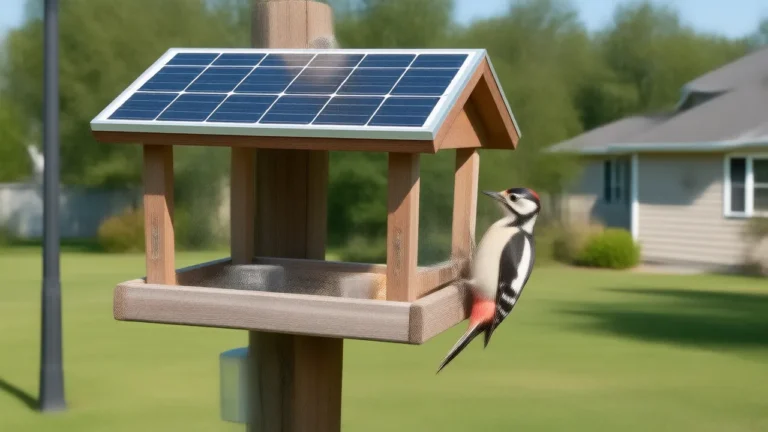
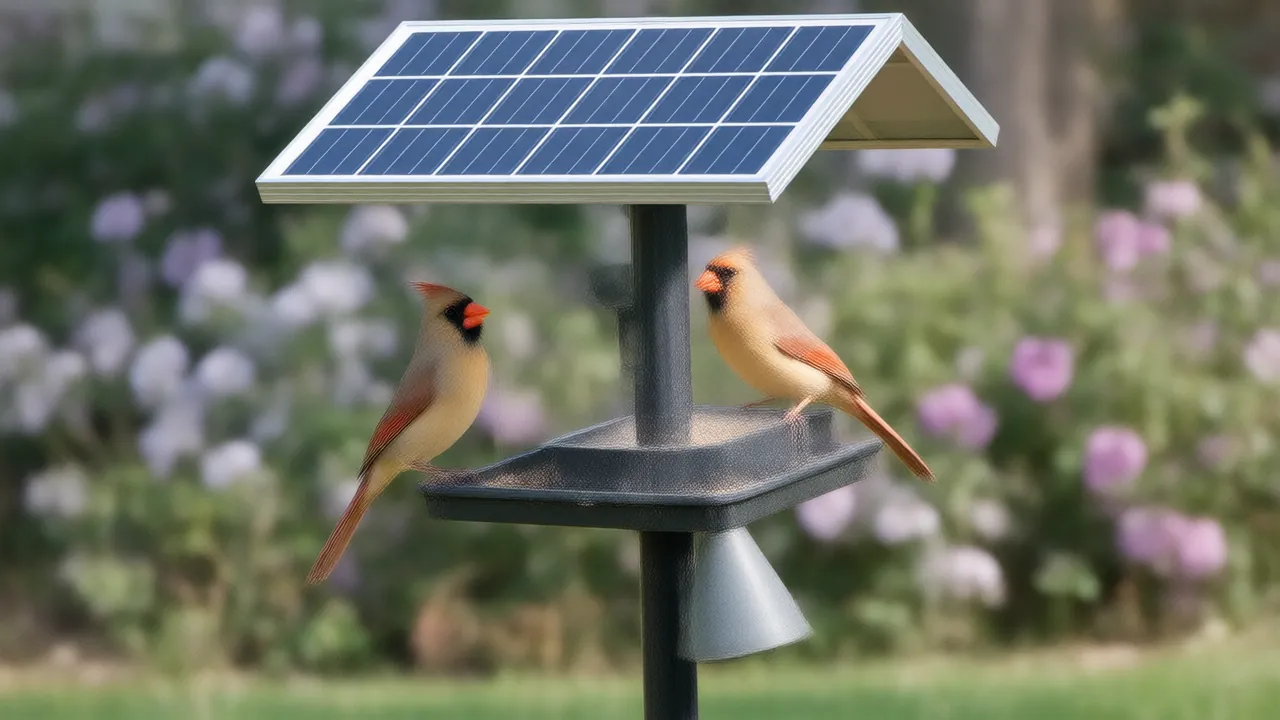
For most yards, the best mount for a bird feeder camera is a baffled pole about 5 feet high, 8 to 10 feet from anything a squirrel can jump from, in a spot with several hours of direct sun and a solid WiFi signal. Deck and window mounts are closer to the router but often shaded by the house; railings help squirrels, and trees are shady and shaky.
In this guide
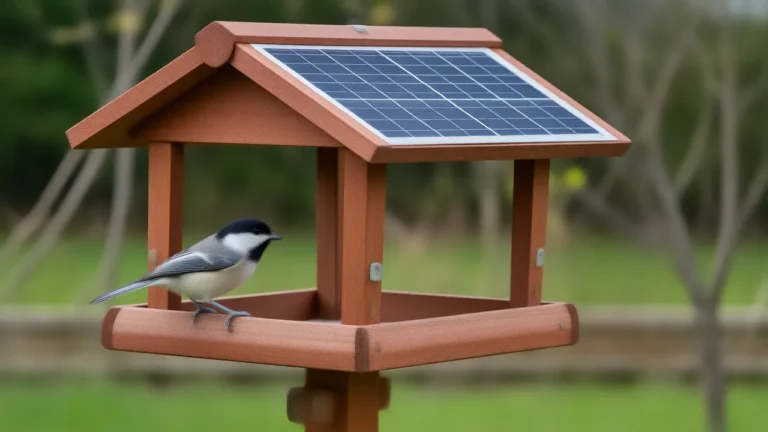
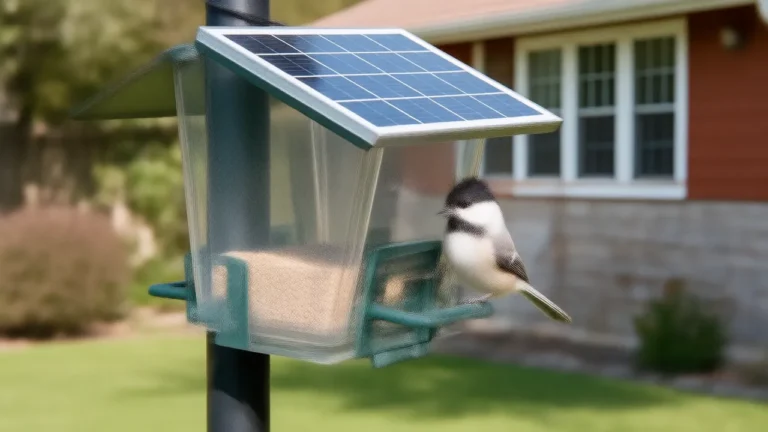
Where you mount a feeder camera matters as much as the camera itself. The same camera can record sharp, well-lit clips of cardinals in one spot and blurry, backlit squirrels in another. The goal is a mount that gets sun on the solar panel, keeps a strong WiFi signal, stays steady in the wind and gives birds a safe way in and out.
For most yards, the answer is a sturdy pole with a baffle, out in the open but within reach of your WiFi. Here are the common options and the trade-offs of each.
Mounting options compared
| Mount | Sun for the panel | Squirrel access | WiFi and view |
|---|---|---|---|
| Freestanding pole in the lawn | Best: you choose the sunniest spot | Low with a baffle and 8 to 10 feet of clearance | Depends on distance from the house; easy to get a clean background |
| Deck railing or bracket arm | Varies; the house and roof overhangs can shade it | High; squirrels run along railings | Strong signal and close views; seed mess lands on the deck |
| Tree branch or trunk strap | Often poor; leaves shade it from spring to fall | High; trees are squirrel highways | Natural look, but branches sway and trigger false alerts |
| Fence or wooden post | Good if the fence line is open to the south | High on a fence; better on a lone post with a baffle | Usually fine; watch for the street or neighbors in the frame |
| Window mount | Only on a sunny side of the house | Low unless near a ledge, tree or roof | Strongest signal and closest views; suction cups can slip in the cold |
Pole mounts: the most flexible choice
A pole lets you put the camera exactly where conditions are best, which is why it suits most yards.
- Height: put the feeder about 5 feet up. That is high enough for a baffle to work and low enough to refill the seed and wipe the lens without a ladder.
- Clearance: keep the pole 8 to 10 feet from trees, fences, roofs and railings. Squirrels can leap that far sideways, and they drop onto feeders from branches overhead.
- Baffle: fit a cone or cylinder baffle on the pole just below the feeder, with its bottom edge at least 4 feet off the ground. The guide to how to place a squirrel baffle has the measurements.
- Stability: a pole that sways turns clips into a blur. Sink it about 2 feet into firm soil or use a ground socket, and choose a thick, multi-piece pole over a thin shepherd's hook for a camera feeder.
- Cover: keep shrubs 10 to 12 feet away, so birds have somewhere safe to wait but cats cannot pounce straight from cover onto the feeder.
Deck, wall and window mounts
Mounting on or near the house usually solves the WiFi problem, since the router is only a wall or two away, and it puts birds where you can watch them without opening the app. The trade-offs are sun, squirrels and mess.
- Deck railings: a bracket arm that holds the feeder a couple of feet out from the rail makes things harder for squirrels but does not stop a determined one. Fallen seed and droppings land on the deck, so hulled sunflower keeps the mess down. See bird feeder on a deck for more.
- House walls: an extension arm on a wall bracket works on the sunny side of the house. Check that the eaves do not shade the panel in the middle of the day, especially in summer when the sun is high.
- Windows: a window mount can give close views, but nearby glass still needs a full exterior screen or dense exterior markings. Distance does not replace treatment; see current window guidance. Check direct solar-panel sun separately.
Trees and fence posts
A camera feeder hung in a tree looks natural, and birds approach it readily. The problems are shade, shake and squirrels. Leaves block the panel from late spring into fall, branches move in the wind and fill your phone with empty motion alerts, and squirrels reach almost any feeder hung in a tree. If a tree is your only option, choose a sturdy lower limb on the sunny side, hang the feeder as far out along it as you can reach, and use a short, fixed hanger instead of a long chain.
Fence posts work well when the post stands on its own and gets sun. A post in the middle of a fence line is easy for squirrels running along the top rail, and a camera on a fence often looks straight into a neighbor's yard or the street. Check the frame on live view before you drill anything.
Solar panel placement through the seasons
The panel on a solar feeder camera needs direct sun, not just daylight. A spot in bright shade all day will not keep the battery topped up.
- Aim for several hours of direct sun, including the middle of the day. In the US, an open southern exposure gets the most.
- Check the spot in different seasons. A tree that is bare in March may shade the panel from May to October, and the low winter sun casts long shadows from houses and fences.
- Expect slower charging in winter, when days are short and the sun is low. Opening live view less often helps the battery through December and January.
- Brush snow off the panel after storms, and wipe off pollen and droppings when you refill the seed.
The guide to bird feeder camera solar panel placement covers angles and seasonal shade in more detail.
Check the WiFi before you dig
A camera that keeps dropping offline usually has a signal problem. Before you set a pole in concrete or screw a bracket into siding, test the exact spot:
- Stand where the feeder will go with your phone on your home WiFi and play a video. If it stalls, the camera will struggle too.
- Better still, hold the camera at that spot and watch its live view for a couple of minutes.
- Think about what sits between the router and the yard. Brick, stone, stucco, metal siding, large appliances and foil-backed insulation all weaken the signal.
- If the signal is weak, move the router closer to that side of the house, or add a mesh node or extender by a window facing the feeder.
See how far a bird camera can be from the router for more on range.
Get the view right
- Keep the sun behind the lens. In the US, a lens facing roughly north avoids shooting into the sun for most of the day. With a camera built into the feeder, that means turning the whole feeder.
- Mind the background. A hedge or evergreens well behind the feeder give a soft, even backdrop. A street, a waving flag or tall grass in the frame sets off motion alerts.
- Respect privacy. Keep neighbors' windows and yards and the sidewalk out of the frame, and check any homeowners association rules about feeders and cameras.
- Leave room to work. You will refill seed and wipe the lens often, so make sure you can reach the feeder easily in winter boots.
The guide on which way a bird feeder camera should face covers angles and lighting in more depth.
Questions people ask
Where is the best place to put a bird feeder camera?
On a baffled pole about 5 feet high, 8 to 10 feet from trees and fences, in a spot with several hours of direct sun, a strong WiFi signal, and shrubs 10 to 12 feet away for cover.
Can you mount a bird feeder camera on a tree?
Yes, but expect shade on the solar panel, shaky clips in the wind and easy access for squirrels. A pole in the open usually works better.
How far from the house can a bird feeder camera be?
As far as your WiFi reaches reliably. Test the exact spot with your phone or the camera's live view before mounting, and add an extender by a window if the signal is weak.
Which direction should a feeder camera face?
Away from the sun where possible. In the US, a lens facing roughly north keeps the sun behind the camera for most of the day.
Written by the Backyard Birdcam team with AI assistance. Found something we got wrong? Email shop@smarternewsnow.com and we will fix it. How we write our guides.