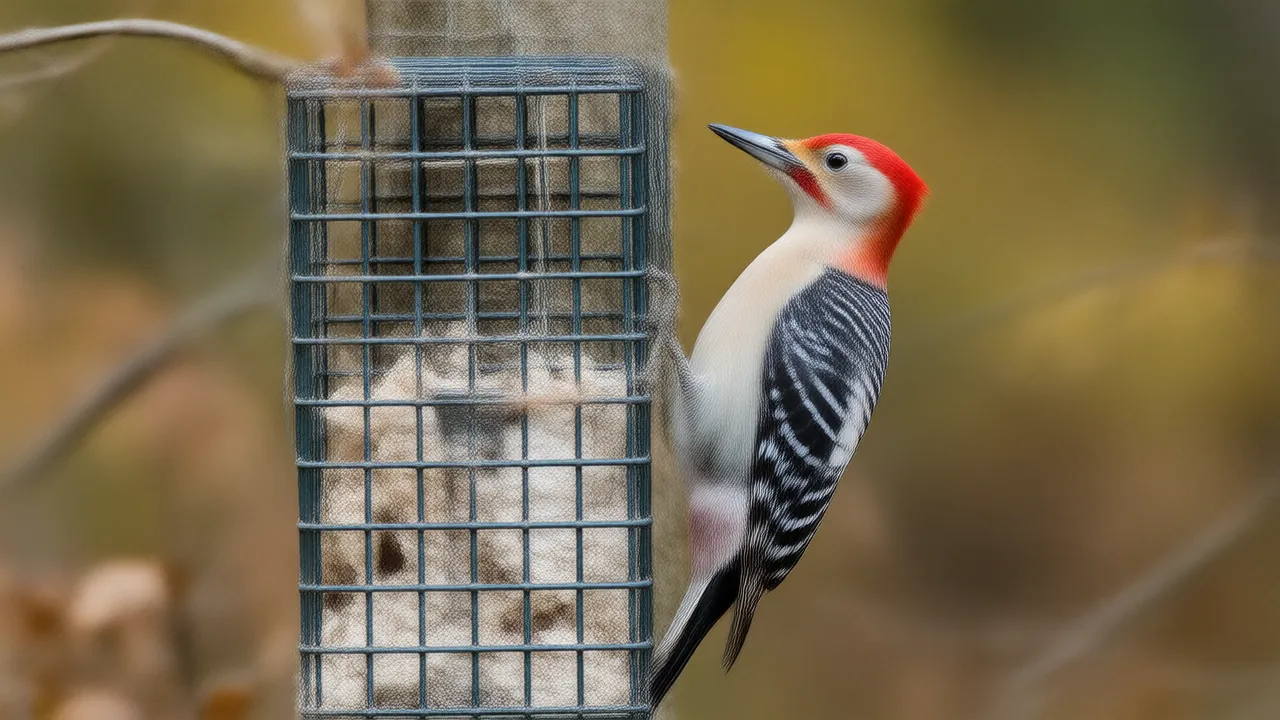
Quick answer
To attract woodpeckers, hang a suet feeder on or near a tree trunk, add shelled unsalted peanuts or black oil sunflower, and put out water. Leave dead trees and limbs standing where they cannot fall on anything, since woodpeckers feed on insects in dead wood and nest in it. Downy, hairy and red-bellied woodpeckers are the most common feeder visitors.
In this guide
To attract woodpeckers to your yard, hang a suet feeder close to a tree trunk, add shelled peanuts or sunflower seed, and leave some dead wood standing where it is safe to do so. Suet brings them in for food; dead limbs, snags and mature trees give them insects to dig for and places to carve nest holes.
Across most of the US, the woodpeckers you can expect at feeders are the downy, the hairy and, in the eastern half of the country, the red-bellied. Northern flickers and pileated woodpeckers visit too where the habitat suits them.
Which woodpeckers come to feeders, and what they eat
Woodpeckers mostly eat insects they pry out of bark and wood, such as beetle larvae and ants, but many also eat nuts, seeds, acorns and fruit. That mixed diet is why suet and nuts work so well at a feeder.
| Woodpecker | Where you will find it | Best feeder foods | Notes |
|---|---|---|---|
| Downy | Most of the US, except the driest desert areas | Suet, sunflower, peanuts | The smallest; happily uses tube feeders too |
| Hairy | Wooded areas across the US | Suet, peanuts, sunflower | Larger and warier than the downy; likes big trees |
| Red-bellied | Eastern half of the US | Suet, peanuts, sunflower, fruit | Males have a red cap and nape, females a red nape only; the red belly is only a faint wash |
| Northern flicker | Throughout the US | Suet at times; mostly ants on the ground | Often feeds on lawns rather than trees |
| Pileated | Mature forests in the East, the northern Rockies and the Pacific Northwest | Suet, especially from a tail-prop feeder | Crow-sized; needs large trees nearby |
| Red-headed | Open woods in the eastern and central US; local | Suet, nuts, sunflower | Stores food in cracks and crevices |
| Gila | Desert Southwest | Suet, fruit, nectar | Sometimes drinks from hummingbird feeders |
If you are unsure which small black-and-white woodpecker you are seeing, the guide to downy vs hairy woodpecker shows how to tell the two apart by bill length and size.
The best woodpecker foods
Suet
Suet is rendered beef fat, often mixed with seeds, nuts or dried fruit and pressed into square cakes. It is high in energy and easy for woodpeckers to eat while clinging, which is why it is the single best woodpecker food. Plain suet and suet with peanuts are both reliable; cakes loaded with millet or cracked corn tend to attract starlings and other birds more than woodpeckers. More on the options is in what birds eat suet.
Raw suet softens and spoils in warm weather, and soft fat can smear onto feathers. From late spring through summer, switch to no-melt suet dough, which holds its shape in heat, or take suet down until fall in hot climates.
Peanuts
Shelled peanuts in a mesh feeder draw downy, hairy and red-bellied woodpeckers, along with jays, nuthatches and titmice. Use raw or dry-roasted peanuts with no salt or flavoring. Keep them dry and throw out any that look moldy or smell musty, since moldy peanuts can make birds sick.
Sunflower and fruit
Black oil sunflower and hulled sunflower chips bring woodpeckers to ordinary tube and hopper feeders, especially downy and red-bellied. Red-bellied woodpeckers also take orange halves and apple pieces, and in the desert Southwest, Gila woodpeckers come to fruit and nectar.
Setting up a woodpecker feeder
Woodpeckers are built for vertical surfaces. They cling with strong feet and brace against the trunk with stiff tail feathers, so they prefer feeders that let them feed in that same upright position.
- Suet cage: a simple wire cage holding one cake. Hang it on or close to a tree trunk, where woodpeckers approach naturally by hitching up the bark.
- Tail-prop suet feeder: a cage with a long flat panel below it. The panel gives larger woodpeckers, including the pileated, a surface to brace against.
- Suet log: a short log with holes drilled in it and packed with suet or suet dough. It looks and feels like a branch, which woodpeckers readily accept.
- Upside-down suet feeder: the suet faces downward under a small roof. Woodpeckers, nuthatches and chickadees can feed hanging upside down; starlings find it much harder.
Hang feeders at a height you can reach easily for refilling, and near trees so woodpeckers have a trunk to land on and cover to retreat to. The guide to hanging a suet feeder covers heights, hardware and squirrel-proofing.
If European starlings clean out your suet in a day, switch to an upside-down suet feeder: woodpeckers, nuthatches and chickadees feed from below easily, while starlings find it awkward. A cage surrounded by a second, wider cage also keeps starlings out, but it shuts out larger woodpeckers such as the red-bellied too, so it suits yards where downy woodpeckers are the main visitors. The guide to keeping starlings off suet has more options.
Raccoons and opossums raid suet at night. If a cage is torn open or missing by morning, bring the suet in at dusk.
Why dead wood and snags help
Food at a feeder is only part of what woodpeckers need. Dead and dying wood is where much of their natural food lives, because beetle larvae and carpenter ants tunnel into softening wood. It is also where most woodpeckers carve their nest cavities. Downy and hairy woodpeckers, for example, typically dig a fresh nest hole in dead wood each spring.
Those old cavities are then reused by birds that cannot dig their own, such as chickadees, titmice, nuthatches, bluebirds and wrens. So a single dead tree can support several species over the years.
A few ways to keep dead wood in the yard safely:
- Leave a snag where it cannot fall on anything. A dead tree away from the house, driveway, fences, power lines and play areas can stand for years.
- Ask for a tall stump instead of full removal. When a dying tree must come down, a tree service can often cut it to a safe height and leave the trunk standing as a snag.
- Keep dead limbs on healthy trees if they overhang only lawn or garden beds.
- Stack a log pile in a back corner. Rotting logs feed insects that flickers and other birds eat.
Keep in mind that snags near buildings can be a real hazard, and a certified arborist is the right person to judge whether a dead tree is safe to keep.
Trees, water and nest boxes
Mature trees matter more to woodpeckers than anything you can buy. Oaks supply acorns and a huge variety of insects, and pines, hickories and other native trees offer bark to forage and wood to nest in. If you plant, favor native trees and fruiting shrubs such as dogwood and serviceberry, and go easy on pesticides; ants and wood-boring insects are woodpecker food, and flickers in particular rely on ants in the lawn.
A bird bath draws woodpeckers in to drink and bathe, especially in dry spells and in winter if the water stays open.
Most woodpeckers prefer to excavate their own nest, but some will use a nest box. Northern flickers are the most likely, particularly if the box is packed full of wood shavings so the birds can dig it out themselves. Red-bellied woodpeckers occasionally use boxes too. Put boxes up by late winter, before nesting starts.
What to do this week
- Hang a suet feeder on or near a tree trunk, with a plain or peanut suet cake.
- Add a mesh feeder of shelled, unsalted peanuts or a tube of black oil sunflower nearby.
- Look for dead wood you can safely leave standing, and hold off on removing it.
- Put out water in a shallow bath.
- Be patient. Woodpeckers can take a few weeks to find a new suet feeder, and they visit most from fall through early spring. In summer, watch for adults bringing their young to the suet.
If you live near mature forest, the largest of them may turn up too; the guide to attracting pileated woodpeckers explains what they need.
Questions people ask
What is the best food to attract woodpeckers?
Suet is the most reliable woodpecker food, followed by shelled, unsalted peanuts and black oil sunflower. Red-bellied woodpeckers also eat fruit such as orange halves.
Where should you hang a woodpecker feeder?
On or close to a tree trunk, or on a pole near trees. Woodpeckers approach by climbing bark, so a feeder near a trunk feels natural to them and gives them quick cover.
Can you feed woodpeckers suet in summer?
Yes, but raw suet softens and spoils in heat. Use no-melt suet dough in warm months, or take suet down until fall where summers are hot.
Do woodpeckers use birdhouses?
Most prefer to dig their own nest cavity in dead wood. Northern flickers will use a nest box filled with wood shavings, and red-bellied woodpeckers occasionally do.
Will attracting woodpeckers damage my house?
A suet feeder is not usually the reason woodpeckers peck a house. Pecking on siding more often means drumming to claim territory or searching for insects in the wood, which is a separate problem to address.
Written by the Backyard Birdcam team with AI assistance. Found something we got wrong? Email shop@smarternewsnow.com and we will fix it. How we write our guides.