Quick answer
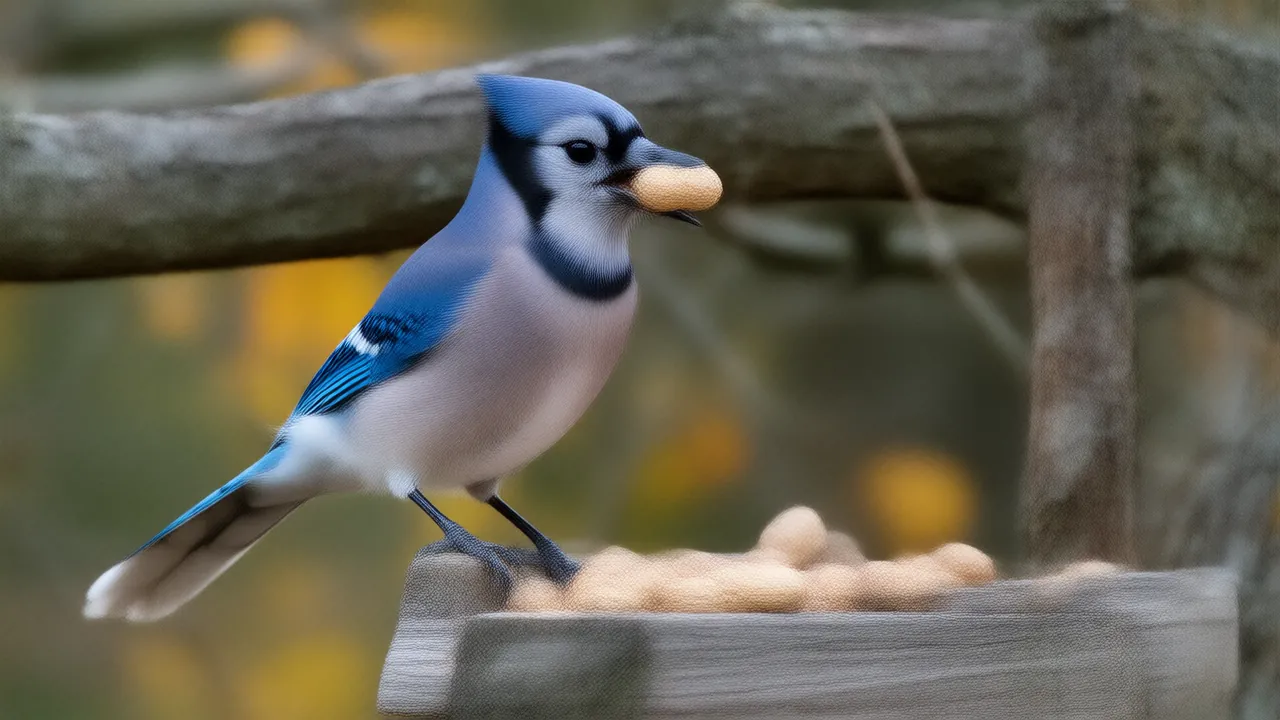
Offer unsalted peanuts, in or out of the shell, plus black oil sunflower seed and a little cracked corn on a platform feeder or a sturdy hopper with room to land. Blue jays prefer open feeders to small tube perches. Oak trees, a bird bath and tall cover nearby make your yard even more appealing, especially in fall when jays gather and hide acorns.
In this guide
Blue jays are bold, loud and clever, and they come readily to backyard feeders once they find something worth carrying away. The fastest way to bring them in is unsalted peanuts in the shell on an open platform feeder. Add oak trees, tall cover and a place to drink, and jays will visit all year in much of their range.
One thing to check first: blue jays live mainly east of the Rocky Mountains. In most western yards the jay you see is a Steller's jay or a scrub-jay, which like many of the same foods. See Steller's jay identification if you are not sure which one is visiting, or how to attract scrub-jays if you live in the West.
What blue jays eat in the wild
Blue jays eat a little of almost everything, but nuts and seeds carry them through fall and winter. Acorns are the classic staple, along with beechnuts and other tree nuts, grains and weed seeds. In spring and summer they eat many more insects, including caterpillars, beetles and grasshoppers, plus berries and other fruit. Now and then they raid other birds' nests for eggs or nestlings. That is natural behavior, even if it is hard to watch.
A blue jay can carry several acorns at a time, holding them in a pouch in its throat and in its bill, then fly off to bury them one by one. Many are never dug up again, and that habit helps spread oak trees across the landscape.
Best blue jay food for your feeder
| Food | How to offer it | Notes |
|---|---|---|
| Peanuts in the shell | Platform feeder, ground tray or peanut wreath | The top draw; buy unsalted peanuts sold for wild birds |
| Shelled peanuts | Platform, hopper or mesh peanut feeder | Also feeds woodpeckers, titmice and nuthatches; keep them dry |
| Black oil sunflower | Hopper or platform | Easy to crack; also feeds most other feeder birds |
| Striped sunflower | Hopper or platform | Thicker shell that jays and cardinals open easily |
| Cracked or whole corn | Platform or ground tray, in small amounts | Also draws squirrels, grackles and deer; spoils when wet |
| Acorns | Scattered on a platform in fall | Gather sound, uncracked acorns from under oaks |
| Suet | Suet cage or tail-prop suet feeder | A cold-weather extra |
Skip salted, flavored or candied nuts, and never put out peanuts that smell musty or look moldy. Moldy peanuts can contain toxins that are harmful to birds. For more on whole peanuts and who eats them, see what birds eat unshelled peanuts.
Feeders blue jays can use
Blue jays are about 10 to 12 inches long, far bigger than a chickadee or a finch, so many small-bird feeders do not suit them.
- Platform or tray feeders are the best choice. They give jays room to land, look around and grab a peanut.
- Hopper feeders with a wide ledge work well for sunflower seed and shelled peanuts.
- Peanut wreaths and whole-peanut feeders make jays work a little for each nut, which slows how fast the peanuts disappear.
- Tube feeders with short perches are awkward for a bird this size. A jay may cling for a moment but rarely stays.
- Weight-triggered squirrel-proof feeders may close under a heavy jay. If you use one, check whether its setting lets jays through.
Put the jay feeder where they can see it from the trees: near the edge of the yard, about 5 to 6 feet off the ground, with tall trees within a short flight. Jays like to swoop in, grab food and retreat to a branch to eat or to hide it.
Trees, water and cover that keep jays around
- Oaks above all. If you have room, plant a native oak suited to your area. Beech, hickory and other nut trees help too.
- Tall trees and dense evergreens give jays lookouts, shelter from weather and nest sites. Blue jays usually build their nests in the crotch of a tree or on a thick outer branch, often well above head height.
- Water. Jays drink and bathe often. A bird bath with a shallow, sloping edge works well, and a heated one keeps water open in freezing weather.
- Fruiting native shrubs add berries in late summer and fall.
Leave active nests alone. Blue jays, like nearly all native birds, are protected by federal law, and a jay near its nest will scold, call loudly and sometimes swoop at people or pets that come too close.
Fall: the best season to attract blue jays
Fall is when blue jays are easiest to see. From late summer into late fall they collect and hide acorns and other nuts, and they come to feeders again and again to carry off peanuts and seeds for later. A tray of peanuts that empties in minutes in October is usually being stored, not eaten on the spot.
Fall is also migration time. Some blue jays move south in loose flocks, often along lakeshores and coastlines, while others stay put all winter. Which ones migrate is hard to predict, and the pattern changes from year to year. The guide do blue jays migrate? covers what is known.
Living with blue jays at your feeders
Jays have a reputation as bullies. They do push smaller birds off a feeder for a moment, and they can empty a tray quickly. A few simple changes keep everyone fed:
- Set up a separate jay station with peanuts and corn a little way from your small-bird feeders.
- Offer peanuts in a wreath or mesh feeder so jays take them one at a time.
- Keep tube and nyjer feeders with short perches for chickadees and finches. Jays rarely bother with them.
- Put out peanuts in the morning in small amounts. A tray that is empty by evening draws fewer raccoons and rats at night.
Squirrels love the same peanuts and corn. A baffle on the pole below the platform, with the pole 8 to 10 feet from trees, fences and roofs, keeps most of them off without harming anyone. Some people also set out a separate squirrel corner far from the bird feeders, which keeps the peace.
Blue jays also act as a neighborhood alarm. Their harsh calls often warn other birds of a hawk or a cat, and they can imitate the scream of a Red-shouldered or Red-tailed Hawk remarkably well. If the feeders suddenly go quiet after a jay calls, look up. Males and females look almost the same; blue jay male vs female covers the subtle clues.
Quick start: attract blue jays this week
- Put up a platform feeder about 5 feet high near tall trees.
- Add a small handful of unsalted in-shell peanuts and some black oil sunflower seed.
- Set a shallow bird bath within sight of the feeder.
- Refill in small amounts each morning so the food stays fresh and dry.
- Give it a week or two. Once one jay finds the peanuts, its calls tend to bring others.
Questions people ask
What is the best food to attract blue jays?
Unsalted peanuts in the shell are the top choice. Black oil sunflower, striped sunflower and cracked corn on a platform feeder also work well.
Do blue jays eat from tube feeders?
Not often. Most tube feeders have perches too short for a bird that size. Platform feeders, hoppers with a wide ledge and peanut wreaths suit them better.
Why do blue jays take so many peanuts at once?
They are storing food. Blue jays carry nuts away and bury or hide them to eat later, especially in fall.
Do blue jays live in the western US?
Mostly not. Blue jays live mainly east of the Rocky Mountains, and most western yards get Steller's jays or scrub-jays instead.
Written by the Backyard Birdcam team with AI assistance. Found something we got wrong? Email shop@smarternewsnow.com and we will fix it. How we write our guides.