Quick answer
Place a bird bath in partial shade, on level ground, about 10 to 15 feet from a tree or shrub birds can escape to, with open ground around it so cats cannot hide nearby. Keep it out from directly under feeders and busy perching branches, within reach of a hose, and visible from a window. Pedestal baths suit most songbirds; ground baths suit robins and doves.
In this guide
The best bird bath placement is in partial shade, on level ground, within a short flight of a tree or shrub but with open ground around it so a cat cannot sneak up. Birds are wet, heavy and slower to take off while bathing, so they choose water where they can see danger coming and reach cover fast.
Get those two things right, cover close by and open space at the rim, and most other choices, such as pedestal or ground level, matter less. After that, think about the water: shade keeps it cooler and cleaner, and a spot near the hose makes it easy to refill.
Bird bath placement checklist
- Cover nearby: a tree or shrub roughly 10 to 15 feet away, close enough for a quick escape.
- Open ground at the bath: no dense, low shrubs or tall plants right beside it where a cat could hide.
- Partial shade: morning sun and afternoon shade is ideal in most of the country.
- Not directly under a feeder or a favorite perching branch, which fill the water with hulls and droppings.
- Level and stable: water should sit evenly, and the bath should not rock or tip.
- Visible from a window you use, so you can enjoy it and see when it needs refilling.
- Within reach of a hose for daily topping up and easy cleaning.
Bird bath in sun or shade?
Partial shade is the best compromise. Water in full summer sun warms up quickly, evaporates fast and grows algae within days, so you end up scrubbing and refilling constantly. Shade keeps the water cooler and fresher. Deep shade all day can make a bath harder for birds to spot, and a dim, damp corner may feel less safe to them, so a spot with dappled light or afternoon shade usually works best.
The answer shifts with climate and season. In the hot South and Southwest, afternoon shade makes a real difference to water temperature and evaporation. In cold winters, a sunny spot helps keep the water open longer on freezing days. If you use a heated bath in winter, sun matters less; placement then depends on reaching an outdoor outlet safely.
Watch where the shade falls at mid-afternoon in July before you settle on a spot. Shade from a house or tree moves a long way between spring and midsummer.
How close to cover: cats, hawks and escape routes
Bathing birds are vulnerable. Soaked feathers slow them down, and their attention is on the water. They want two things at once: cover close enough to reach in a dash when a hawk swoops, and enough open space around the bath that nothing can ambush them from the ground.
A common rule of thumb is to place the bath about 10 to 15 feet from dense shrubs or trees. That gives birds a nearby branch to fly to, drip-dry and preen on, while leaving a clear zone around the rim. The biggest ground threat in most yards is a free-roaming cat, which hunts by hiding in low cover and pouncing. Keep hostas, tall grasses and low hedges from crowding right up to the bath.
An open lawn with a small tree a short hop away is close to ideal. A bath tucked deep inside a flower border looks lovely but often goes unused, or becomes a hunting spot.
Bird bath under a tree: pros and cons
A tree offers shade and perches, both of which birds like near water. The trade-off is what falls in. Leaves, seeds, pollen, sap and droppings from birds perched overhead all end up in the basin, so a bath directly under a canopy needs cleaning far more often.
The best compromise is near the edge of the tree's canopy rather than beneath its center. The bath still gets some shade and the branches are a short flight away, but less debris lands in the water. Avoid placing it right under a branch that birds use as a regular perch, and never directly beneath a bird feeder. The guide to cleaning a bird bath covers how often to scrub and what to use.
Bird bath height: pedestal, ground or hanging
| Type | Best for | Watch out for |
|---|---|---|
| Pedestal (about 2 to 3 feet tall) | Most songbirds; easy to see and clean; birds can watch for cats from above ground level | Needs a level, firm base; lightweight ones tip in wind or when squirrels land on the rim |
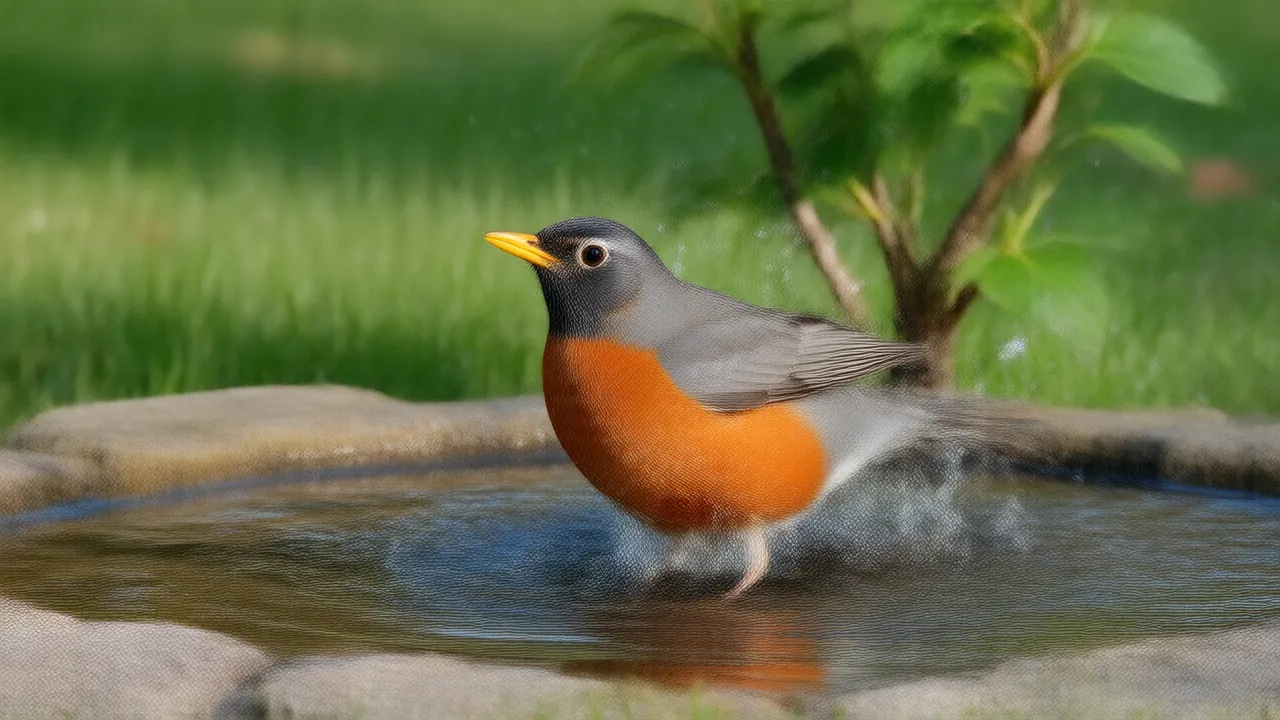
| Ground level | Robins, doves, sparrows, towhees and other birds that feed on the ground; drinking and bathing at puddles is natural to them | Most exposed to cats; place it in open lawn, well away from low cover |
| Hanging | Small yards, patios and balconies; out of reach of most ground predators | Swings in wind and spills; small basins dry out fast in summer |
No single height suits every bird. Many yards do well with a pedestal bath near the house and a shallow dish on the ground in a more open spot. If you are considering the second option, the guide to a ground-level bird bath covers setup and safety.
Whatever the height, depth matters too. Songbirds prefer water no deeper than about 1 to 2 inches, with gently sloping sides and a rough surface they can grip. If your basin is deeper, add a few flat stones. The details are in how deep a bird bath should be.
Other things to plan for
Make the water easy to find
Birds notice water by sight and sound. The shimmer and splash of moving water draws them from farther away than a still basin, so a dripper, a small bubbler or a solar fountain can help a new bath get discovered. Moving water also discourages mosquitoes from laying eggs. See the guide to a bird bath dripper for simple options.
Windows
Birds visiting a bath can collide with reflective or see-through glass. Treat hazardous panes with a full exterior screen or repeating marks no more than 2 inches apart across the outer surface. Moving the bath farther away is not a substitute for glass protection; see current window-collision guidance.
Feeders
Having water and food in the same part of the yard is good for birds, but keep them apart by several feet. Seed hulls and droppings from a feeder quickly foul a bath placed underneath it. Plan bird-feeder placement separately so the bath is not underneath the seed spill.
Winter
Where winters freeze, open water is scarce and birds will come to a bath readily. A heated bath or a de-icer designed for bird baths keeps it open; place it where a cord can reach an outdoor-rated, ground-fault-protected outlet without crossing paths. More detail is in the guide to a heated bird bath. Never add antifreeze, salt or any chemical to keep bird bath water from freezing.
If birds are not using the bath
A new bath can take a few days to a few weeks to catch on. If it is still being ignored, work through these in order:
- Check the depth. Water deeper than about 2 inches puts off most small birds. Add flat stones.
- Check the footing. A slick glazed or glass basin gives birds nothing to grip. Add a flat textured stone or some coarse gravel.
- Check the water. Green, smelly or scummy water gets skipped. Scrub the basin and refill with fresh water every two or three days, daily in hot weather.
- Move it closer to cover if it sits in the middle of a large open space, or farther from low shrubs if cats are around.
- Add movement. A dripper or small fountain often makes the difference.
Questions people ask
Should a bird bath be in sun or shade?
Partial shade is best in most places. Shade keeps water cooler and slows algae and evaporation, while some sun helps birds spot the water and helps keep it open in winter.
Is it OK to put a bird bath under a tree?
Yes, but place it near the edge of the canopy rather than directly under the center. Leaves, seeds and droppings falling from above mean a bath under a tree needs more frequent cleaning.
How far should a bird bath be from bushes?
About 10 to 15 feet from dense shrubs is a common rule of thumb. That keeps an escape route close for birds while leaving open ground so cats cannot hide next to the bath.
What is the best height for a bird bath?
A pedestal bath about 2 to 3 feet tall suits most songbirds and keeps them above ground level. Ground-level baths also work well for robins, doves and sparrows if they sit in open space away from cover where cats hide.
Written by the Backyard Birdcam team with AI assistance. Found something we got wrong? Email shop@smarternewsnow.com and we will fix it. How we write our guides.