Quick answer
Feed birds in bear country only while bears are denned, which in most northern areas means roughly December through February or March. Take seed, suet and nectar feeders down at the first thaw in spring and keep them down until bears den again in late fall. In between, attract birds with water, native plants and nest boxes, and store seed where bears cannot smell or reach it.
In this guide
- Do bird feeders attract bears?
- When to feed birds in bear country: a seasonal calendar
- If you feed outside the safe window, cut the risk
- Bear-safe ways to keep birds in your yard
- Store seed and clean up as if a bear is watching
- What to do if a bear visits your feeder
- A bear-country checklist for this fall
- Sources and editorial verification
The safest way to feed birds in bear country is to feed only while the bears are asleep. Put seed and suet out after local bears have gone into their dens, which in most northern areas means late November or December, and take everything down in early spring before they wake up. For the rest of the year, bring birds in with water, native plants and shelter instead of food.
In practice, that means feeders stay down for most of the year: in northern bear country, from about March or April, when bears start to wake, until late November or December. A bear that learns your yard means an easy meal rarely forgets it, and that lesson usually ends badly for the bear. Birds do not need your feeder to get through the warm months, and a yard with water and the right plants stays busy anyway.
Do bird feeders attract bears?
Yes, and strongly. Black oil sunflower seed, peanuts and suet are packed with fat and calories, and a bear's nose can find a full feeder from a long way off. To a hungry bear, a feeder is the easiest high-value meal in the neighborhood.
Nectar counts too. Bears drain hummingbird and oriole feeders for the sugar, and they will pull down tube feeders, bend steel poles and tear suet cages apart. Spilled seed on the ground can be enough to bring one back night after night, even after the feeder itself is gone.
The bigger problem is what happens next. A bear that finds food around houses loses some of its caution around people. It starts checking trash cans, grills, porches and garages. Bears that grow bold around homes are often trapped and moved, or put down, which is why wildlife agencies in bear states ask people to take feeders down for much of the year. Some states and towns go further and restrict bird feeding during bear season, so check your local rules before you hang anything.
When to feed birds in bear country: a seasonal calendar
Black bears live in wooded country across a large part of the nation, from New England and the Appalachians to the upper Midwest, parts of the Southeast and much of the West. How long they sleep depends on where you live, so treat this as a rough guide and adjust it to your local bears.
| Time of year | What bears are doing | What to do with feeders |
|---|---|---|
| Late fall (November to December) | Most northern bears den once natural food runs out and snow arrives; some stay out late in a mild fall or a big acorn year | Wait until bear sightings and signs have stopped in your area, then put seed and suet out |
| Winter (December to February) | Denned in most northern areas | The safe window for seed, suet and peanuts |
| Late winter and spring (March to May) | Bears leave their dens hungry, while natural food is still scarce | Take every feeder down at the first thaw or the first bear report, whichever comes first |
| Summer (June to August) | Active, eating greens, insects and berries | Water, plants and nest boxes only; no seed, suet or nectar |
| Fall (September to November) | Eating almost nonstop to fatten up for winter | Keep feeders down; this is the riskiest time of all to feed |
In the South, dens are shorter, and in mild parts of the Southeast and Florida some bears, especially males, stay active on and off all winter. If bears in your area never really settle down, there is no truly safe feeding season. Skip seed feeders and lean on water and plants instead.
A warm spell in late winter can wake bears early. When the snow starts to melt, take the feeders in before you see the first bear, not after.
If you feed outside the safe window, cut the risk
Some people in areas with only occasional bear visits keep a feeder up a little longer. If you choose to, these steps lower the odds of a visit. None of them makes a feeder bear-proof.
- Hang it high and away. Suspend the feeder at least 10 feet off the ground and 4 feet from any trunk, post or deck rail, for example from a cable strung between two trees. A pole on its own rarely stops a bear; bears simply bend it.
- Bring feeders in every night. Bears around houses often come after dark, so emptying and storing feeders at dusk helps. It is not a cure, because bears also visit in daylight.
- Feed less. Put out only what the birds finish in a day, so nothing sits overnight.
- Keep the ground clean. Use hulled seed such as sunflower hearts, which leaves no shells, add a seed catcher tray under the feeder, and rake up whatever still falls.
- Skip suet and nectar in warm months. Suet smells strongly in the heat, and sugar water is a magnet. In summer, a bed of tubular flowers feeds hummingbirds without advertising a free meal.
If a bear has reached a feeder, remove the feeder and spilled seed and contact the responsible state, tribal or local wildlife authority. Do not improvise an electric fence or other high-risk deterrent. Where an authority recommends electrified exclusion, use a qualified installer and a system designed, permitted and maintained for that location. For lower-risk setup context, see what makes a bird feeder pole bear-resistant, while remembering that no pole makes continued feeding appropriate after bear activity.
Bear-safe ways to keep birds in your yard
Birds come to a yard for water, cover and natural food as much as for seed. During bear season, put your effort there.
Water
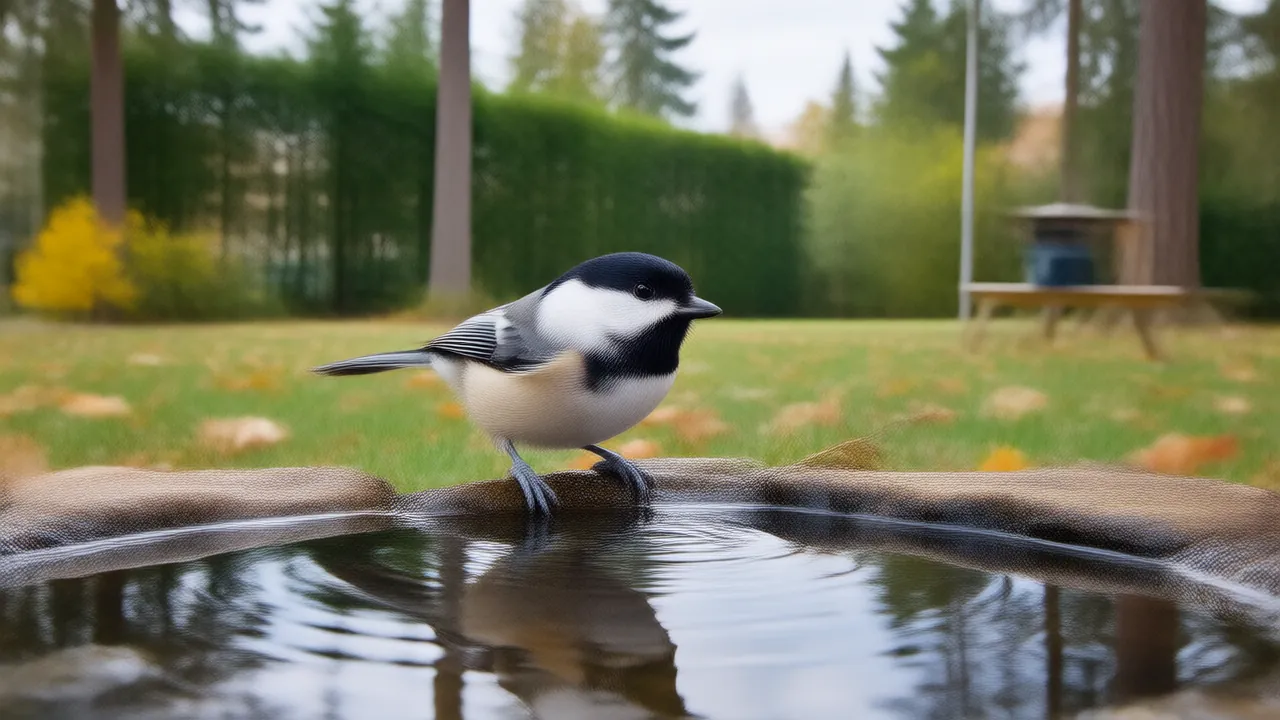
A clean bird bath brings in birds that rarely touch a seed feeder: robins, bluebirds, warblers and waxwings among them. Keep it shallow, 1 to 2 inches at the deepest point, set it near shrubs the birds can dive into, and change the water every couple of days. A dripper or small fountain adds the sound of moving water, which draws birds from farther away. A bath gives a bear no calories, so it is far less likely to become a habit than a feeder.
Native plants
Plant seed-bearing flowers and grasses near the house. Coneflowers, black-eyed Susans, sunflowers, asters and native grasses feed finches, sparrows and juncos straight from the stem if you leave the seed heads standing into winter. Tubular flowers such as bee balm, cardinal flower and, in the East, trumpet honeysuckle feed hummingbirds through the summer. Berry shrubs are a mixed blessing in bear country: bears love the fruit too, so plant serviceberry, dogwood and viburnum at the far edge of the yard rather than beside the deck. The guide to native plants for birds has choices for each region.
Shelter and nest boxes
A brush pile, a stand of evergreens or a thicket of native shrubs gives birds places to hide, roost and nest. Nest boxes sized for chickadees, wrens, bluebirds or swallows bring nesting pairs into the yard in spring, and watching the comings and goings at a box is every bit as rewarding as watching a feeder.
Store seed and clean up as if a bear is watching
The feeder is only one of the smells that pull bears toward a house. Deal with the others at the same time.
- Keep seed, suet and nectar supplies inside a locked garage, basement or shed, in metal cans with tight lids. A plastic bin on the porch is an invitation. More on storing bird seed safely.
- Rake up spilled seed and hulls under old feeding spots, especially in early spring when the feeders come down.
- Wash feeders before you put them away, so they carry less scent.
- Keep trash indoors or in a bear-resistant container until pickup day, feed pets indoors, and clean the grill after each use.
- Pick up fallen fruit under apple and crabapple trees, and protect chicken coops and beehives. They draw bears just as feeders do.
Raccoons, rats and deer follow the same spilled seed, so a tidy feeding area pays off twice. If something is emptying your feeders overnight and you are not sure what, these clues help you work out the culprit.
What to do if a bear visits your feeder
Stay inside and keep your distance. Never walk out to shoo a bear off a feeder, and never try to get close for a photo. Loud noise from a safe spot indoors, such as banging a pot by an open window, usually sends a black bear on its way.
Once it has left:
- Take every feeder down that day, hummingbird feeders included, and store them indoors.
- Clean up all seed, hulls and suet crumbs on the ground.
- Leave the feeders down for several weeks at least. Bears check places where they have found food before, and a bear that finds nothing on a few return trips moves on.
- If a bear keeps coming back, acts bold around people or tries to get into a building, call your state wildlife agency for advice.
Grizzly bears live in parts of Montana, Wyoming, Idaho and northeastern Washington, and across much of Alaska. The stakes are higher there, and local rules on food and attractants tend to be stricter. If you live in grizzly country, follow local guidance exactly.
A bear-country checklist for this fall
- Leave seed, suet and nectar feeders down until local bears have denned.
- Keep a bird bath clean and filled, and leave flower seed heads standing for finches and sparrows.
- Move seed into a metal can inside a locked building.
- Rake up old feeding spots and wash stored feeders.
- Choose a winter feeder spot you can see from a window, with a high cable hang if you want extra margin.
- Put a reminder on the calendar for late winter: feeders come in at the first thaw.
Sources and editorial verification
Editorial boundary for How to Feed Birds in Bear Country Safely: After bear activity, remove feeders and attractants and follow the current state, tribal or local wildlife authority rather than a fixed seasonal rule; Food examples are optional supplemental feeding, not a complete or universally suitable diet; avoid spoiled, salty, sweetened or contaminated food and prioritize habitat. Check linked sources and the responsible local authority again before acting because product documentation, disease conditions, wildlife rules and seasonal observations can change.
- US National Park Service — checked for bird feeders as bear attractants.
- Colorado Parks and Wildlife — checked for birdseed as a bear attractant.
- Cornell Lab of Ornithology — checked for pest-attractant control.
- Cornell Lab Project FeederWatch — checked for seed and food types.
- Cornell Lab Project FeederWatch — checked for responsible feeding basics.
- Cornell Lab of Ornithology — checked for feeder cleaning procedure.
Questions people ask
Do bird feeders attract bears?
Yes. Seed, suet and sugar water are rich, easy food, and bears can smell a feeder from a long way off. Spilled seed on the ground attracts them too, even after the feeder is gone.
When should you take bird feeders down in bear country?
In early spring, as soon as bears start leaving their dens, and keep them down until bears den again in late fall. Exact timing varies by region and by year, so watch for local bear reports.
Can a hummingbird feeder attract bears?
Yes. Bears drain nectar feeders for the sugar. In bear country, flowers are a safer way to feed hummingbirds, or bring nectar feeders in every evening and hang them high.
What should you do if a bear gets into your bird feeder?
Stay indoors and keep your distance. After it leaves, take all feeders down, clean up the seed on the ground, and leave feeders down for several weeks. Call your state wildlife agency if the bear keeps returning or acts bold.
Written by the Backyard Birdcam team with AI assistance. Found something we got wrong? Email shop@smarternewsnow.com and we will fix it. How we write our guides.