Quick answer
Start with one feeder of black oil sunflower seed where you can see it from a window, a regional field guide or a free bird ID app, and a notebook. Learn five common birds first, such as the Mourning Dove, House Finch and American Goldfinch, watch in the morning when feeders are busiest, and write down what you see. Binoculars can wait.
In this guide
To start backyard bird watching, hang one feeder of black oil sunflower seed where you can see it from a window you use every day, pick one way to identify birds (a regional field guide or a free bird ID app), and keep a notebook by the window. Watch in the first few hours after sunrise, when feeders are busiest, and learn five common birds well before you try to learn them all. You do not need a big yard, binoculars or any experience.
This plan keeps the first week simple: one feeder, one way to identify birds, a notebook, and five birds to learn first. Everything else can wait until you know what you enjoy.
Day 1: Put up one feeder where you can see it
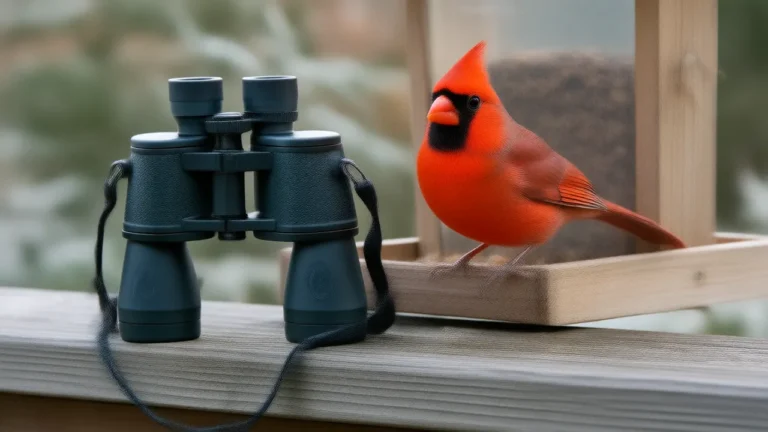
Pick a window you sit near often, such as the kitchen, the breakfast table or a home office. Put a feeder in view of it, fill it with black oil sunflower seed, and leave it alone. Black oil sunflower is the one seed most feeder birds will eat, from chickadees and cardinals to finches and nuthatches.
- Feeder type: a hopper or tube feeder is the easiest start. A low platform feeder also draws ground-loving birds like doves and juncos.
- Protect the window: use a complete exterior screen or closely spaced exterior marks across hazardous glass. Do not rely on a 3-foot/30-foot rule; follow current collision-prevention guidance.
- Cover nearby: a shrub or small tree about 10 feet away gives birds a safe place to wait and to escape hawks, without handing cats an ambush spot right beside the feeder.
New feeders often sit untouched for a few days, sometimes a couple of weeks. That is normal: birds need to find the feeder and decide it is safe. More on choosing the spot is in where to put a bird feeder.
Day 2: Choose one way to identify birds
You need one reliable reference, not five. Pick whichever suits you:
- A regional field guide. Get an edition for your half of the country, eastern or western, rather than one book for the whole continent. You will flip past fewer birds that never visit you, and the range maps show which birds live near you in each season.
- A free bird ID app. Most let you answer a few questions about size, colors and where you saw the bird, or upload a photo, and then suggest likely matches for your location and date. Some can also identify birds by song.
Whichever you choose, check the range map before you settle on an answer. A bird that looks right but does not live in your state at that time of year is almost always the wrong answer. The guide on how to use a bird field guide walks through how a typical guide is laid out.
Days 3 to 5: Learn these five birds first
Backyard birders across the US see the same small group of species again and again. Learning them well gives you a yardstick for everything else. These five are widespread across most of the lower 48 states, though some visit only in certain seasons:
| Bird | Size and look | Where to watch for it |
|---|---|---|
| Mourning Dove | About 12 inches; soft gray-brown, small round head, long pointed tail, black spots on the wings | On the ground under feeders and on platform trays; all year in most areas |
| House Finch | About 5 to 6 inches; males with a red head and breast, females plain brown with blurry streaks | Tube and hopper feeders, often in small groups |
| American Goldfinch | About 5 inches; males bright yellow with a black cap in summer, both sexes dull olive-brown in winter | Tube and nyjer feeders; seed heads of coneflowers and sunflowers |
| Dark-eyed Junco | About 6 inches; gray or gray-and-brown above, white belly, pale pink bill, white outer tail feathers that flash in flight | On the ground below feeders, mostly from fall to early spring in much of the US |
| American Robin | About 10 inches; gray-brown back, orange breast, yellow bill | On the lawn pulling up worms; rarely at seed feeders |
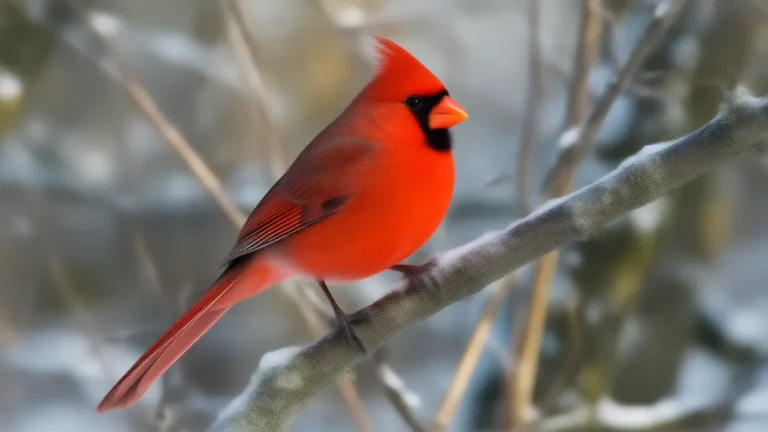
East of the Great Plains, add the Northern Cardinal, Blue Jay and whichever chickadee lives near you, and look for the Downy Woodpecker at suet across most of the country. In much of the West, scrub-jays, towhees, Lesser Goldfinches and, in winter, White-crowned Sparrows are common yard birds. The guide to common backyard birds covers many more of the birds you are likely to meet.
How to identify a bird in the few seconds you get
Beginners tend to focus on color. Color is useful, but it shifts with light, season and age, so start with size and shape. Run through these in order:
- Size. Compare the bird with ones you know: sparrow-sized (about 6 inches), robin-sized (about 10 inches) or crow-sized (roughly 17 inches or more).
- Shape. Look at the bill (a thick seed-cracker, a thin insect-picker or a chisel), the length and shape of the tail, and whether the head has a crest.
- Color pattern. Note where the colors are: the cap, a line through the eye, bars on the wings, streaks on the breast, patches that flash in flight.
- Behavior. Does it walk on the ground, hop, hang upside down, climb a trunk, or grab one seed and fly off?
- Sound. Even one call narrows it down, and many apps can match a recording.
Jot down what you saw before you open the book or the app. Details blur quickly, and it is surprisingly easy to talk yourself into the first picture that looks close.
Day 6: Start a notebook
A notebook turns casual looking into real birding. Keep one by the window with a pencil, and for each session note:
- The date, time and weather
- Each species, and the largest number you saw at one time
- Anything unusual: a bird you could not identify, a new behavior, a bird that seemed sick or hurt
Within a season you will start to see patterns, like the week the juncos return in fall or the day the first hummingbird shows up in spring, and you will have your own record of which birds your yard attracts. See keeping a bird watching journal for page layouts and ideas.
Day 7: Watch at the right time, and watch quietly
Feeders are usually busiest in the first few hours after sunrise, when birds refuel after a night without food. A second, smaller rush often comes in late afternoon. Cold snaps and the hours before a storm bring heavy feeding too.
- Watch from indoors, a few feet back from the glass, so birds do not notice your movement.
- Outdoors, sit still in one place and let the birds come to you. Sudden movement sends them off.
- Keep cats indoors. A cat near a feeder turns it into a trap.
- Never handle nests, eggs or wild birds. Native birds and their nests are protected by federal law.
What to add after the first week
Binoculars
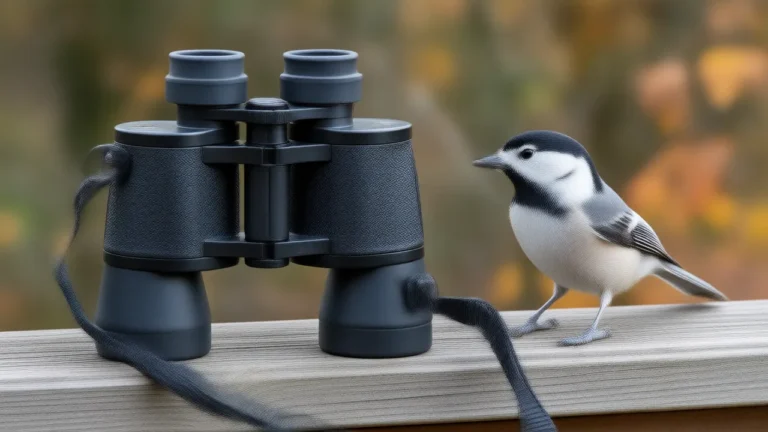
Binoculars are the first upgrade most people make. For backyard use, a pair in the 7x or 8x range is easier to hold steady and to find birds with than a higher magnification. The guide on how to choose binoculars for bird watching explains what the numbers mean.
A second food
Once birds visit regularly, add one new food: suet in the cooler months for woodpeckers and nuthatches, nyjer for goldfinches, or white millet on a tray for juncos, sparrows and doves. Each new food tends to bring in a few new species.
Water
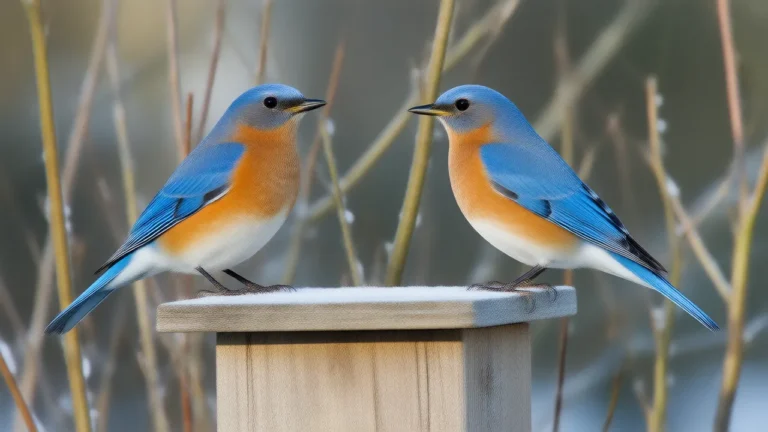
A shallow bird bath draws birds that never eat seed, such as robins, bluebirds and warblers. Keep it clean, refill it every day or two, and in cold climates consider a heated one for winter.
A backyard count
Community counts such as the Great Backyard Bird Count, held over a few days each February, let beginners add their sightings to a nationwide record. You can take part by counting the birds in your own yard for as little as 15 minutes.
Questions people ask
What is the easiest way to start bird watching?
Put one feeder with black oil sunflower seed where you can see it from a window, and use a regional field guide or a bird ID app to name what comes. Learn a few common birds well before trying to learn them all.
Do you need binoculars for backyard bird watching?
No. Birds at a feeder near a window are easy to see without them. Binoculars help once you start noticing birds in the treetops and across the yard.
What time of day is best for watching backyard birds?
Early morning, in the first few hours after sunrise, is usually the busiest time at feeders. Late afternoon often brings a second, smaller wave.
How long does it take birds to find a new feeder?
Often a few days, sometimes two weeks or more. Birds already feeding nearby usually find it first, and others follow them.
Written by the Backyard Birdcam team with AI assistance. Found something we got wrong? Email shop@smarternewsnow.com and we will fix it. How we write our guides.