Quick answer
Put a baffle on the pole, a wide cone or a long cylinder, with its lower edge at least 4 feet off the ground and all feeders above it. Stand the pole 8 to 10 feet from trees, fences, deck rails and roofs, so squirrels cannot jump past the baffle. Never grease the pole; it gets onto birds' feathers and rarely works for long.
In this guide
To stop squirrels climbing a bird feeder pole, fit the pole with a baffle, either a wide cone or a long cylinder, with its lower edge at least 4 feet off the ground and every feeder hanging above it. Then make sure the pole stands 8 to 10 feet from trees, fences, deck rails and roofs, so squirrels cannot simply jump past the baffle. The baffle stops the climb; the open space stops the leap.
A smooth pole, a thicker pole or a coat of grease might slow a squirrel for a day. None of them is a fix, and grease harms birds. The options below are compared honestly, so you can see what each one does and where it falls short.
How squirrels get up a pole
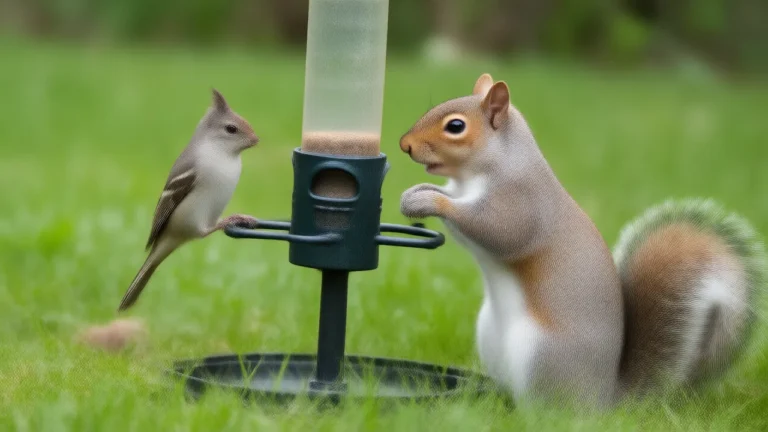
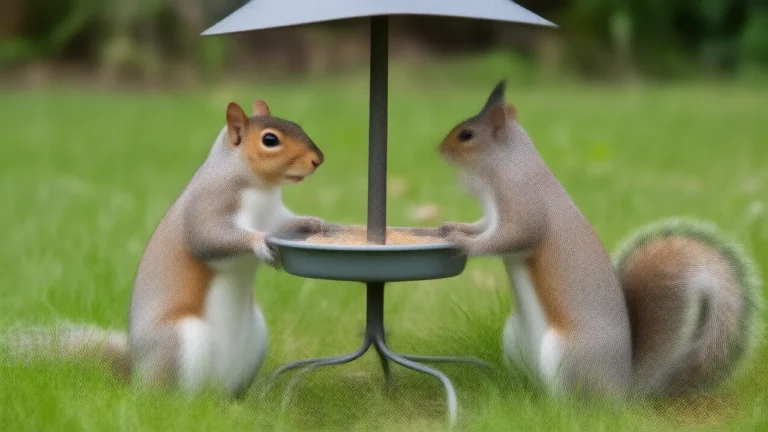
Tree squirrels are built for climbing. Their sharp, curved claws grip wood, bark, rough paint, rust and the joints of sectional poles. On a thin pole they hug it with all four legs and shimmy straight up, and many squirrels can climb a plain smooth metal pole the same way. They can also turn their hind feet backward, which lets them come down headfirst as easily as they go up.
They jump, too. A gray squirrel can spring roughly 4 to 5 feet straight up from the ground, and leap about 8 to 10 feet sideways from a raised launch point such as a fence or a deck rail. That is why a baffle needs both enough height and enough open space around it.
Squirrel pole guards compared
| Option | How it works | Does it stop climbing? | Watch out for |
|---|---|---|---|
| Cone baffle | A wide, flared shield clamped around the pole below the feeders | Yes, when wide, snug and at least 4 feet up | Raccoons can reach around some; a loose fit leaves a gap |
| Cylinder baffle | A long smooth tube with a closed top, also called a torpedo or stovepipe baffle | Yes, the most reliable | Must be sized to the pole; bulkier to look at |
| Coiled toy spring | Hung down the pole so it stretches and wobbles under a climbing squirrel | Sometimes, and not for long | Determined squirrels learn to beat it; rusts and tangles |
| Smooth or thicker pole alone | Less grip for claws | Slows some squirrels only | Most squirrels still get up |
| Grease or oil on the pole | Makes the pole slippery | Never use it | Gets onto birds' feathers; see below |
Cone or cylinder?
Choose a cone baffle if squirrels are your only climbers and your pole is a standard slim metal pole. Cones are light, easy to fit and less bulky to look at. Some are designed to tilt or wobble when a squirrel grabs the rim, which makes them harder to get past.
Choose a cylinder baffle if raccoons, rats or opossums also raid the feeders, or if your squirrels have already learned to beat a cone. A squirrel reaching up from the pole finds nothing to grab on a long smooth tube, and larger animals cannot reach over the top. A typical cylinder baffle is about 2 feet long. If you like building things, a homemade squirrel baffle made from metal stovepipe works on the same principle.
A dome baffle that hangs above a feeder is a different tool. It stops squirrels dropping onto a feeder from branches above, but it does nothing about a squirrel climbing up from below.
The coiled spring trick gets a lot of attention; the guide on whether the spring trick works on squirrels looks at it in detail.
Does pole diameter matter?
Less than people hope. A thin pole, such as a shepherd's hook, is easy for a squirrel to wrap its legs around. A wide, smooth metal pole is harder to grip, but plenty of squirrels still climb it, so a wider pole is not a substitute for a baffle.
What pole diameter does decide is which baffle fits. A baffle should clamp snugly around the pole. A gap between the two gives a squirrel a foothold or a way to squeeze through, so check the baffle's listed pole size before buying.
- Slim round metal poles take most cone and cylinder baffles.
- Square wooden posts are easy to climb; fit a cylinder baffle made for square posts, or switch to a metal pole.
- Sectional poles have joints and threads that give claws something to catch. Put the baffle above the highest joint a squirrel could reach.
- Shepherd's hooks are often pushed into garden beds right beside shrubs, which turns the shrubs into launch pads. Move the hook into open lawn and add a baffle.
Whatever the pole, set it deep, straight and firm. A pole that leans or sways brings the baffle and feeders closer to whatever is beside it.
Placement: the other half of the fix
A baffle only works if the squirrel has no other way up. Stick to these distances:
- Baffle height: lower edge at least 4 feet above the ground, with nothing a squirrel can stand on, such as a planter, a rock or a bench, underneath it.
- Feeders: all hanging above the baffle, with no chain, tray or feeder dangling below its top.
- Launch points: 8 to 10 feet of open air to the nearest tree, fence, deck rail, roof, shed, grill or patio furniture.
- Overhead: no branches or wires hanging over the feeders.
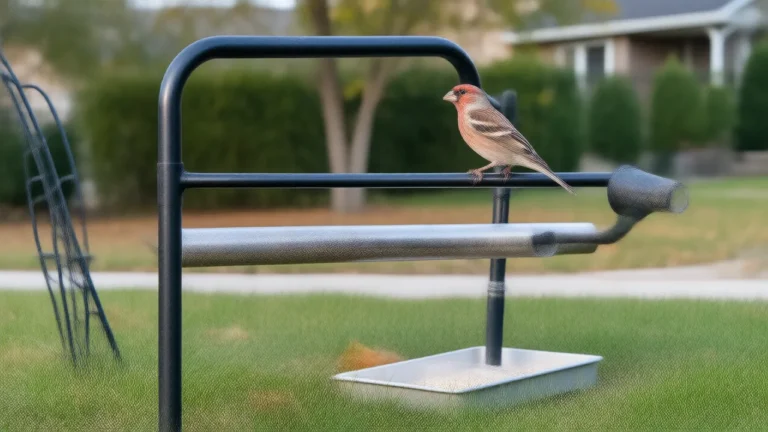
Measure from the feeder, not from the pole, because an extension arm can put a feeder several feet closer to a fence than the pole itself. Deck-mounted poles are a common weak spot: the railing sits right next to them, and most squirrels can leap from the rail to the feeder. A ground pole out in the open lawn usually solves it. The guide to placing a squirrel baffle walks through the measuring step by step.
After a heavy snow, check the baffle. Drifts raise the ground, and a baffle that was 4 feet up in fall can end up well within jumping reach.
Why grease is not an option
Greasing the pole is one of the most repeated squirrel tips, and it is a bad one. Grease, petroleum jelly, cooking oil or sticky paste does not stay on the pole. Squirrels carry it up onto feeders and perches, and birds brush against the pole and baffle. Once it gets onto feathers, it mats them, and oiled feathers lose the insulation and waterproofing a bird needs to stay warm and dry. Birds also swallow it while preening.
It does not even work well. Grease collects dirt and seed, runs in summer heat, hardens in the cold, and needs constant reapplying, and many squirrels learn to climb through it. Pastes and sprays made with hot pepper are no better on a pole: the pepper itself does not bother birds, but the greasy base does. The guide on whether petroleum jelly on a feeder pole is safe explains the risks in more detail.
If squirrels still get up
Watch where a squirrel starts from. The route it takes tells you what to change.
- It climbs past the baffle. The baffle is too low, too narrow or loose on the pole, or something underneath gives a boost. Raise it, tighten it, or swap a cone for a cylinder.
- It jumps onto the feeder from the side. A launch point is too close. Move the pole, or remove or trim what the squirrel jumps from.
- It drops from above. A branch or wire is overhead. Trim the branch or move the pole into open sky.
- It jumps from the ground to the feeder. The feeders hang too low. Raise the baffle and the feeders together.
- It still manages somehow. Fill the feeders with safflower or nyjer, which many squirrels care little for, and keep sunflower for a feeder you can defend.
Some people also give squirrels a small ration of corn or peanuts at the far side of the yard, which keeps them busy away from the bird feeders. For more ways to protect the feeders themselves, see how to keep squirrels off bird feeders.
Questions people ask
What is the best way to stop squirrels climbing a bird feeder pole?
A baffle mounted with its lower edge at least 4 feet up, with the pole 8 to 10 feet from anything a squirrel can jump from. A long cylinder baffle is the most reliable type.
Can squirrels climb a smooth metal pole?
Many can. They hug a slim pole with all four legs and shimmy up, and a wider pole only slows some of them. A baffle is what actually stops the climb.
Is a cone or a cylinder baffle better?
Both stop squirrels when mounted high enough and fitted snugly. A cylinder baffle also stops raccoons and rats, and is harder for experienced squirrels to beat.
Is it safe to put grease or petroleum jelly on a bird feeder pole?
No. It ends up on birds' feathers, where it ruins their insulation and waterproofing, and birds swallow it while preening. It also wears off fast and many squirrels climb through it.
Written by the Backyard Birdcam team with AI assistance. Found something we got wrong? Email shop@smarternewsnow.com and we will fix it. How we write our guides.